

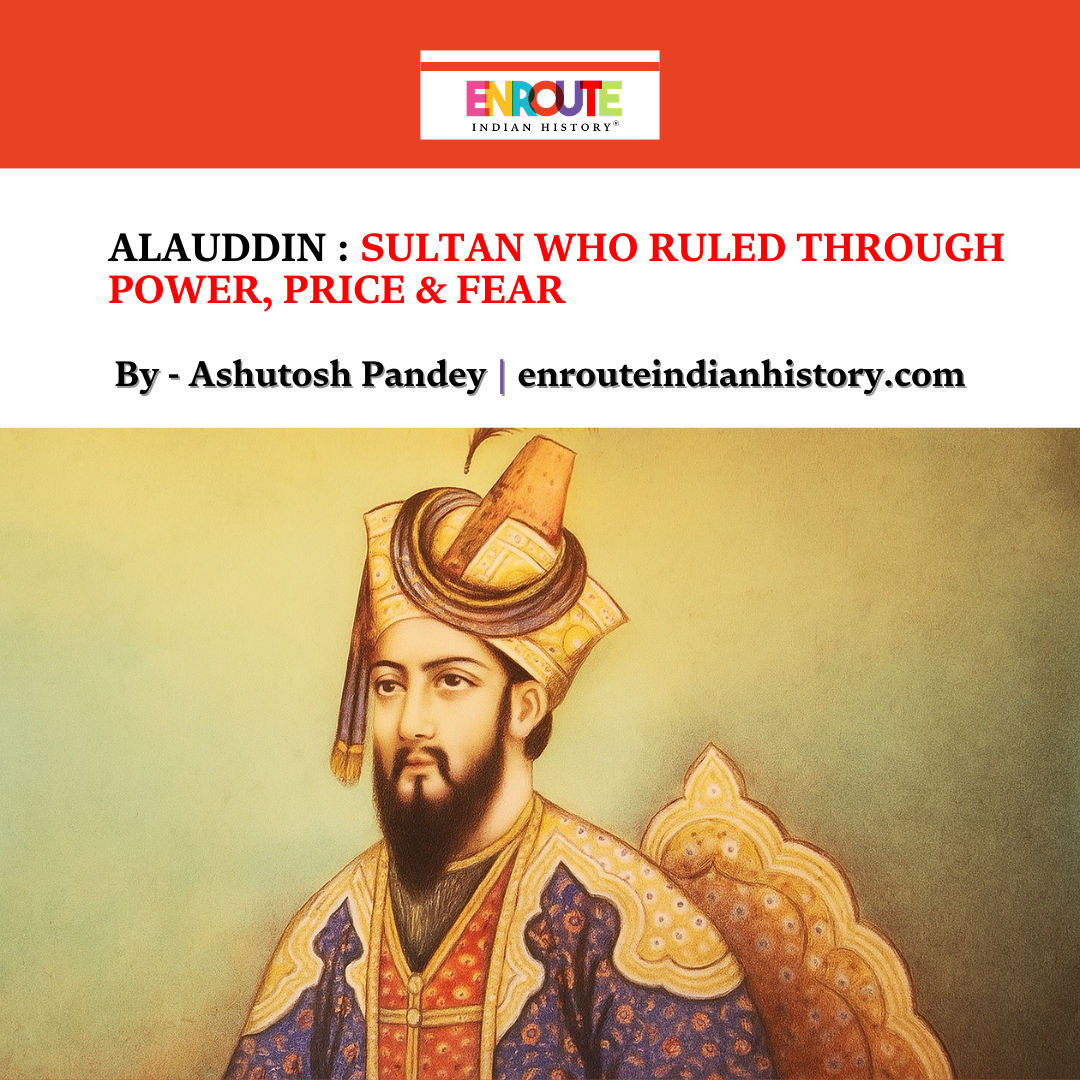
By Ashutosh Pandey
On a humid night in 1296, on the banks of the river Ganga, a victorious general returned from the Deccan carrying immense wealth—and a far greater ambition. Alauddin Khalji had just concluded a daring campaign against Devagiri, a raid that filled his treasury and quietly altered the balance of power within the Delhi Sultanate. To the court, he appeared as a loyal commander presenting spoils to his uncle, Sultan Jalaluddin Khalji. In reality, he was preparing to claim the throne.
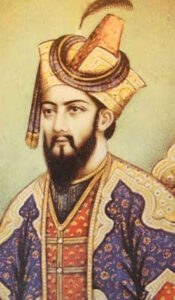
Within days, Jalaluddin Khalji was assassinated, and Delhi witnessed the rise of a ruler unlike any it had known before. Alauddin Khalji ascended the throne not through inherited legitimacy or religious sanction, but through calculated violence and political resolve. His reign unfolded in an age of constant threat—Mongol invasions loomed at the frontiers, nobles conspired within the court, and the vastness of the subcontinent resisted central control. Alauddin responded with an uncompromising vision of state power, transforming the Delhi Sultanate into a militarised and tightly regulated empire.
From General to Sultan
Alauddin Khalji’s rise was rooted in opportunity and ambition. As the nephew and son-in-law of Jalaluddin Khalji, he held a powerful military position but remained constrained by his uncle’s lenient style of governance. Jalaluddin’s policy of forgiveness towards rebels and nobles, while morally appealing, weakened royal authority. Alauddin recognised this vulnerability.
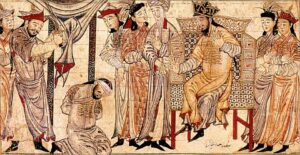
The Devagiri expedition (1296) was pivotal. Acting without royal sanction, Alauddin led a swift campaign into the Deccan, extracting enormous wealth from the Yadava kingdom. This sudden influx of resources allowed him to buy the loyalty of soldiers and nobles alike. When Jalaluddin met him near Kara to reconcile, Alauddin ordered his assassination and proclaimed himself Sultan.
From the outset, Alauddin ruled with a clear understanding of power: loyalty was purchased, opposition crushed, and authority centralised. Delhi was no longer to be governed through personal relationships, but through fear and discipline.
Mongol Invasion & Military Reforms
One of the greatest challenges of Alauddin Khalji’s reign was the repeated Mongol invasions from Central Asia. Unlike earlier Sultans, who struggled to repel these attacks, Alauddin adopted a systematic military response. He expanded the standing army to an unprecedented size, reportedly maintaining over 300,000 cavalry soldiers.
Delhi itself was transformed into a defensive capital. Fortifications were strengthened, and the construction of Siri, a new fortified city, served both strategic and symbolic purposes—it was a city built for war. Alauddin personally supervised military organisation, branding horses, maintaining detailed registers of soldiers, and ensuring strict discipline.
These measures proved effective. Major Mongol invasions between 1297 and 1306 were decisively repelled, securing the Sultanate’s northern frontiers. Alauddin emerged as the first Delhi Sultan to permanently neutralise the Mongol threat, a feat that gave stability to his rule and confidence to his expansionist ambitions.
From Rajasthan to Deccan
Alauddin Khalji was among the most expansionist rulers of medieval India. In the north, he targeted the Rajput strongholds of Rajasthan. The conquest of Ranambhor (1301), Chittor (1303), and Mewar demonstrated his determination to crush regional resistance. These campaigns were marked by brutal sieges and uncompromising tactics, reinforcing his reputation as a ruthless conqueror.
In the south, Alauddin pursued expansion through trusted generals, most notably Malik Kafur. Between 1308 and 1311, Khalji armies penetrated deep into the Deccan, extracting tribute from the Yadavas, Kakatiyas, Hoysalas, and Pandyas. Though these regions were not directly annexed, the campaigns brought immense wealth to Delhi and established its supremacy across the subcontinent.
For the first time, Delhi became the undisputed centre of a pan-Indian political order, linked to distant regions through military dominance rather than administrative integration.
Market Reforms
Alauddin Khalji’s most distinctive legacy lies not in conquest, but in governance—particularly his market control system, unparalleled in medieval India. To sustain his massive army without overburdening the treasury, Alauddin fixed the prices of essential commodities such as grain, cloth, horses, and slaves.
Markets in Delhi were strictly regulated. Officials monitored prices, hoarding was punished severely, and merchants were forced to register with the state. Grain from royal lands was stored in government granaries and released to stabilise supply. According to chronicler Ziauddin Barani, even during famines, prices in Delhi remained stable.
These reforms were not driven by welfare concerns, but by political calculation. By keeping prices low, Alauddin ensured that soldiers could be paid modest salaries without risking discontent. More importantly, he broke the economic power of nobles and traders, making them dependent on the state.
The market reforms reflect Alauddin’s broader philosophy: economic control was essential to political control.
Policies of Fear & Surveillance
Alauddin Khalji deeply distrusted the nobility, whom he viewed as a constant threat to royal authority. To neutralise them, he implemented a series of harsh measures. Marriage alliances among nobles were restricted, social gatherings were banned, and a vast network of spies kept the Sultan informed of even private conversations.
The consumption of alcohol was prohibited, not on moral grounds, but to prevent conspiracies. Large land grants were confiscated, and revenue demands were increased to weaken aristocratic independence.
These policies created an atmosphere of fear, but they also ensured stability. Rebellions became rare, and the Sultan’s authority remained unquestioned throughout his reign. Alauddin ruled not through consent, but through an omnipresent state.
Architecture & Urban Vision
Alauddin Khalji’s architectural contributions reflect his political priorities. Unlike later Mughal rulers, he did not build for aesthetic grandeur alone. His structures emphasised strength, scale, and authority.
The city of Siri, constructed northeast of Mehrauli, served as a military garrison and royal residence. Its massive walls symbolised Delhi’s transformation into a fortress capital. Alauddin also expanded the Qutb complex, beginning the construction of the Alai Minar, intended to surpass the Qutub Minar in height—though it remained unfinished.
The Alai Darwaza, a southern gateway to the Quwwat-ul-Islam Mosque, stands as the finest surviving example of Khalji architecture. Built using red sandstone and white marble, it introduced true Islamic arches and domes to Indian architecture, marking a technological and stylistic shift.
Through architecture, Alauddin projected imperial authority, discipline, and permanence.
Authority over Orthodoxy
Unlike some of his predecessors, Alauddin Khalji did not allow religious orthodoxy to dictate governance. While he maintained Islamic institutions, he openly asserted that the Sultan’s duty was to preserve the state, not enforce religious law. Barani records Alauddin stating that he did not know whether his policies were Islamic, only that they were necessary.
This pragmatic approach allowed him to rule a diverse population without religious interference in administration. It also marked a shift towards a more secular conception of kingship, where political necessity outweighed theological considerations.
Death & Legacy
Alauddin Khalji died in 1316, leaving behind a powerful but tightly controlled empire. Without his personal authority, many of his systems collapsed quickly. Yet the impact of his reign endured.
He demonstrated that the Delhi Sultanate could survive external invasion, dominate the subcontinent militarily, and govern through centralised administration. His experiments with market control, military organisation, and state surveillance influenced later rulers, including the Tughlaqs and even the Mughals in different forms.
Alauddin Khalji remains a controversial figure—feared, criticised, and often misunderstood. But beyond moral judgement, his reign represents a decisive moment in Indian history, when Delhi evolved from a fragile kingdom into an imperial capital ruled by policy, power, and purpose.
Conclusion
Alauddin Khalji did not rule Delhi with kindness or compromise. He ruled it with clarity. In an age of uncertainty, he believed that only a strong state could survive—and he was willing to pay any price to build it. His legacy lies not in monuments alone, but in the idea that power, when organised, regulated, and enforced, could reshape history itself.
Bibliography
1.Barani , Ziauddin. Tarikh-i-Firozshahi : Translated by Ishtiaq Ahmad Qureshi. Delhi: Munshiram Manoharlal
2. Amir Khusrau. Khazain-ul-Futuh (The Treasures of Victory).
3. Chandra, Satish. Medieval India: From Sultanat to the Mughals (1206–1526). New Delhi: Har-Anand Publications.
4. Habib, Irfan. “Economic History of the Delhi Sultanate.” Indian Historical Review