
By Saiee Katkar
Chillai Kalan, the notorious forty-day stretch of harsh winter in Kashmir beginning on 21 December, is not merely a weather phenomenon. It is a season that reorders landscapes, rhythms, appetites, and memories. While most commonly described through meteorological reports of plunging temperatures or frozen lakes, academic research reveals a layered story where climate, culture, and cuisine converge. Chilla Kalan becomes a lens through which we understand not only environmental extremity but also human resilience, adaptive tradition, and emotional belonging.
The Meteorology of Extremes
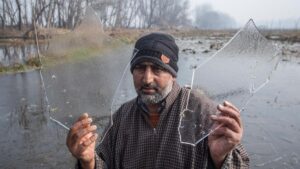
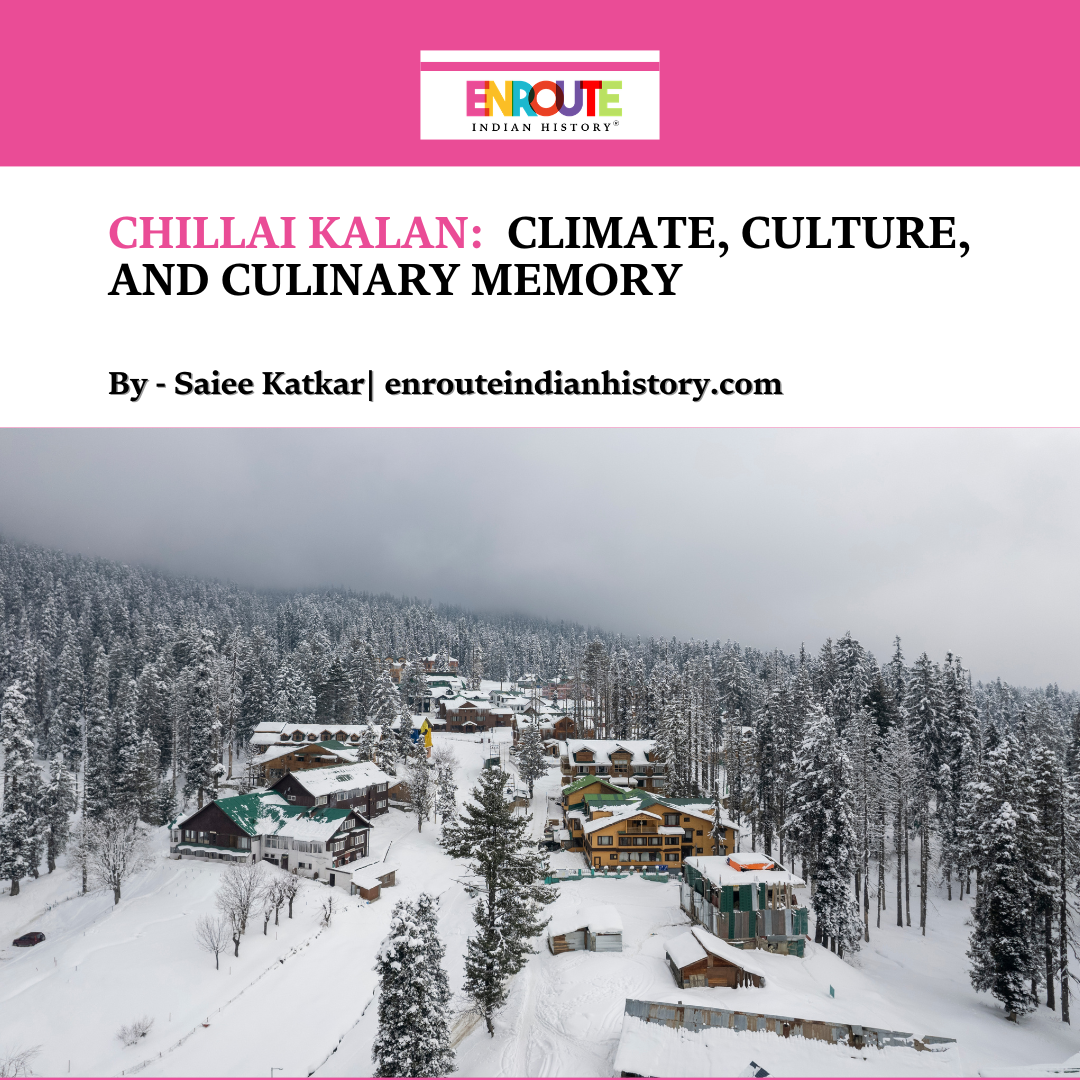
Climatological studies consistently describe Chillai Kalan as the coldest period of the Kashmiri winter, marked by severe night temperatures, frequent snowfall, and the freezing of major water bodies (Mir, 2014). Dal Lake turning into a sheet of ice is not a poetic exaggeration but a documented annual pattern with significant implications for mobility and water supply. ( Image 1 ) Recent hydrological research notes tha variations within these forty days, whether heavy snowfall or unusually dry spells, directly affect the region’s water resources for the rest of the year (Rather & Dar, 2024). A dry Chillai Kalan is now studied as a warning sign for reduced glacial recharge and summer scarcity, showing how this traditional calendar season continues to shape contemporary environmental science.
Living With the Cold: Cultural Adaptation and Material Memory
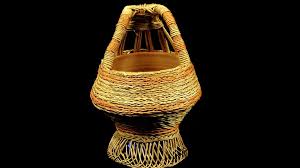
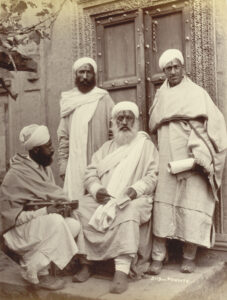
If meteorology explains the cold, culture explains how people inhabit it. Ethnographic accounts describe Chillai Kalan as a time when life temporarily folds inward. Homes transform into insulated worlds: kangris (earthen firepots) ( Image 2) tucked beneath pherans ( Image 3) rooms sealed with heavy curtains, and families reorganising living spaces around sources of warmth (Dabla, 2010). These adaptations are not simply utilitarian but deeply cultural, learned behaviours passed down like heirlooms.
The linguistic origins of the term reflect this embodied experience. Chillai Kalan comes from the Persian word chilla, meaning a period of seclusion or retreat, and kalan, meaning larger or more intense. Historians argue that the term travelled to Kashmir during the Mughal era when Persian shaped administrative and cultura vocabulary (Khan, 2005). Its deeper resonance likely comes from Central Asian Sufi practices. In several tazkiras, the forty-day chilla appears as a period of disciplined spiritual withdrawal. Kashmiri winters seemed to mirror this practice naturally.
Culinary Warmth
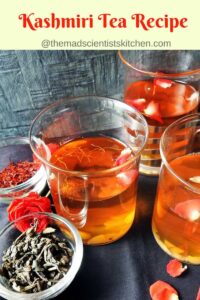
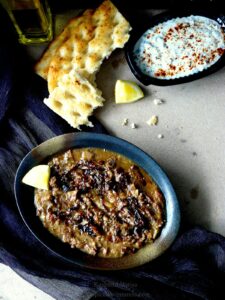
Food becomes a quiet narrator of this season. Research on Kashmiri winter diets highlights the shift toward high-fat, slow-cooked, deeply warming preparations that fortify the body against cold stress (Mattoo, 2008). Harissa, (Image 4) the iconic minced mutton dish slow-cooked before dawn, appears not as indulgence but as necessity. (Image 5) Khewa, the saffron and spice tea, becomes a daily medicinal brew. The emphasis is not only on warmth but on sustainability. Dried vegetables (hokh syun), stored turnips, fermented preparations, and sun-dried greens ensure that households remain food secure when markets shrink and mobility becomes uncertain.
Several interview-based studies document the emotional weight these foods carry. One elderly resident from downtown Srinagar describes harissa as “the taste of safety, a reminder that even in the coldest forty days, we know how to hold on.” Another recalls childhood mornings of waking to “the crackle of the kangri and the smell of khewa,” vividly capturing the sensory landscape of Chillai Kalan. Such testimonies reveal that winter cuisine in Kashmir is not just a nutritional response but a cultural archive that preserves techniques, memories, and micro rituals shaping identity.
Historical Roots and Seasonal Rhythms
The season’s cultural significance is not new. Medieval Persian Kashmiri chronicles mention winters that halted political campaigns, froze rivers, and stalled harvests. Scholars note that the idea of retreat from warfare, travel, and labour reflects a long- standing relationship between winter severity and social rhythm in the valley (Raina, 1998). Chillai Kalan, therefore, inherited both climatic reality and historical meaning, a period where life contracts so that resilience can expand.
Economic and Infrastructural Impact
Contemporary research also explores the practical pressures of Chillai Kalan. Energy demand studies show that heating needs peak during this period, straining power grid and causing frequent outages (Bhat, 2022). Firewood consumption increases sharply, revealing both environmental challenges and socio-economic dependence on traditional heating. Agriculture, though dormant, quietly benefits. Horticultural studies emphasise that sustained winter chill is essential for the valley’s apple production, linking extreme cold to future economic stability.
A Season of Hardship, Skill, and Heritage
What emerges from these varied strands of evidence is a portrait of Chillai Kalan as a complex season, one that tests, shapes, and defines Kashmir. It is meteorology and memory, hardship and heritage. In these forty days, the valley performs an ancient choreography of survival: sealing homes, preserving food, sharing warmth, and waiting for the gradual softening that comes with Chillai Khurd and Chillai Bachha.
References (APA Style)
Bhat, A. (2022). Energy demand patterns in the Kashmir Valley during the winter months. Journal of Himalayan Infrastructure Studies.
Dabla, B. A. (2010). Culture and customs of Kashmir: A sociological analysis. Kashmir Sociological Review.
Khan, M. (2005). Persian influences on Kashmiri culture. Central Asian Review.
Mattoo, J. (2008). Traditional Kashmiri gastronomy and seasonal dietary practices. Indian Journal of Regional Food Studies.
Mir, A. H. (2014). Winter climatology of the Kashmir Valley. Journal of Mountai Science.
Rather, S., & Dar, I. (2024). Hydrological implications of winter variability in Kashmir. Environmental Monitoring Review.
Raina, M. (1998). Seasonality and social rhythms in medieval Kashmir. Journal of Himalayan Historical Studies.
Image –
Imag1 ChalaiKhilan – https://www.thehindu.com/news/national/other-states/chillan-i-kalan-in-kashmir/article67660991.ece
Image 2 – Kangari – https://garlandmag.com/article/kangri-the-dilemma-of-the-kashmiri-portable-heater/
Image 3 Pheran –https://en.wikipedia.org/wiki/Pheran#/media/File:KashmirPundit1895BritishLibrary.jpg
Image 4 Harris https://thespiceadventuress.com/2014/12/24/kashmiri-harisa-and-a-blessed-christmas-to-all-of-you/
Image 5 Khewa https://themadscientistskitchen.com/kashmiri-kahwah/#google_vignette