
By Aryan Singh
Daryaganj, one of Old Delhi’s most vibrant neighbourhoods, is best known for its iconic Sunday Book Market. Every weekend, its streets transform into a paradise for readers, with rows of vendors offering rare editions, second-hand books, and academic volumes at bargain prices. This weekly bazaar has become a cultural landmark, drawing book lovers from across the city. But Daryaganj’s fame is not limited to its literary charm. Beyond the hustle of the Sunday market, it holds a special place in India’s culinary history. The area is celebrated as the birthplace of two dishes that redefined North Indian cuisine—Butter Chicken and Dal Makhani. First created in the kitchens of Moti Mahal, these dishes blended rich flavours with inventive cooking, soon winning hearts far beyond Delhi. Over time, they became global culinary ambassadors of Indian food, and Daryaganj’s name remains forever linked with their origin
This article delves into the layered history of Daryaganj—its history, transformation after Partition, the culinary legends who created butter chicken and dal makhani, and the fiery courtroom battle between two iconic restaurants over the true origins of these dishes.
Source: Wikimedia Commons
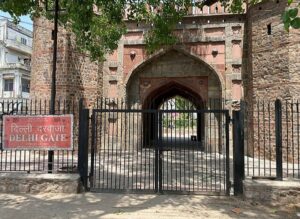
Before we move ahead, let’s pause to explore the roots of the name Daryaganj. The word ‘Darya’ translates to river, while ‘Ganj’ means market—together evoking the idea of a bustling riverside bazaar. Historian Sohail Hashmi notes that this market was laid out during the reign of Shah Jahan, with his wife, Akbarabadi Begum, credited for its design. In the Mughal era, it thrived under the name Faiz Bazaar, a vibrant hub along the Yamuna’s edge.
The Partition Effects
The origins of butter chicken and dal makhani are closely tied to the year 1947, when India achieved independence from British rule but also endured the trauma of Partition. This division of the country into India and Pakistan triggered one of the largest mass migrations in history, with an estimated 7–8 million people crossing borders in search of safety. The upheaval came at a staggering human cost—over a million lives were lost, and countless families found themselves in refugee camps, as mentioned by Deborah Ruth Sutton, Department of History, Lancaster University, in her research article titled “Masjids, monuments and refugees in the Partition City of Delhi”.
Deborah Ruth Sutton also mentions that the Partition reshaped Delhi in profound ways. The city’s culture, population, and urban landscape were dramatically transformed as waves of displaced people arrived. Iconic monuments such as Jama Masjid, Qutub Minar, Humayun’s Tomb, and Purana Qila temporarily became shelters for those fleeing violence. According to estimates, nearly half a million refugees poured into Delhi, while around three lakh Muslims were forced to leave.
To manage the crisis, the Indian government allocated nearly 2,000 acres of land to the Ministry of Relief and Rehabilitation for permanent resettlement. The 1951 Delhi Census reflects this transformation, with entire neighbourhoods—such as Vijay Nagar, Model Town, GTB Nagar, and Khan Market—emerging as new colonies to house the displaced. These resettlement initiatives not only provided refuge but also altered the social and cultural fabric of the city, laying the foundation for Delhi’s modern identity. (Hindustan Times, 2023)
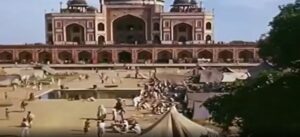
Source: Wikimedia Commons, Refugee camp in Humayun Tomb, 1947
Moti Mahal Restaurant
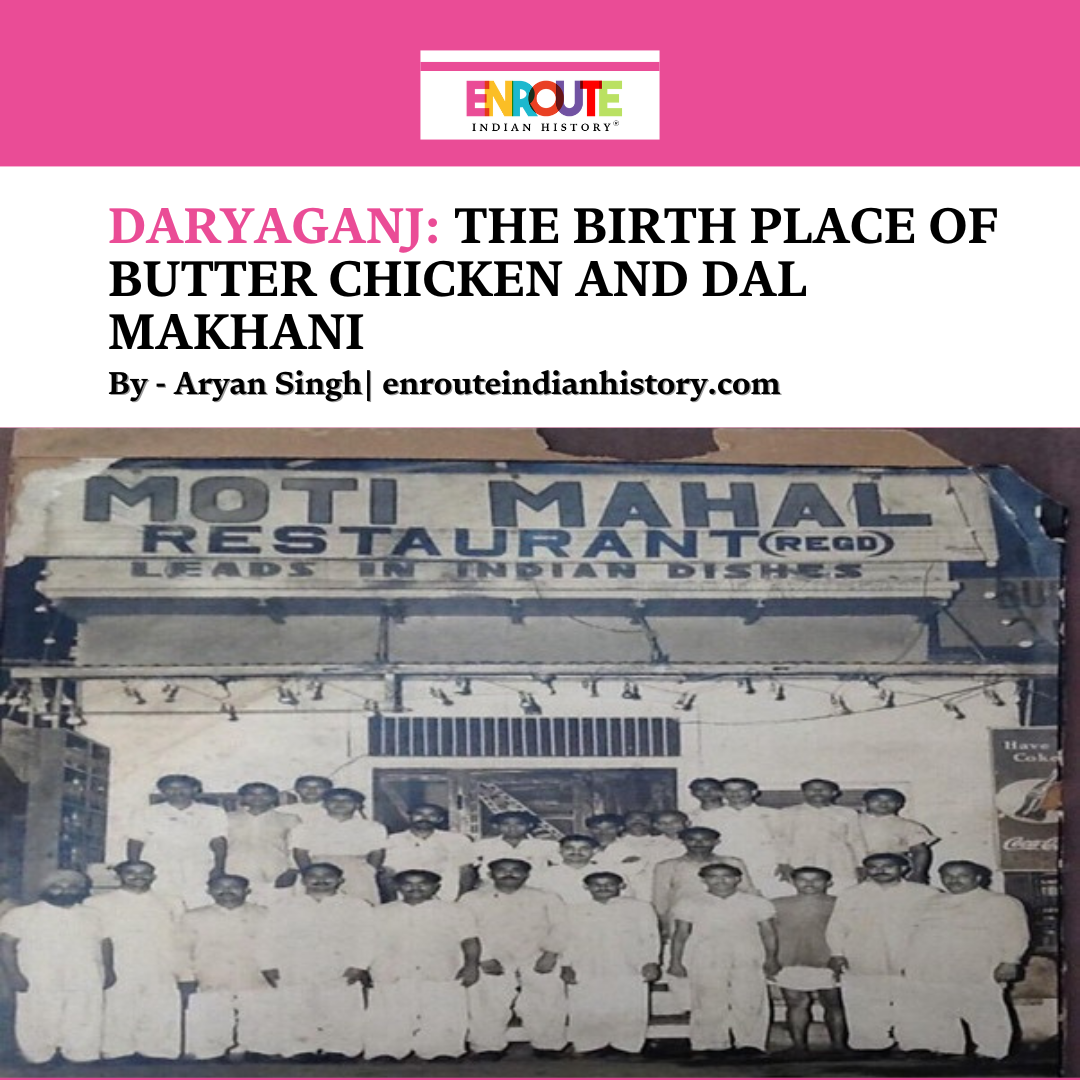
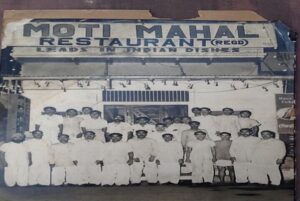
Moti Mahal is today regarded as one of Delhi’s most iconic restaurants, particularly celebrated for its butter chicken. Over the decades, it has drawn visitors from across the world and counted global leaders among its patrons. Former Soviet President Nikita Khrushchev and Pakistan’s Prime Minister Zulfikar Ali Bhutto dined here, while during the Shimla Agreement, Prime Minister Indira Gandhi had food specially ordered from the restaurant. Khrushchev even had dishes flown to Moscow to be served at official banquets, underlining Moti Mahal’s international reputation. (TOI, 2024)
Source: Wikimedia Commons
The restaurant’s story, however, stretches back to pre-Partition days. In the 1930s, Mokha Singh Lamba first established Moti Mahal in Peshawar. Among those who worked with him were two young men—Kundan Lal Gujral and Kundan Lal Jaggi—who served as waiters, while their future business partner, Thakur Das, was engaged in the wholesale rice and pulses trade nearby. Their roots reflected the diversity of undivided India: Jaggi was born into a Punjabi Hindu family in Peshawar, while Gujral came from a Punjabi Pathan family in the North-West Frontier Province, where his father ran a cloth shop in Jhelum. (TOI, 2024)
The upheaval of Partition in 1947 brought them all to Delhi, where fate reunited them. Jaggi later recalled encountering Gujral and Thakur Das by chance on Roshanara Road while purchasing a half bottle of whiskey. This reunion sparked the idea of going into business together. Initially considering Fatehpuri as a location, they ultimately found a shop in Daryaganj. Pooling together the significant sum of ₹6,000—a large investment at the time—they set up a modest tea shop. The surrounding area, with its meat shop and bustling vegetable mandi, proved ideal for a food business. Gradually, their small shop evolved into a full-fledged restaurant. (TOI, 2024)
The Discovery of Butter Chicken
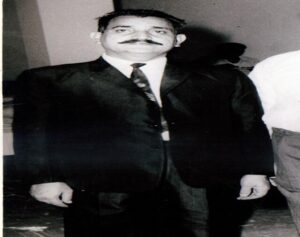
One Night in 1947, Kundan Lal Jaggi was closing his restaurant when suddenly a group of hungry people arrived at his restaurant. The food was almost finished, with only a few pieces of Tandoori chicken left to serve. A Bengali gentleman dining at his restaurant suggested Kundan Lal to make a gravy and add tandoori chicken to it. So, Jaggi got an idea and he created a gravy with tomatoes, fresh butter, some spices, and then added the pieces of tandoori chicken to it. So, this is how a new dish was created, which was loved by his guests, and Kundan Lal decided to put his dish permanently on the menu and named it butter chicken. What began as an improvisation soon became one of Delhi’s signature culinary contributions and later a global favourite. (Dariyaganj.com)
Source: Wikimedia Commons, Kundan Lal Jaggi
The Discovery of Dal Makhani
Once, a Sikh gentleman, Sucha Singh, dined at Moti Mahal in 1947 and suggested that Kundan Lal should try something special with the regular Dal. After thinking it over, he slow-cooked black lentils on tandoor with tomatoes, white butter, herbs, and spices. He left it to slow-simmer overnight, and the next morning, he discovered a luscious creamy dal. As it was made with butter or Makhan, he named it Dal Makhani. (Dariyaganj.com)
This restaurant enjoyed patronage from famous personalities, including PM Jawahar Lal Nehru, who even asked the restaurant team to set up a tandoori at his office residence. They have served celebrities like Atal Bihari, Indira Gandhi, Richard Nixon, King Birendra, Sam Manekshaw, Rajesh Khanna, Nargis, etc. (Motimahal.in) Kundan Lal Jaggi, in one of his interviews, mentions that Sardar Swaran Singh (External Affairs Minister) was a regular visitor and brought Bhutto with him to his restaurant. He also recalled that Homi Jahangir Baba would come specially from Bombay to taste their food and visit the restaurant before he died in a Plane crash. Kundan Lal Jaggi was also given the IFCA ‘Culinary legendary award’. In 2018, he passed away at the age of 94. (TOI, 2024)
Court battle b/w Moti Mahal and Daryaganj Restaurant
In 2019, Jaggi’s grandson, Raghav Jaggi, opened Daryaganj restaurant to continue the legacy and even pitched on Shark Tank India. The feud between the two families, the current owner of Moti Mahal, Manish Gujral, submitted evidence in court in 2024 that his grandfather, Kundal Lal Gujral, was the inventor of the dish, whereas Kundan Lal Jaggi’s grandson Raghav Jaggi argues that his grandfather was a partner in Moti Mahal and they have the right to claim to the creation of the dish. Moti Mahal is now seeking 2 crores in damages for copyright infringement and also wants the court to bar Daryaganj from claiming that butter chicken and dal makhani were created by his forefathers. (Al Jazeera, 2024) Now the High Court will decide who invented butter chicken and dal makhani, and who is the real owner of these dishes.
References
1. Sutton, Deborah Ruth. “Masjids, Monuments and Refugees in the Partition City of Delhi, 1947–1959.” Urban History, 19 Jan. 2022, pp. 1–18, https://doi.org/10.1017/s0963926821001036.
2. “About Daryaganj –a Story of Timeless Indian Flavours.” Daryaganj, 2025, www.daryaganj.com/about-daryaganj. Accessed 15 Sept. 2025.
3. Shamim, Sarah. “Butter Chicken Battle: How the Dish Brought Two Indian Restaurants to Court.” Al Jazeera, www.aljazeera.com/features/2024/2/17/butter-chicken-battle-how-the-dish-brought-two-indian-restaurants-to-court.
4. India, Times of. “The Legal Battle over the Invention of Butter Chicken: Moti Mahal vs Daryaganj | India News – Times of India.” The Times of India, 2024, timesofindia.indiatimes.com/india/the-legal-battle-over-the-invention-of-butter-chicken-moti-mahal-vs-daryaganj/articleshow/107592632.cms.
5. “Homepages.” Moti Mahal Delux Tandoori Trail, motimahal.in/.