

By Ashutosh Pandey
Craftsman from Titarpur who spends weeks making Ravana effigy only to watch it collapse in flames when asked by a reporter, he replied : “Our Ravana must look strong, so that when he falls, people should feel victory.”
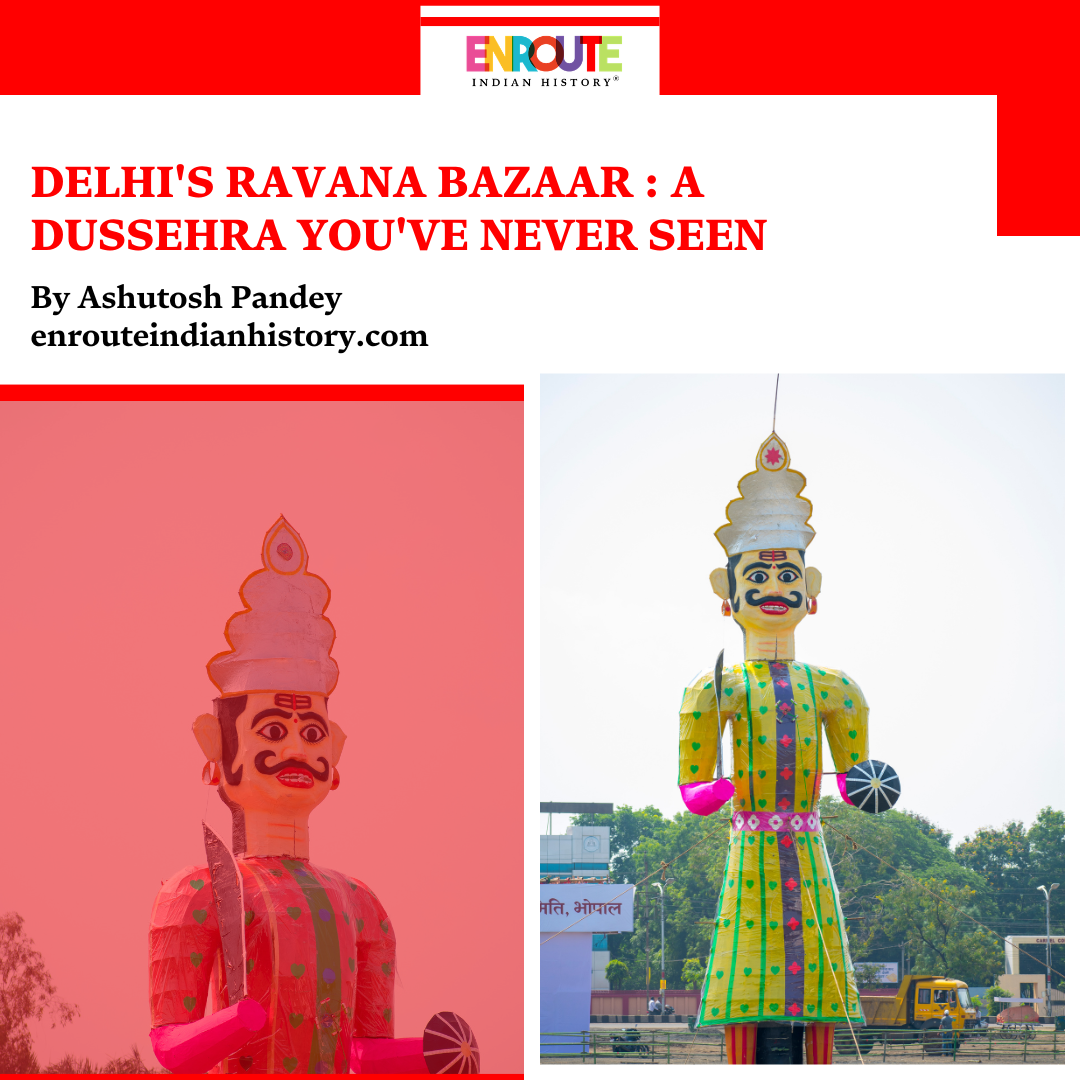
On the evening of Dussehra as the sun makes its way to the west, a crowd of thousands of people gather in the grounds across the city. The whole environment blares with the chanting of Jai shree Ram. The center of attraction is the effigies of Ravana, Meghnath, & Kumbhakarna– made up of bamboo, clothes, paper, fire crackers, etc. One small spark, cheers from the crowd & within moments the figures that take weeks of labor collapses in smoke & fire. The fiery spectacles are the climax of Dussehra festival. But very few people take a pause & ash – who made these giant effigies and where do they come from. The answer lies in Titarpur, a little known neighborhood in West Delhi close to Tagore garden. Every year as autumn arrives narrow lanes of Titarpur transform into open air workshops.
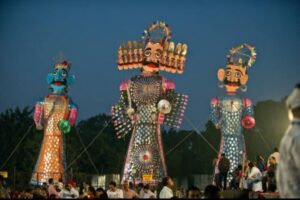
Titarpur on regular days looks like any other area of Delhi – crowded houses, busy markets, tea stalls, etc but when it comes to September the whole atmosphere changes. Bamboo poles, heaps of coloured papers, paints, firecrackers and the sound of working echoes till midnight. Locals call it Ravana Gram – a village where Ravana is born every year. For decades now families here have specialized in effigy making. Their creations travel not just to local Ramleela maidaan Or red fort but also to small parks & community grounds across Delhi NCR. We can say without Titarpur, Delhi’s dussehra would not be completed.Making effigy is not a small task, it begins with cutting of bamboo and to structure a skeleton kind of giant body. Makers build effigies as tall as 20 to 100 feets. Over this skeleton, layers of paper and clothes are pasted, giving shape to Ravana’s body & then comes the important part- 10 heads of Ravana. Once the structure is stable, Ravana effigy is brought to life with papers and paints. Every part specially the face is made with great detailing, wide eyes, sharp moustaches, crown, etc. And last comes the stuffing of firecrackers. It is done with care because small mistakes can cause disastrous accidents. Men, children and women too joined to help. Effigy making in Titarpur is not a solitary craft but a family affair.
The traditional roots of Ravana effigies making. The burning of Ravana is as old as dussehra itself. The festival marks the victory of good over evil, the battle of Ram and Ravana. But delhi owns different style of dussehra celebration. From mughal era Ramleela at the Red fort drew huge audience and with time neighborhood across the city began staging their own versions of ramleela. The role of effigy making fell to Titarpur, the skilled artisans settled here decades ago and slowly the area became synonymous with effigy making. It is more seasonal employment for families that live here.Skills handed down from father to son, For many families in Titarpur, making effigies of Ravana isn’t just seasonal work — it’s a lineage craft. Generations have passed down techniques of bending bamboo, layering paper, and painting fierce moustache.Titarpur shows how craft sustains in the heart of modern city.
The question arises why still Ravana is burned, it is not just for spectacle it carries the message beyond. Ravana with 10 heads represents EGO, GREED, ANGER, LUST, ENVY, INJUSTICE. Burning Ravana is a way of our society to remind itself that no matter how mighty evil is, it cannot defeat truth. The economics of effigy making are also very fragile, small effigies of 15-20 feets get 10-15 thousands while larger effigies may fetch lakhs but the margin of profit is very thin. The entire year depends on the earnings of these weeks. That’s why many people from the younger generation are choosing different professions for stable income leaving fewer hands to carry the tradition forward. In recent times, effigies making of Titarpur faces several challenges. First and foremost is pollution concerns. With growing awareness of pollution & depleting air quality, the traditional way of burning effigy is criticized a lot. Some communities even now demand eco-friendly Ravana effigy. Also unfortunate accidents happen sometimes so artisans are restricted with guidelines for height, material used, etc. Also as urbanization spread it’s legs, the titarpur area shrinks making it difficult for craftsmen.
What makes titarpur still relevant is its quality of adaptation. Some craftsmen now experiment with eco-friendly effigies, using natural colours, biodegradable papers, etc . Even showcasing the modern era Ravana in effigies. Modern issues of corruption, injustice, pollution and others are represented. These innovations are not just demanded by the public but also help the craft to be relevant. When you walk through the streets of titarpur before dussehra to witness carnival before the carnival, you will see effigies in series. Streets full of noise, chaos and life. The smell of colours, glue get mixed with the aroma of the streets. Basically we can say that titarpur is the organizer of dussehra celebration in Delhi, without it Delhi would not be able to celebrate dussehra as it is celebrated.
On the day of climax i.e. on dussehra effigies of Ravana,Meghnath and kumbhkarn are transported through different mediums. And the character of Rama when aims the arrow of fire, flames in a few moments turns effigies into ashes. The craftsmen often watch their own effigies burning down to ashes, but those ashes remind them that their craft & tradition survived for another year.
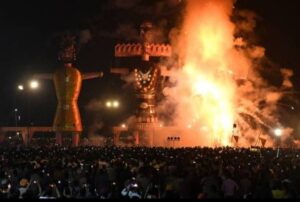
So mostly for everyone burning effigies is just a few minutes show of Rama defeating Ravana, symbol of victory of good over evil, but for Titarpur it is livelihood, tradition and art. They shape the evil so that society can celebrate its fall. Their work vanishes in a few minutes but the titarpur story proves that temporary art can also leave a permanent mark on culture. After the end of the bustling festival of dussehra, Titarpur again whispers for another year – quietly and under one breath.
Bibliography & image credit :-
*Article- The markers of Ravana (2009),Times of India
*Article- In the demon king Ravana, Titarpur artisans find their God(2015), Times of India
*Pictures- scroll.in, http://www.google.com