
Echoes of the Epics: The Living Tradition of Chitrakathi in Pinguli
- March 23, 2026
By Saiee Katkar
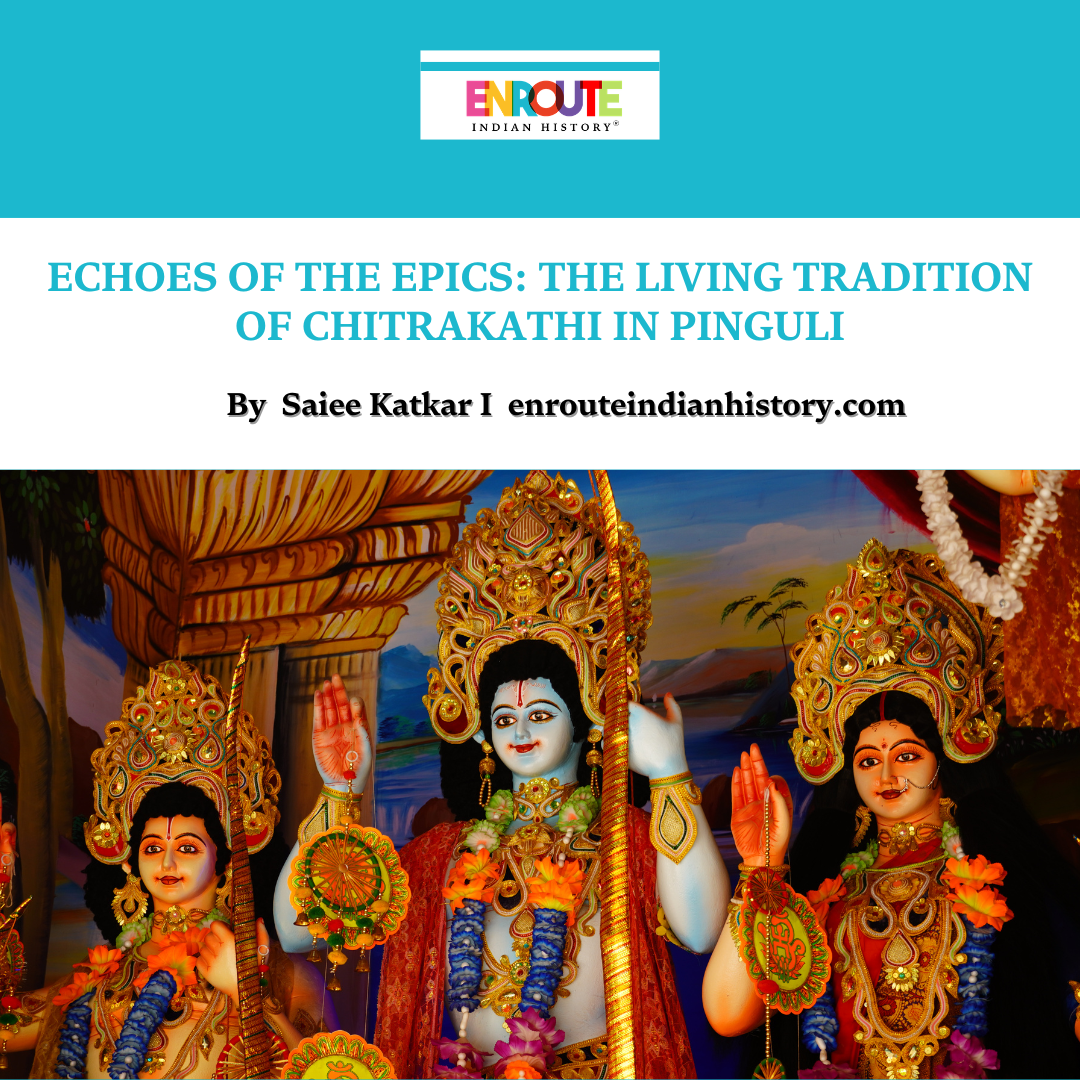
Painting Stories into Memory In the quiet Konkan village of Pinguli in Maharashtra’s Sindhudurg district, the air still hums with stories, stories sung, painted, and remembered. Here, the Thakar community has preserved Chitrakathi, an ancient art form that unites narrative, music, and image into a single expressive tradition. Each performance once brought to life episodes from the Ramayana and Mahabharata, not on a stage or screen, but through hand-painted scrolls and oral narration (Pinguli Chitrakathi Art, n.d.). The storyteller, known as the chitrakathi, would unfold his scrolls one by one, his voice transforming painted figures into living characters.
Chitrakathi is not simply a visual art; it is a performative memory system , a way of keeping mythology and cultural history alive. For centuries, these performances animated village courtyards and temple gatherings, merging faith with entertainment. In each unfolding image, generations found echoes of devotion, imagination, and shared identity.
Story, Song, and Scroll
The Performative Language of Chitrakathi Unlike static folk paintings, Chitrakathi thrives on performance. Each scroll (pothi) contains sequences of paintings, traditionally around thirty to forty, depicting moments from Hindu epics and regional legends. These paintings are created using handmade paper, natural pigments, and simple brushes fashioned from animal hair. But the magic lies not in the paintings alone , the artist’s voice completes the artwork.
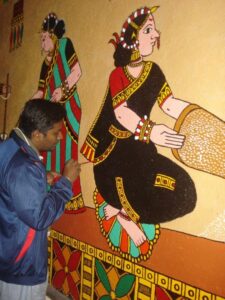
A chitrakathi performance begins with invocations to deities, followed by sung narration accompanied by instruments like the ektara or tambura. As the artist sings, he reveals each panel in rhythm with the story’s progression, maintaining suspense and engagement. The audience becomes part of the narrative; they react, question, and sometimes even join the chorus. In this way, Chitrakathi creates a living dialogue between art and community (Gaonkar, 2018).
Such performative storytelling once flourished across India such as in Patachitra of Bengal, Phad of Rajasthan, and Kalamkari of Andhra Pradesh. Yet, Chitrakathi’s uniqueness lies in its intimacy: it is a family art, passed from father to son, its repertoire memorized and retold across generations.
Cultural Memory and Community Identity
The Thakar community of Pinguli, classified as a Scheduled Tribe, historically serve as itinerant storytellers and ritual performers. Their performances were not just acts of devotion but also vehicles of education and social commentary. Through visual epics, they transmitted ethical values, folk wisdom, and historical events to largely non- literate rural audiences.
Chitrakathi thus functioned as a people’s archive , a visual library of the collective imagination. In its blending of music, story, and image, the art also mirrors the syncretic nature of Maharashtra’s cultural landscape. Much like the Kirtankar or Dashavatari traditions, it binds the community through shared performance and faith (Google Arts & Culture, n.d.).
Today, the art stands as a marker of Thakar identity. Despite the pressures of modernization, the few remaining artists view their practice as both inheritance and responsibility, a thread connecting them to their ancestors and to the larger narrative fabric of Maharashtra.
From Courtyard to Museum
Changing Contexts of Practice With the decline of traditional patronage in the twentieth century, Chitrakathi began to lose its audience. Rural fairs, temple festivals, and religious gatherings that once sustained the art gradually faded. Cinema, radio, and later television transformed how stories were consumed. Performers who once traveled between villages found fewer listeners and, consequently, fewer livelihoods (Times of India, 2017).
In response to these changes, the art shifted from performance to preservation. The establishment of the Thakar Adivasi Kala Aangan in Pinguli by artist Parashuram Gangawane marked a turning point. The center functions both as a museum and a living workshop where scrolls, puppets, and traditional musical instruments are preserved, demonstrated, and taught. Through collaborations with cultural bodies and universities, the museum seeks to record oral repertoires, digitize scrolls, and train younger artists (Gaonkar, 2018).
However, this institutional revival also raises questions: when an art rooted in community storytelling moves to museum walls, can it retain its soul? What is preserved, the object or the experience? The answer may lie in finding a balance between conservation and continued practice.
Materiality and Technique
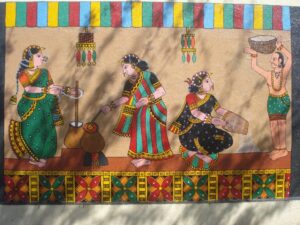
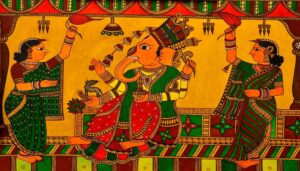
The Aesthetic Dimension Chitrakathi paintings are made on handmade paper coated with natural adhesives like tamarind seed paste. The artists use natural pigments derived from minerals and plants such as ochres, indigo, lampblack, and rice starch for white. The colour palette remains earthy, reflecting the Konkan landscape. Figures are drawn in strong outlines, and compositions follow a horizontal narrative rhythm suited for sequential storytelling.
Each scroll is unique. Some depict divine episodes like Sita’s abduction or Arjuna’s trials, while others capture local folk legends or moral tales. Interestingly, the paintings are never signed; they belong to the tradition, not to the individual. In this sense, authorship in Chitrakathi is communal and a reflection of shared creativity and inherited knowledge.
Today, younger artists experiment with new materials and themes using acrylics or paperboard, depicting modern issues such as environmental awareness or migration ,showing how traditional art continues to evolve while keeping its roots intact (Gaonkar, 2018).
Revival and Preservation Efforts
Several institutions and cultural organizations have recognized the need to safeguard Chitrakathi as a part of India’s intangible cultural heritage. The Indira Gandhi National Centre for the Arts (IGNCA) and the Indian National Trust for Art and Cultural Heritage (INTACH) have supported documentation and exhibition projects.
Workshops, residencies, and art fairs have provided exposure and income to traditional artists. The Thakar Adivasi Kala Aangan now receives visitors from across India and abroad, turning Pinguli into a small but significant heritage destination. Schools and universities in Maharashtra have begun incorporating Chitrakathi into heritage education programs, linking folk art to local identity and sustainability.
Yet, challenges persist. Limited financial support, the lure of urban employment, and a lack of systematic training remain major hurdles. For Chitrakathi to thrive, revival must extend beyond preservation. It must integrate livelihood, education, and creative freedom for the community.
Chitrakathi and the Framework of Intangible Cultural Heritage UNESCO’s 2003 Convention for the Safeguarding of the Intangible Cultural Heritage defines such heritage as living traditions transmitted through practice, expression, and knowledge systems (UNESCO, 2003). Chitrakathi fits seamlessly into this framework. It is not merely an object-based art but an ecosystem of skills such as painting, narration, and music which is rooted in community interaction.
Preserving Chitrakathi, therefore, requires more than collecting its scrolls. It demands platforms for performance, inclusion of oral archives, and support for younger practitioners to sustain their cultural roles. As scholars note, safeguarding intangible heritage must focus on continuity rather than static conservation (Gaonkar, 2018).
If revitalized thoughtfully, Chitrakathi could become a model for other regional art forms facing similar decline, proving that tradition and modernity need not exist in opposition , they can sustain each other through adaptation.
Conclusion
The Scrolls Still Speak Chitrakathi of Pinguli is more than an art form . It is a living conversation between past and present. Within its painted scrolls lie centuries of storytelling, faith, and creativity, carried forward by generations of Thakar artists. Though modernity has changed its audience and context, the spirit of Chitrakathi endures in every performance, every pigment, every remembered song.
For Maharashtra and for India, it stands as a reminder that heritage lives not in monuments alone but in human voices, hands, and memories. Preserving Chitrakathi, then, is not an act of nostalgia ,it is a commitment to keeping culture alive in motion, rhythm, and imagination.
As the last few masters continue to sing before visitors at Pinguli’s museum courtyard, their scrolls still whisper the same ancient stories. The epics breathe once more, not through books, but through brushstrokes and song.
References
Gaonkar, M. (2018). Contemporary practices of Chitrakathi in the twenty-first century art market. Chitrolekha Journal on Art and Design, 2(2).
Google Arts & Culture. (n.d.). Chitrakathi art. Dastkari Haat Samiti.
Pinguli Chitrakathi Art. (n.d.). Thakar Adivasi Kala Aangan Museum documentation.
Times of India. (2017, November 5). A forgotten art of telling tales of yore via paintings.
The Hindu. (2022, February). Meet the Gangavane family, masters in Chitrakathi paintings, who want to make Sindhudurg the cultural hub of Maharashtra.
UNESCO. (2003). Convention for the Safeguarding of the Intangible Cultural Heritage.