
By Saiee Katkar
Introduction : The Sound of a Region
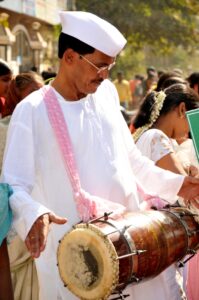
Maharashtra’s cultural landscape is incomplete without its folk musical instruments. These instruments do not merely provide rhythm or melody but serve as carriers of memory, belief, and collective identity. From the dholki in Tamasha ( Image 1 ) to the tuntune in Warkari gatherings, each sound reflects centuries of practice, craft, and devotion. They are deeply embedded in rituals, theatre, and festivals, turning ordinary gatherings into shared cultural experiences (Ranade, 2006).
Instruments Across Folk Traditions
Folk traditions across Maharashtra are marked by distinct instruments. In Powada, the heroic ballad form, instruments such as the dhol, sambal, and tuntune create urgency and valor. Tamasha performances rely on the dholki and lejhim for rhythm, while the harmonium and cymbals add layers of sound (Deshpande, 2012). Gondhal rituals, dedicated to deities like Bhairava and Bhavani, use nagaras and ghungroos to invoke divine presence. In the Warkari tradition, the ektara, chipli, and mridanga dominate, their repetitive rhythms guiding devotional singing and abhangas. Tribal communities, including the Bhils and Gonds of Vidarbha, employ instruments like the tarpa and khanjari, integral to seasonal festivals and agricultural rituals
Craft Traditions and Materials
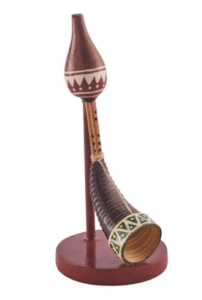
The making of these instruments is itself a cultural act. Craftsmen, often from hereditary artisan families, use locally available materials such as teakwood, jackfruit wood, goat skin, brass, and bamboo. The dholki, for instance, is made from seasoned jackfruit wood, its two sides covered with goat and buffalo skin for tonal contrast (Kumar, 2010). The tarpa, used in tribal dances, is made from a gourd and bamboo (Image 2), while the tuntune employs a dried gourd resonator and gut strings.Such craft traditions are passed orally, with techniques remaining largely undocumented.
This secrecy maintains both authenticity and sacredness, as many craftsmen believe the act of making is as spiritual as the act of playing
Instruments in Rituals and Community Life
These instruments are not confined to performance stages but permeate community life. During Ganeshotsav, dhol-tasha pathaks energize processions. In rural weddings, shehnai and dholki announce joy. Gondhalis use their instruments to create a sonic environment for the goddess to descend, blurring boundaries between ritual and theatre For the Warkari pilgrims walking to Pandharpur, the ektara and chipli are portable companions that allow constant singing of Vitthal’s name. Instruments thus mediate between the sacred and the social, becoming inseparable from both festival and everyday existence (Joshi, 2015).
Regional Variations Across Maharashtra
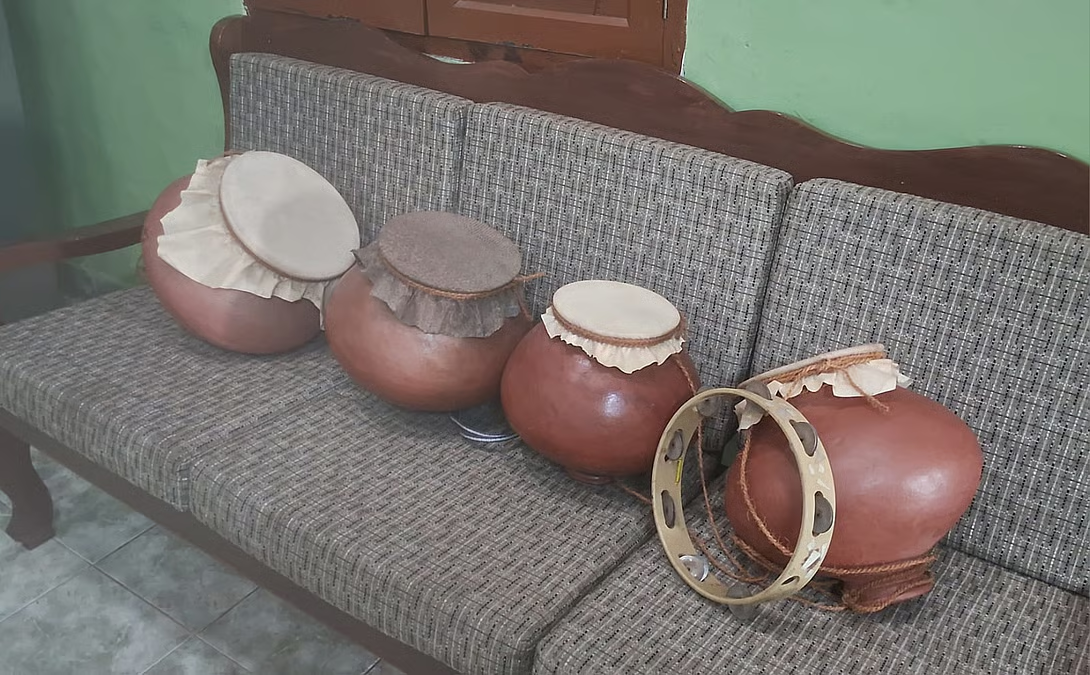
The state’s vast geography contributes to diverse instrument traditions. In Konkan, fisherfolk celebrations feature the dhol and ghumat (Image 3) ( membranophone instrument from Goa ) ,the latter made from an earthen pot covered with monitor lizard skin. Vidarbha’s tribal belt emphasizes the tarpa and dhol, linked to agricultural cycles. Marathwada, with its Sufi influence, showcases the use of the daf and halgi in qawwali-like performances. Western Maharashtra, home to Tamasha, highlights the dholki, tuntune, and harmonium. Each region thus preserves distinct sounds, shaped
by ecology, occupation, and historical interaction
Oral Histories, Myths and Symbolism
Oral traditions enrich the meaning of these instruments. In folk memory, the dhol is not just an instrument of war or festivity, but a call to collective action. Legends narrate that the tarpa was gifted to humans by forest spirits to celebrate harvests. The ektara, with its single string, symbolizes the soul’s singular devotion to God in the Warkari tradition. Such myths provide symbolic depth, ensuring that instruments embody more than functional roles.They become metaphors of resistance, devotion, and survival (Sontakke, 2018).
Changing Times and Challenges
The survival of these instruments is threatened by modern changes. Migration to cities, the dominance of electronic instruments, and shifts in entertainment have reduced their everyday presence. Younger generations, exposed to Bollywood and global music, often find little economic value in pursuing traditional instrument- making or performance (Patel, 2021). Tamasha troupes now sometimes replace the dholki with digital beats. The use of animal skin faces opposition from animal rights groups, leading to substitutes that alter traditional sounds. Yet, efforts by cultural organizations, government bodies, and researchers are helping revive interest. All India Radio recordings, TRTI Maharashtra archives, and folk festivals continue to
provide platforms for these endangered traditions
Conclusion
Keeping the Sound Alive The folk instruments of Maharashtra represent resilience. They are not just objects but living traditions that carry the stories, struggles, and joys of communities. Preserving them requires documenting craft practices, supporting local artisans, and creating spaces where these instruments can be heard in their cultural context. In a time when globalization threatens homogenization, the unique sounds of Maharashtra remind us of the value of diversity, memory, and rootedness.
Image References
● Image 1: A man playing the dholki in a procession in Maharashtra. Courtesy: Adarsh Upadhyay, Wikimedia Commons, 2012.
● Image 2: Tarpa instrument of the Warli tribe, Maharashtra. Courtesy: Asia InCH – Encyclopedia of Intangible Cultural Heritage.
● Image 3: Multiple ghumots showing construction and material variations. Courtesy: Sebanti Chatterjee, Down To Earth, 2025.
References
● Deshpande, S. (2012). Tamasha: Cultural history of a folk art form. Pune: Continental.
● Joshi, M. (2015). Ritual and performance in Maharashtra: Folk musical practices. Indian Journal of Performing Arts, 9(2), 45–60.
● Kumar, A. (2010). Craft traditions of Indian percussion instruments. Ethnomusicology Journal, 54(1), 77–94.
● Patel, R. (2021). Folk instruments in contemporary India: Challenges and transformations. South Asian Cultural Studies Review, 13(3), 110–128.
● Ranade, A. (2006). Music and musical thought in Maharashtra. New Delhi: Sangeet Natak Akademi.
● Sontakke, V. (2018). Oral narratives and symbolic meanings in Maharashtrian folk music. Journal of Folklore Studies, 12(1), 89–104.