
RAVNEET KAUR
“The jewellery worn by the women of the royal family; if I have no other means of light, then the shine of the diamonds and pearls worn by the women is enough to see….”
~ Jahangir, Tuzuk-e-Jahangiri
THE AL-THANI COLLECTION
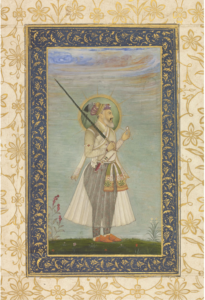
Figure I: Portrait of Shah Jahan, Mughal India, c. 1700. Sold for $62,500 on 19 June 2019 at Christie’s in New York
In 2009, Sheikh Hamad bin Abdullah Al Thani, a Qatari prince, was invited to the exhibition “Maharaja: The Splendour of India’s Royal Courts” by Amin Jaffer, a curator at the Victoria and Albert Museum, London. Later on, he would recount to Forbes that he was most impressed by a Mughal sapphire turban ornament, with emeralds and rubies arranged around a sapphire, given to Admiral Charles Watson by Nawab Mir Jafar. This marked the start of Sheikh Al-Thani’s interest in Indian jewellery, and over time, Indian articles of jewellery, jewelled objects and art found their way to the illustrious and encyclopaedic Al-Thani collection alongside other rarities from the world, be it Mayan jade masks or Ming porcelain.
By 2019, Sheikh Al-Thani had curated a magnanimous collection of Indian articles that were auctioned at Christie’s New York, known as Maharajas and Mughals Magnificence, and fetched 109 million US dollars – the highest for any auction of Indian art and jewelled objects, second highest for a private collection. The auctioned pieces ranged from Mughal daggers, anklets, huqqa mouthpieces to Nawanagar jighas (turban ornaments), from gulabpash (rosewater sprinkler) to uddharane (ritual spoon) and Tipu Sultan’s “magic box”. It also included 20th-century Cartier collaborations with Indian royals like the Patiala ruby choker.
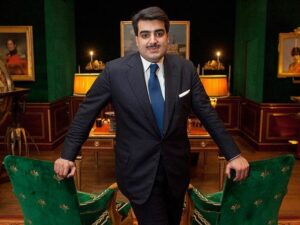
Figure II: Sheikh Hamad bin Abdullah Al Thani. Richard Pohle The Times. Christie’s. (Inside The World’s Greatest Private Jewelry Collection: The Maharaja Treasures Of Sheikh Al-Thani https://share.google/Q9nu8oWeHnqrDtlwN)
MUGHAL JEWELLERY: A HISTORY
Geographically, India has been blessed with an abundance when it comes to jewellery making. The Golconda mines yield some of the finest diamonds in the world, Kashmir has its sapphires, and Baroda provides pearls. Whatever was left was imported through India’s extensive trade routes – emeralds from Colombia via Goa, turquoise from Iran, spinels from the Badakhshan region, and some diamonds from Madagascar too (Deeba, 2022).
On the other hand, over centuries, jewellers and lapidaries found their way into the subcontinent through patronage. Dr. Deeba (2022) notes the patronage given to jewellers under the Mughals in the royal Karkhanas, especially from the reign of Akbar (c. 1542-1605), as the Ain-e-Akbari mentions ornaments being prepared in factories near the palace. Moreover, Abul Fazl informs us that “a treasurer was appointed solely for the manufacture of the ornaments and was appointed to assist them” and of the inspection of these jewellers.
André Wink, a notable scholar of medieval and early modern India, in Akbar (2012) writes that “the Mughal emperors encouraged Indian and Persian artists to develop new jewellery making ideas that were trained under patrons’ discerning eyes. These articles created new designs with the help of Indian and Persian styles, and the fusion of these designs led to the emergence of a unique style known as Mughal jewellery.” This becomes true as Mughals brought nephrite jade with them from Central Asia, and the newer sensibilities that were specifically attached to Mughal jewellery – be it spinel stones or the significance attached to jewelled inkwells and wine cups. Mughal craftsmen were also the first to combine Kundan, a traditional Indian jewellery making, with enamelling.
Kundan is a gem-cutting technique which uses pure 24-carat gold in the form of finely beaten foil – Kundan. In the process, the base is first made of gold, where cavities are left for adding gemstones. The gems are set with the help of surmai, a mixture of shellac and antimony, which holds them in place. Later on, Kundan is added to fill the gaps between the gem and the setting. Kundan is used to embellish many articles of jewellery – necklaces, bangles and jewelled objects like inkwells, paan boxes, hookahs, perfume bottles and culinary pieces like bowls and spoons.
Another technique used was – minakari. Minakari was originally a Persian art form, as in Farsi, ‘mina’ or ‘minu’ meant heaven and ‘kari’ means work on an object. The Mughals brought it with them and popularised it in the Indian subcontinent. Minakari is a form of enamel painting used for fine jewellery making; earlier it was done on gold, but over time other metals like silver and copper were also used. It was and still is done on the reverse side of Kundan jewellery. It is a time-consuming art, though significant, as the technique introduced the use of several floral motifs on jewellery items.
Mughal craftsmen set ornaments with gems and precious stones, and for the first time, they added enamel to the back or the inner surfaces of ornaments, a technique possibly learnt from the Portuguese in Goa. This way gemstones were set into enamelled surfaces or into engraved gem materials like nephrite jade or rock crystal, “thereby adding hidden interest that only the owner or wearer knew about”.
Nephrite jade was introduced by the Mughals from Central Asia, which the jewellery makers combined with previously existing Indian jewellery-making techniques (MET, 2014). Nephrite jade is of various shades ranging from white to greenish black. The Mughal craftsmen carved the hard stone finely and turned it into anklets and wine cups.
Mughal jewellery made extensive use of diamonds, emeralds, polki (uncut diamond) and gemstones – agate, jade, pearls, tourmaline, topaz, and spinel stones. The spinel stones were a favourite of the Mughals, which are often erroneously taken for rubies. These spinels symbolised imperial power and divine right. Behnaz Atighi Moghaddam, the Head of Sale in the Islamic and Indian Art Department at Christie’s and an art expert, notes that specific symbolic meanings were attached to gems and colours. She says that “in Mughal jewellery, gemstones and colours had a spiritual significance. Rubies symbolised power, emeralds were thought to bring wisdom, healing and eternal life; while pearls represented purity and elegance.” Similarly, the colour red symbolised passion, blue meant tranquillity, while green stood for fertility. Amongst these, emeralds and spinels were the most revered and thus were engraved with names of emperors, messages and Quranic verses.
JEWELLED ARTICLES FROM THE AL-THANI COLLECTION
There’s no end to the extensive assemblage of Mughal jewellery. Apart from jewellery, the Mughals were great connoisseurs of jewelled objects – hookahs, inkwells, pen sets, wine cups, daggers, jewellery boxes and so on. These jewelled pieces were as significant as jewellery per se and were makers of rank, status and authority. Mughal miniatures greatly aid in the study of all this memorabilia and paraphernalia. Moghaddam also outlines how the miniatures help in enhancing our understanding of Mughal aesthetics – “we know about many of the traditions in Indian jewellery from surviving paintings of the period. Some illustrate the ways in which Mughal rulers and court officials liked to wear their jewels, while others depict rites of passage in Indian jewellery traditions.”
In the 2019 Maharajas and Mughal Magnificence auction from the Al-Thani collection, around 400 articles were auctioned. Part of the bid was the jewelled Mughal articles as discussed below.
A notable specimen is the Dagger (Kard) with European head – a 17th-century watered steel dagger, belonging to Jahangir and Shah Jahan, encased in a jade hilt and inlaid with gold. Inscribed in gold at the back reads – sahib qiran-i-thani – the Second Lord of the Conjunction. The feature of considerable interest is the European cherub, which may have been copied from a Goan ivory of Christ, possibly by a European lapidary at the Mughal court. William Robinson, Christie’s head of Islamic art, argues that it is quite unusual as Mughal craftsmen would have normally followed Islam’s strict prohibition of graven images, saying – “the dagger is one of the high points… It’s also one of the most understated.” The royal umbrella (chhatri) and fish (mahi) – imperial symbols -also appear on the blade.
The Zafar Takiya (crutch handle), literally meaning “victory pillow”, was a short crutch put under the armpit to lean while reclining, or was a sword or dagger with a crutch handle used by royalty and Sufis alike. Like other items, the Mughal zafar takiya is made of jade and inlaid with diamonds and agate. It is in the shape of gazelle or ibex heads. The Christie’s catalogue reads that – “Holy men (faqirs) in India often leaned on a small crutch, Zafar Takiya (cushion of victory) while seated on the ground. These crutches are made of both simple and precious materials, and the handles were usually curved to fit comfortably under the arm.”
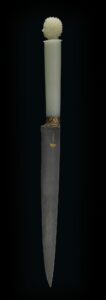
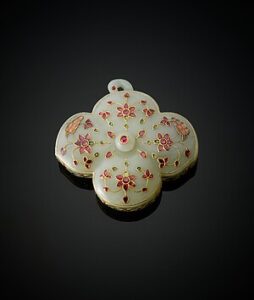
Figure III: Dagger (kard) with European Head. c. 1620-36. Christie’s. (https://localhost:5000/exhibitions/objects)
Figure IV: Dibbi (Box) with flowers and grapes. c. 1740-80. Christie’s. (https://localhost:5000/exhibitions/objects)
The Dibbi (Box) with grapes and flowers is a compartmented container made of jade, inlaid with pure gold wire, rubies, emeralds and crystal. Such containers were typically used for Paan. The Chauri (Flywhisk holder) is a fan for cool air. Made of jade with gold wire and rubies, a chauri also served as a symbol of honour associated with sovereigns and divinities. In the Mughal court, the attendant charged with waving the chauri was known as a chamardar and held an official position at court. The chamardar’s constant presence can be noted in Mughal miniatures.
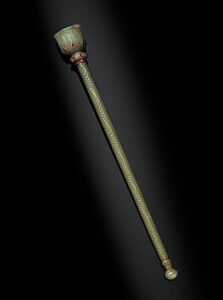
Figure V: Chauri (Flywhisk holder). c. 1700. Christie’s. (https://localhost:5000/exhibitions/objects)
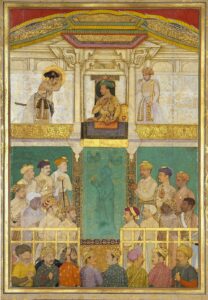
Figure VI: Jahangir receives Prince Khurram. c. 1635-40. Windsor Padshahnama. Notice the Chamardar on Jahangir’s right. Wikipedia. (https://en.wikipedia.org/wiki/Jahangir_Receives_Prince_Khurram).
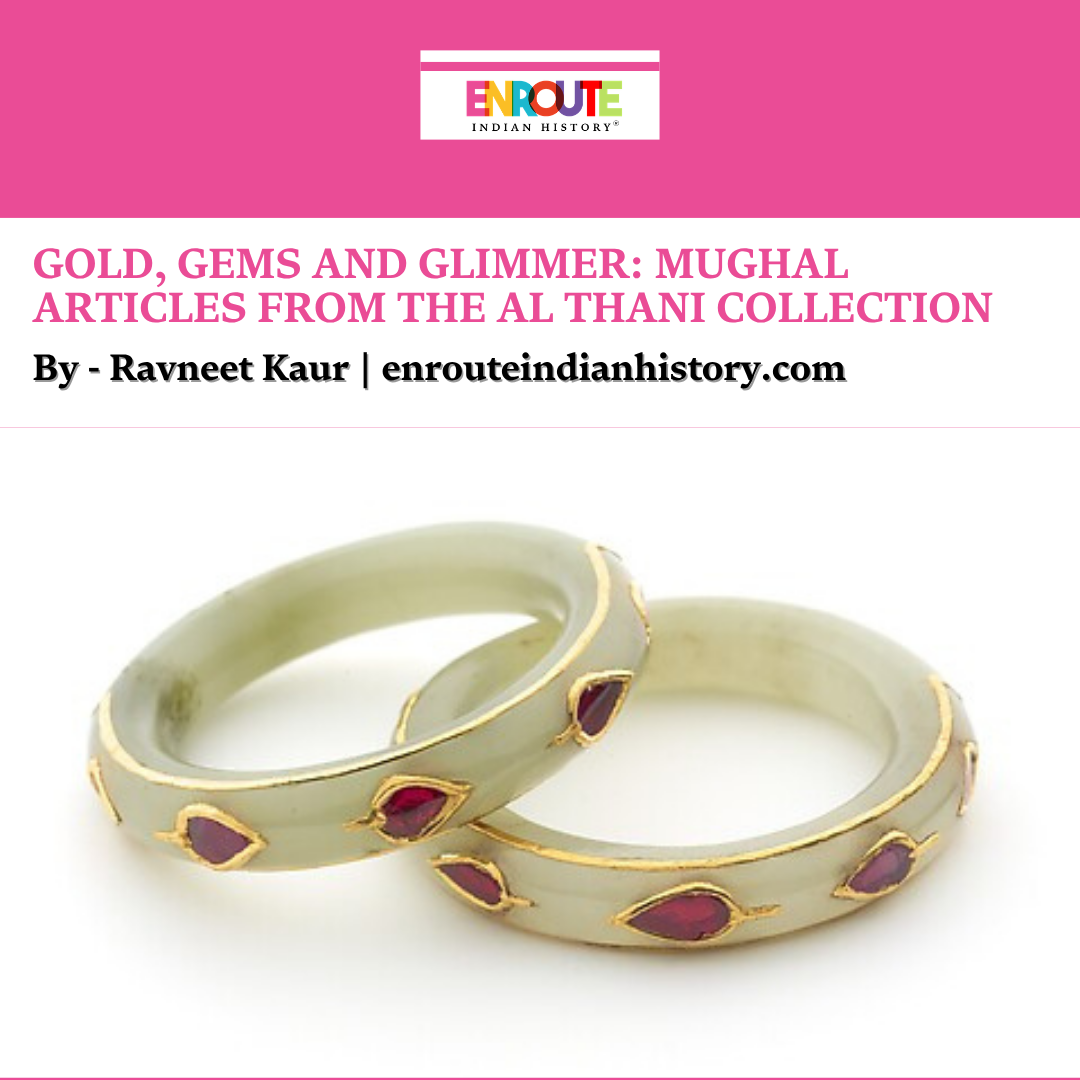
Another piece is the – Flask with arabesques and gold. It is made of rock crystal and inlaid with gold wire, rubies, and emeralds and has a gold collar, stopper, and foot. Rock crystal is noted for its translucence. A pair of falcon anklets is another jewelled article made of jade inlaid with gold and rubies. Falcons were a mark of royalty, and paraphernalia such as these anklets was specifically made to adorn and harness these highly prized creatures. Conversely, these also signified the bird’s noble status.
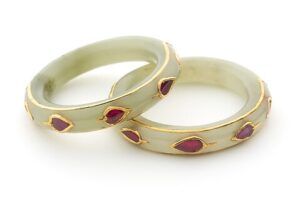
Figure VII: Pair of Falcon Anklets. c. 1800. Christie’s. (https://localhost:5000/exhibitions/objects)
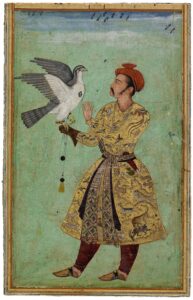
Figure VIII: Prince with a Falcon. c. 1600-05. Wikimedia Commons. (https://commons.wikimedia.org/wiki/File:Emperor_Akbar,_Los_Angeles_County_Museum_of_Art.jpg)
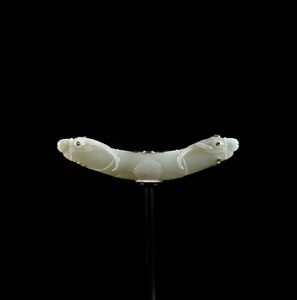
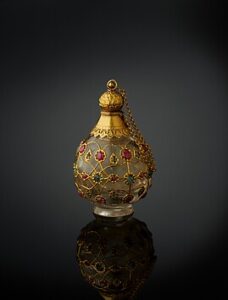
Figure IX: Zafar Takiya (Crutch Holder). c. 1650. Christie’s. (https://localhost:5000/exhibitions/objects)
Figure X: Flask. c. 1650-1700. Christie’s. (https://localhost:5000/exhibitions/objects)
Jahangir’s wine cup, part of the Al-Thani collection, is the oldest tableware linked to a Mughal emperor. The inscription on the jade cup mentions that the wine cup is for the exclusive use of Jahangir. The cup has a Sufi connection and mentions wine as one way of attaining the Divine. Wine cups had symbolic significance in Mughal courtly culture, visual imagery and Persian and Sufi literary traditions as they move beyond mere consumption and come to symbolise a state of ecstasy or ‘suroor’.
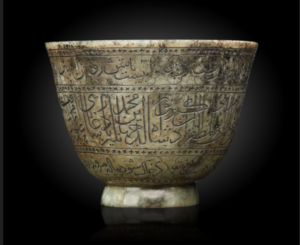
Figure XI: Jahangir’s Jade Wine Cup. c. 1607-08. The Al-Thani Collection. (https://thealthanicollection.com/recently-shown-highlights/wine-cup-of-the-mughal-emperor-jahangir)
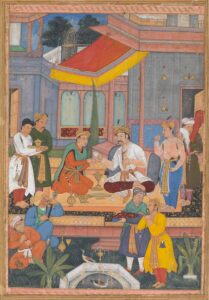
Figure XII: Interior of a Courtyard with Figures. c. early 17th century. Notice the exchange of the wine cup. The Metropolitan Museum of Art. (https://www.metmuseum.org/art/collection/search/445280)
One more article with significant symbolic value is the Gold pen case and inkwell set. The set is made of pure gold and jewelled with rubies, emeralds and diamonds. Moghaddam highlights that “jewelled pen cases and inkwell sets were symbols of knowledge, rank and power at court throughout the medieval Islamic period. This tradition continued into the Mughal world, where lavish pen cases and inkwell sets were given by emperors as a sign of the highest distinction”. In this light, the inkwell and pen transcend their utilitarian functions and become signifiers of rank, distinction and prestige.
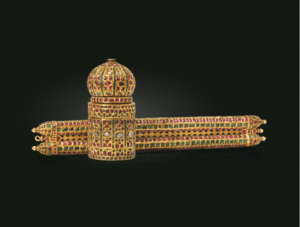
Figure XIII: Gold state pen case and inkwell (davat-i dawlat). c. late 16th century. Sold for $1,575,000 on 19 June 2019 at Christie’s in New York. Christie’s. (https://www.christies.com/en/stories/indian-jewellery-collecting-guide-016d3551bd0e4f6cbf9cc91464d7c460)
The Taj Emerald, a fitting end to this rather small list from the humongous assemblage, is a hexagonal-cut emerald and weighs approximately 141.13 carats. It is carved with stylised chrysanthemum, lotus and Mughal poppy flowers with a plain reverse. It is a possibility that it belonged to Shahjahan’s reign, though it has been named the Taj Emerald, as the floral foliage mirrors the decoration of the Taj Mahal. A marvellous creation, the Taj Emerald is one among the many testimonies of Mughal and Indian art, craftsmanship, and jewellery making.
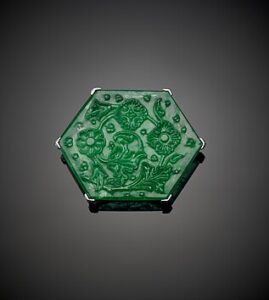
Figure XIV: The Taj Emerald. Christie’s. (https://localhost:5000/exhibitions/objects)
AN ENDURING LEGACY
In the Mughal court, jewellery was integral to the integration of rank and status – bangles were meant only for married women of the harem, while bejewelled jighas were for highest ranking royals and after the Mughal decline in the 18th century, were worn by regional royals as a symbol of elevated status. Similarly, the jewelled articles like inkwells, wine cups and chauri were a part of this wider paraphernalia of royal assertion, identity and divine right.
From introducing nephrite jade, Persian artforms and motifs to bringing in a whole new range of sensibilities and influencing styles, the Mughals have been a force to reckon with. Amber would go on to become a centre of minakari, while in the Deccan, a new syncretism would emerge in jewellery and arts. Further ahead in the early 20th century, fusion jewellery pieces made by European jewellery houses would draw from these Mughal influences and combine them with Art Deco.
Contemporary jewellery makers, too, have been unable to resist the charisma of Mughal grandeur. Jewellery designers like Viren Bhagat, JAR or Joel Arthur Rosenthal and Hanut Singh are noted for imbuing such splendour in their creations. So, when the next time you come across a piece of Kundan enamelled or with minakari on the reverse at a jeweller’s, or an article of jade or red spinels or maybe when you cross paths with a wine cup or inkwell in an old dusty thrift shop, remember that it might have a lot more to someone than it ever could to us.
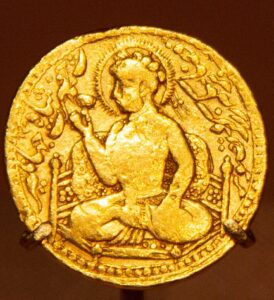
Figure XV: Portrait Coin of the Emperor Jahangir. c. 1614. The Metropolitan Museum of Art. (https://www.metmuseum.org/art/collection/search/444854)
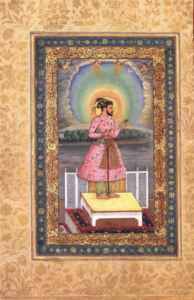
Figure XVI: : Shah Jahan on a Terrace, Holding a Pendant Set With His Portrait. Folio from the Shah Jahan Album by Chitarman. c. 1627–28. The Metropolitan Museum of Art. (https://www.metmuseum.org/art/collection/search/451270)
BIBLIOGRAPHY & REFERENCES
1.“Treasures From India: Jewels From The Al-Thani Collection”. The Metropolitan Museum of Art. October 27, 2014. (https://share.google/1fQJr4dIbTWsCSwmg). News Release.
2. Deeba, Farha. 2022. Lovers of Jewellery – The Great Mughals. NeuroQuantology Issue 22. Pg. 373-383. (373-383.pdf).
3. Collecting Guide: Traditional Indian Jewellery. Christie’s. (Traditional Indian jewellery collecting guide | Christie’s).
4. Brown, Abram. 2019. Inside The World’s Greatest Private Jewellery Collection: The Maharaja Treasures of Sheikh Al-Thani. Forbes. (Inside The World’s Greatest Private Jewellery Collection: The Maharaja Treasures Of Sheikh Al-Thani).
5. Traditional Indian Jewellery Making. 2024. Victoria & Albert Museum. (Traditional Indian jewellery making · V&A).
6. Maurya, Shrey. Kundan: Its History, Patronage and Making. Map Academy. (Kundan: Its History, Patronage and Making – MAP Academy).
7. Meenakari. Map Academy. (Meenakari – MAP Academy).
PHOTO CREDITS
1. Figure I: Portrait of Shah Jahan, Mughal India, c. 1700. Sold for $62,500 on 19 June 2019 at Christie’s in New York
2. Figure II: Sheikh Hamad bin Abdullah Al Thani. Richard Pohle The Times. Christie’s. (Inside The World’s Greatest Private Jewelry Collection: The Maharaja Treasures Of Sheikh Al-Thani https://share.google/Q9nu8oWeHnqrDtlwN)
3. Figure III: Dagger (kard) with European Head. c. 1620-36. Christie’s. (https://localhost:5000/exhibitions/objects)
4. Figure IV: Dibbi (Box) with flowers and grapes. c. 1740-80. Christie’s. (https://localhost:5000/exhibitions/objects)
5. Figure V: Chauri (Flywhisk holder). c. 1700. Christie’s. (https://localhost:5000/exhibitions/objects)
6. Figure VI: Jahangir receives Prince Khurram. c. 1635-40. Windsor Padshahnama. Notice the Chamardar on Jahangir’s right. Wikipedia. (https://en.wikipedia.org/wiki/Jahangir_Receives_Prince_Khurram).
7. Figure VII: Pair of Falcon Anklets. c. 1800. Christie’s. (https://localhost:5000/exhibitions/objects)
8. Figure VIII: Prince with a Falcon. c. 1600-05. Wikimedia Commons. (https://commons.wikimedia.org/wiki/File:Emperor_Akbar,_Los_Angeles_County_Museum_of_Art.jpg)
9. Figure IX: Zafar Takiya (Crutch Holder). c. 1650. Christie’s. (https://localhost:5000/exhibitions/objects)
10. Figure X: Flask. c. 1650-1700. Christie’s. (https://localhost:5000/exhibitions/objects)
11. Figure XI: Jahangir’s Jade Wine Cup. c. 1607-08. The Al-Thani Collection. (https://thealthanicollection.com/recently-shown-highlights/wine-cup-of-the-mughal-emperor-jahangir)
12. Figure XII: Interior of a Courtyard with Figures. c. early 17th century. Notice the exchange of the wine cup. The Metropolitan Museum of Art. (https://www.metmuseum.org/art/collection/search/445280)
13. Figure XIII: Gold state pen case and inkwell (davat-i dawlat). c. late 16th century. Sold for $1,575,000 on 19 June 2019 at Christie’s in New York. Christie’s. (https://www.christies.com/en/stories/indian-jewellery-collecting-guide-016d3551bd0e4f6cbf9cc91464d7c460)
14. Figure XIV: The Taj Emerald. Christie’s. (https://localhost:5000/exhibitions/objects)
15. Figure XV: Portrait Coin of the Emperor Jahangir. c. 1614. The Metropolitan Museum of Art. (https://www.metmuseum.org/art/collection/search/444854)
16. Figure XVI: : Shah Jahan on a Terrace, Holding a Pendant Set With His Portrait. Folio from the Shah Jahan Album by Chitarman. c. 1627–28. The Metropolitan Museum of Art. (https://www.metmuseum.org/art/collection/search/451270)