

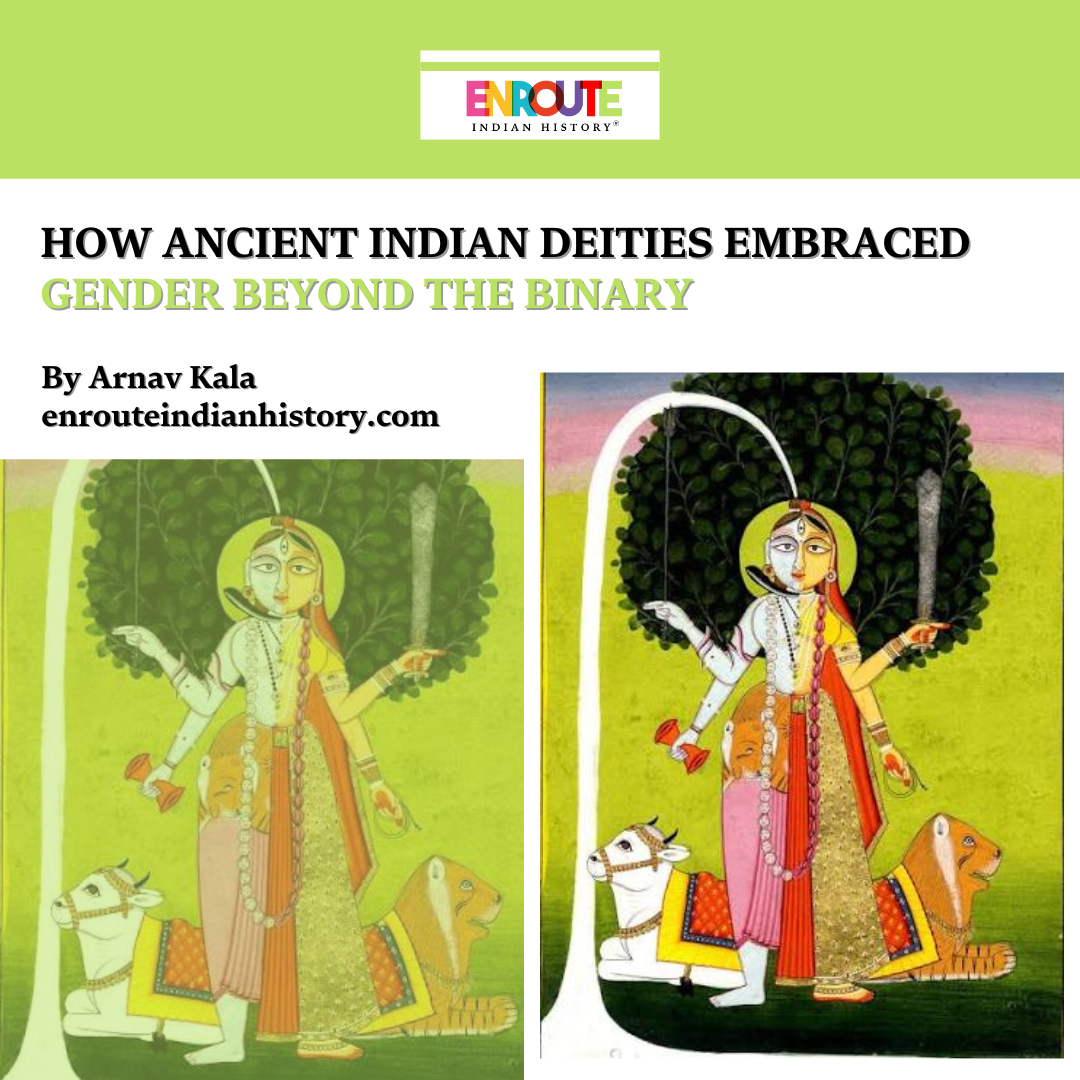
By Arnav Kala
India has long housed a vibrant spiritual tapestry where gender fluidity is neither aberrant nor modern, but a sacred element of divine expression. While the rise of freedom of expression of oneself in the form of movements like the LGBTQ+ including the transgender people is generally seen as a modern phenomenon, Indian religious traditions have given space to deities and rituals that transcend the male-female binary for ages. Among these, three figures stand prominently in both regional worship and social traditions: Bahuchara Mata of Gujarat, Renuka/Yellamma of South India, and Mohini, the enchanting avatar of Vishnu. The worship and origin of these deities have deep historical roots, evolving rituals, and sociocultural significance of these deities, especially in relation to third-gender and gender-divergent communities in India.
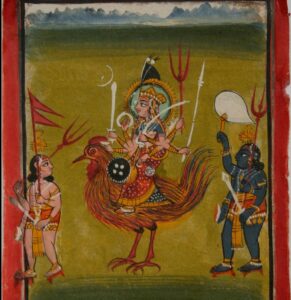
Bahuchara Mata: Patron of the Hijra Community
Bahuchara Mata is a goddess whose worship is central to the Hijra communities in western India, particularly in Gujarat and Rajasthan. Her cult has become a unique convergence point of gender, spirituality, and political identity for centuries.
According to one version of the myth, Bahuchara Mata was a Rajput woman who, upon being attacked by a bandit named Bapiya while traveling with her sisters, cut off her breasts and cursed the attacker to become impotent. To rid himself of the curse, Bapiya began to worship Bahuchara Mata, eventually becoming her devotee. This narrative established the goddess as a patron of those who abandon traditional masculinity.
Another version suggests that the goddess blesses only those who renounce sexual desire and live as celibates. This belief deeply informs the ritual castration and celibacy observed by many within the Hijra community.
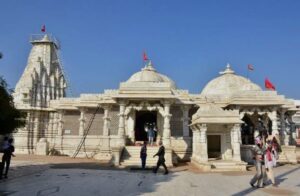
Bahuchara Mata’s principal temple is located at Becharaji in Gujarat, a major pilgrimage site especially for Hijras who visit seeking initiation and spiritual legitimacy. The rituals here often involve vows of celibacy, castration as a rite of passage, and wearing of female attire.
The temple priesthood was historically dominated by Hijras until the 19th century when Sayajirao Gaekwad of Baroda appointed Brahmins as official priests. However, Hijras still perform parallel rituals and often have their own gurus and spiritual networks outside the temple orthodoxy.
Anthropologist William Roscoe and historian Samira Sheikh have argued that Bahuchara Mata’s cult validates non-binary gender identities not just as tolerated anomalies but as sacred. The goddess, by myth and practice, transforms sexual nonconformity into a form of spiritual authority.
Hijra communities often undertake rigorous training and ritual initiation, forming kinship groups modeled after religious sects. The blessing of Bahuchara Mata is invoked during public blessings, birth ceremonies, and hijra weddings.
Renuka/Yellamma: Goddess of Marginality and Regeneration
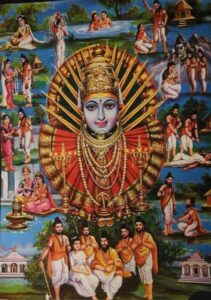
Renuka, also known regionally as Yellamma, is a mother goddess worshipped predominantly in Maharashtra, Karnataka, Telangana, and Andhra Pradesh. Her cult has deep roots in Dravidian, Vedic, and folk traditions and is closely associated with the marginalised, such as the Dalits, Devadasis, and transgender individuals.
According to Puranic lore, Renuka was the chaste wife of sage Jamadagni and mother of Parashurama. When she once lost her concentration while fetching water and thought of another man, Jamadagni ordered their son to behead her. Parashurama obeyed but later brought her back to life using divine power. This tale emphasizes Renuka’s association with cyclical violence, purity, and rebirth.
In local traditions, however, Renuka becomes Yellamma, a fertility goddess who blesses barren women, heals the sick, and protects the vulnerable. The transformation from Renuka to Yellamma represents the shift from Brahmanical chastity to tribal and folk power.
Jogappa Traditions
Equally important and closely tied are the Jogappas, male-to-female transgender individuals or gender-nonconforming males who devote themselves to Yellamma. These individuals undergo initiation rituals and lead lives of celibacy, music, and dance in service to the goddess. Unlike the Hijras of Bahuchara Mata, Jogappas are more closely integrated with folk traditions and rural temple festivals.
The most prominent shrine of Yellamma is located in Saundatti, Karnataka. Pilgrimages, especially during the Yellamma Jatre (fair), draw thousands of devotees. Ritual bathing, offerings of turmeric and vermilion, and ecstatic dances form the core of the celebrations.
Norman Yoffee and other archaeologists have suggested that the temple site may date back to the 8th century and possibly overlays older megalithic shrines. This hints at the antiquity and evolution of Yellamma’s worship from a local fertility spirit to a regional goddess of inclusion and resistance.
Mohini: The Gender-Shifting Avatar of Vishnu
Unlike Bahuchara Mata and Yellamma, Mohini is not a separate deity but an avatar of Vishnu, one of Hinduism’s principal gods. However, the unique aspect of Mohini is her embodiment of complete gender transformation, which is not just symbolic but also physical, which makes her one of the earliest representations of divine transgender expression.
Mohini first appears in the Samudra Manthana (Churning of the Ocean) episode in the Bhagavata Purana and Vishnu Purana. When the gods and demons churn the ocean for amrita (nectar of immortality), Vishnu assumes the form of Mohini—a stunningly beautiful woman—to distract the demons and distribute the nectar among the gods.
Another notable story involves Shiva uniting with Mohini, resulting in the birth of the god Ayyappa to protect against evil. This myth is particularly revered in South India, especially in Kerala and Tamil Nadu.
Mohini is worshipped more directly in South Indian traditions under the guise of Mahalasa Narayani, particularly among the Goud Saraswat Brahmins in Goa. Her temple in Mardol is a popular pilgrimage site and features iconography combining Vishnu’s weapons with feminine beauty.
Mohini is also invoked during the Koovagam festival in Tamil Nadu, where thousands of transgender individuals reenact the myth of Aravan and Krishna/Mohini. Participants symbolically marry Aravan (a warrior who sacrificed his life in the epic Mahabharata), mourn his death, and celebrate their divine femininity.
Mohini, as a deity, challenges the fixity of gender even among the divine. Her presence in canonical texts legitimizes gender fluidity within Vaishnavism. The temporary and strategic assumption of femininity by Vishnu reflects a divine endorsement of gender as performative and transcendent.
Conclusion
Together, Bahuchara Mata, Yellamma, and Mohini demonstrate that Indian traditions have historically accommodated and even sanctified third-gender and gender-nonconforming identities. These deities do not merely represent tolerance but signify divine transformation, social reordering, and ritual empowerment.
1. Bahuchara Mata offers sacred legitimacy to Hijras through celibacy and renunciation.
2. Yellamma empowers marginalized communities via fertility rites and folk rituals.
3. Mohini showcases the fluidity of divine gender, blurring boundaries between masculinity and femininity.
These divine figures have become cultural and spiritual anchors for various communities, especially the transgender, intersex, and queer populations in India. Even today, their worship provides platforms for social visibility, collective rituals, and affirmations of identity that transcend colonial, patriarchal, and heteronormative frameworks.
The narratives and worship traditions of Bahuchara Mata, Yellamma, and Mohini form a triad of sacred gender variance in Indian religion. Far from being marginal or transgressive, these traditions reflect an indigenous and deeply rooted theology of gender diversity. By examining them, one can see that Indian religious consciousness has long acknowledged the fluid and transformative potential of gender, not as an aberration, but as divinity itself.
Bibliography
1. Bahuchara Mata (Deity of Transgenders) Susan Deborah Selvaraj Department of English, M. E. S. College of Arts & Commerce, Zuarinagar, Goa, India
2. Norman Yoffee (2007), in Negotiating the Past in the Past: Identity, Memory, and Landscape in Archaeological Research
3. Mohini: Lord Vishnu’s female form in Hindu Culture – Prakriti Anand, Delhi University