
By Shreya Kamboj
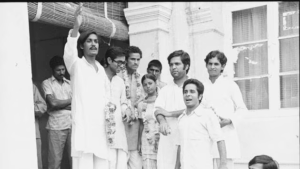
During every election season, the physical landscape of the University of Delhi is transformed by political expression, as posters from various student groups cover the campus walls, gates, and notice boards. The atmosphere is charged with activity as campaign rallies, complete with loudspeakers, pamphlets, and rousing speeches, make their way through the grounds. At the same time, party workers actively pull students into vigorous debates surrounding critical social and political issues. Beyond elections, public spaces within the University are frequently occupied by protests, signature campaigns, and vocal demands for policy changes.
This dynamic political environment is not a new development but is the proud continuation of a tradition that has profoundly shaped the University since its earliest years. Established in 1922, Delhi University was formed by unifying a group of colleges that already possessed strong intellectual and political foundations, with many being actively engaged in nationalist causes. For this reason, from its very inception, the university became a unique institution where serious academic pursuits and sharp political awareness were meant to develop side by side. This paper aims to examine that rich history, beginning with the political context of Delhi in the early twentieth century, followed by the University’s foundation, and its significant role during key moments of India’s freedom struggle.
Historical & Political Background of Delhi
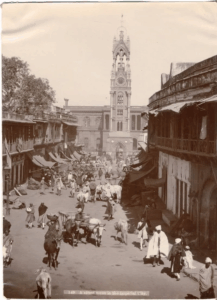
Delhi’s unique political character in the early twentieth century stemmed from its layered history as a symbol of imperial authority. As the former Mughal capital, its landscape was saturated with the legacy of past power, from the Palace to the Jama Masjid. (Gupta 1981) The decision of the British to shift their imperial capital from Calcutta to Delhi in 1911 was a calculated political act, an attempt to legitimize their rule by appropriating the historical seat of Indian sovereignty, a city whose “association with power… made it attractive to successive conquerors”. (Geva 2022) This move transformed Delhi into the nerve center of both colonial administration and the burgeoning nationalist movement.
The political climate in the city was increasingly charged. A growing nationalist press, with numerous Urdu newspapers, fostered a new public consciousness and became a platform for criticizing the establishment. Public spaces became arenas for symbolic protest; political gatherings were frequently held in the gardens around the Town Hall, and Chandni Chowk served as a major artery for processions and demonstrations. This environment of political awakening was fertile ground for youth activism. While there had been earlier attempts to create student federations, it was the Non-Cooperation Movement of the early 1920s that first saw large-scale student participation through forums like youth leagues and debating societies. (Sinha 2022) This movement, which drew students into mainstream national politics on a massive scale for the first time, set the stage for the politically conscious environment into which Delhi University would be born.
Founding of Delhi University
The idea for a university in Delhi originated with the transfer of India’s capital from Calcutta to Delhi, though it took a decade to come to fruition. Initially, the British administration, noting the precarious state of the city’s two private colleges, St. Stephen’s and Hindu College, planned to establish a government college that could evolve into a small university. However, this plan was shelved due to World War I.
The idea for a university in Delhi originated with the transfer of India’s capital from Calcutta to Delhi, though it took a decade to come to fruition. Initially, the British administration, noting the precarious state of the city’s two private colleges, St. Stephen’s and Hindu College, planned to establish a government college that could evolve into a small university. However, this plan was shelved due to World War I.
Following the war and the influential recommendations of the Sadler Commission for unitary, teaching universities, the plan was revived and reshaped. The focus shifted from a single government college to creating a comprehensive, modern university for the imperial capital. This decision was driven by significant political urgency. Education Member Sir Muhammad Shafi and other officials argued that establishing a government university was essential to “forestall the non-cooperators who were contemplating a national university in Delhi”. The fear was that a nationalist institution in the capital would pose a “serious mischief,” and a state-sponsored university would prove the government’s earnestness in providing for India’s educational needs, effectively taking “the wind out of their sails”. (Basu 1986)
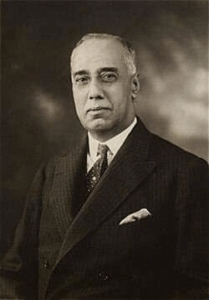
Despite financial concerns and opposition from some European members of the Viceroy’s Council, the Delhi University Bill was passed by the Legislative Assembly on February 22, 1922, and received the Viceroy’s assent on March 5, 1922. The Act came into force on May 1, 1922, officially establishing the University of Delhi. The new university began by integrating the city’s existing institutions, St. Stephen’s College, Hindu College, and Ramjas College, as its first constituent colleges. For instance, Hindu College, in particular, was a hotbed of revolutionary activity, serving as a center for both the Swadeshi and Quit India movements. Its establishment on a foundation of existing private colleges ensured that the spirit of nationalism remained, as these constituent colleges were crucibles of the freedom movement. However, its future was immediately threatened when the Inchcape Retrenchment Committee recommended reconsidering the entire scheme on financial grounds. However, the university’s supporters rallied, and on March 19, 1923, the Legislative Assembly unanimously voted for the continuance of the university and committed to its funding from central revenue, securing its existence. (Basu 1986)
Student Activism and the Freedom Struggle
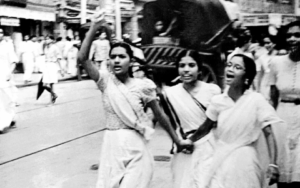
The politically charged environment of Delhi University’s constituent colleges translated directly into active, sustained, and often high-risk participation in India’s freedom struggle. Students were not merely passive recipients of nationalist ideology; they were on the front lines, organizing, protesting, and providing the manpower that fueled the major anti-colonial movements.
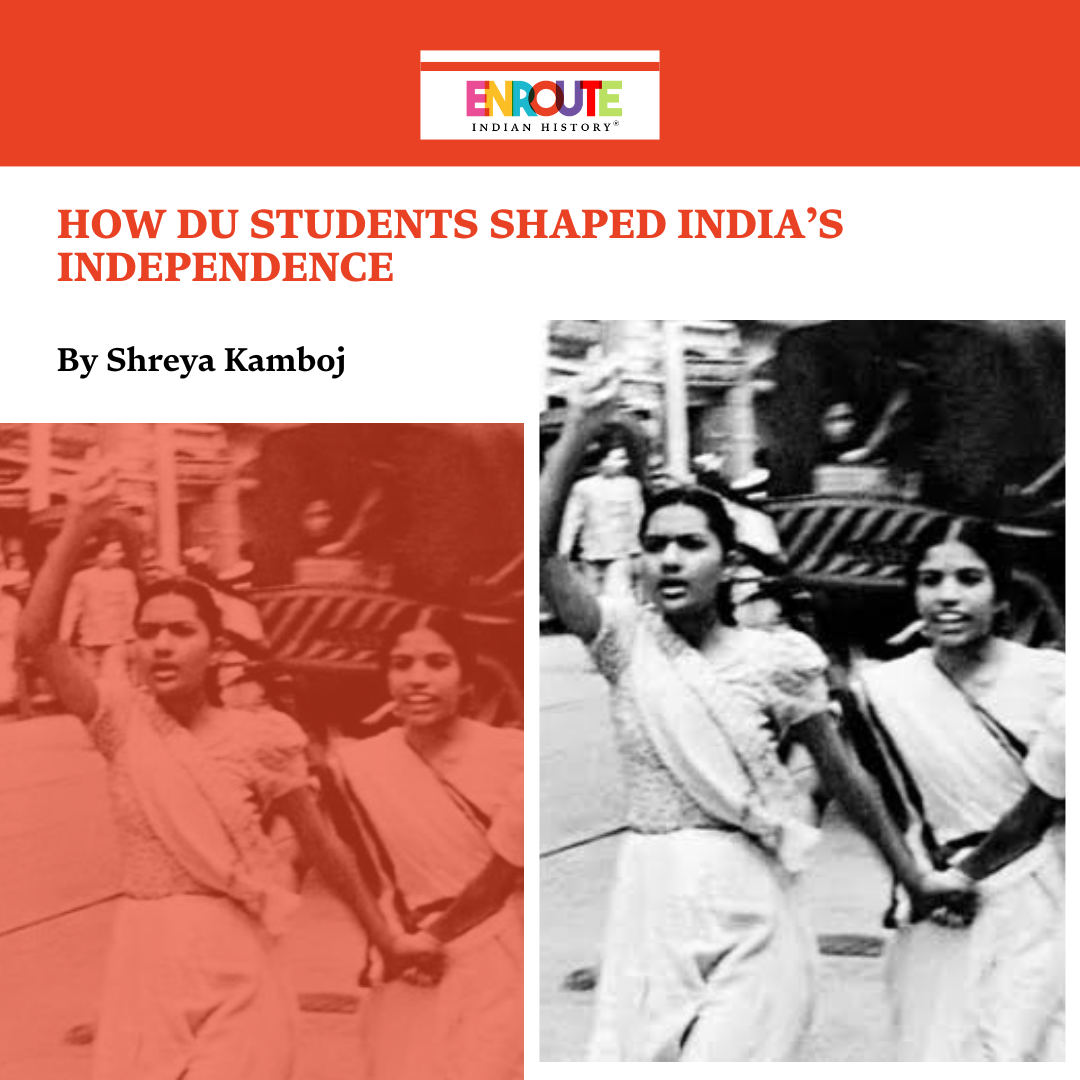
This activism began in earnest during the Non-Cooperation Movement (1920–22). This was the “first major agitation which witnessed large-scale involvement of students via forums such as youth leagues and debating societies.” (Sinha 2022) The students from Hindu College joined the protests, while St. Stephen’s College was also instrumental in nationalist activities. This trend intensified during the Civil Disobedience Movement, when students from both Hindu and St. Stephen’s participated in demonstrations against the Simon Commission. The Quit India Movement of 1942, however, represented the peak of student-led resistance. With senior Congress leaders imprisoned, students stepped into the leadership vacuum. They established sophisticated underground networks, coordinating strikes and participating in “unlawful picketing, processions and other civil resistance.” In a significant protest on August 10, 1942, a large group of Hindu College students marched to St. Stephen’s, where they were joined by students from Indraprastha College for Women, who resourcefully jumped over their college walls to join the procession through Chandni Chowk. (Basu 1998)
This sustained activism was channeled through various student organizations. While local, college-based groups were common, the formation of the All India Students’ Federation (AISF) provided a national framework. (Wilkinson 2019) Student-led publications, from college magazines to underground newsletters, were vital tools for disseminating anti-colonial ideas. The colonial government, recognizing the university as a hub of sedition, responded with severe crackdowns. Hostels at Hindu College and Ramjas College became nerve centers for revolutionary activity, leading to frequent and brutal police raids. Politically active students were placed under intense surveillance. The consequences were severe: a Hindu College board member, Master Ameer Chand, was executed in 1915; students from Ramjas College were arrested, with two, Ram Bihari Mathur and Saxena, sentenced to life imprisonment in the Andaman. As a punitive measure for this widespread activism, the British government stopped the wheat permit for several DU college hostels in 1942.
Connection with Prominent Freedom Fighters
The students of Delhi University did not operate in isolation; their activism was deeply intertwined with the national leadership of the freedom struggle. Several prominent freedom fighters were alumni of St. Stephen’s College, including Lala Har Dayal, a founder of the Ghadar Party, and other key figures like Amir Chand and Asaf Ali.
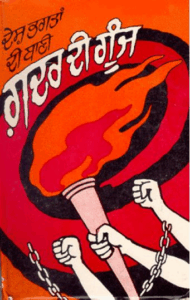
Direct interaction with national leaders was common and transformative. Mahatma Gandhi developed a close relationship with the university community, particularly through Sushil Kumar Rudra, the first Indian principal of St. Stephen’s College. Rudra invited Gandhi to stay at his official residence during his first visit to Delhi. Gandhi also visited Hindu College on January 25, 1930, accepting a donation of Rs 500 from the students to support the independence cause. Another influential figure at St. Stephen’s was C.F. Andrews, an English priest and close associate of Gandhi who taught at the college and helped foster a pro-independence consciousness.
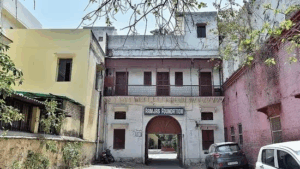
The colleges often served as safe havens. The revolutionary Chandrashekhar Azad was famously given shelter in the hostels of both Hindu College and Ramjas College, with faculty and students taking immense personal risks. This was facilitated by educators like Professor Nand Kishore Nigam of Hindu College, the hostel superintendent, who was later jailed for his role in supporting the freedom fighters. In a remarkable testament to its national importance, Ramjas College’s Governing Body was chaired for a time by Dr. B.R. Ambedkar.
Intellectual and Cultural Contributions to Nationalism
Beyond direct political action, the intellectual and cultural life of Delhi University was a powerful engine for nationalism. The campus was alive with activity that fostered anti-colonial thought and patriotic sentiment through creative and academic expression.
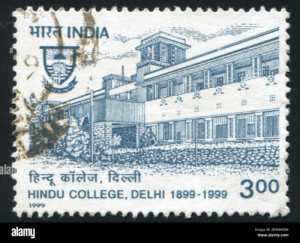
The Hindu College Parliament, established in the 1920s, was a pioneering model for democratic governance, complete with its own “Prime Minister” and “Leader of the Opposition”. It served as a critical forum where students not only debated pressing political issues but also hosted national figures like Jawaharlal Nehru, Maulana Abul Kalam Azad, and Sarojini Naidu, with Annie Besant and M.A. Jinnah as honorary members. This unique institution was a training ground for future citizens of a free India.
The intellectual environment was also shaped by institutions like Zakir Husain Delhi College, which traced its origins to a late 17th-century madrasa. In the 19th century, it became a key center of the ‘Delhi Renaissance,’ fostering a vibrant intellectual community that translated Western scientific and classical works into Urdu. Similarly, the founding of Indraprastha College for Women in 1924, in response to a call by Annie Besant, was a radical act rooted in the nationalist movement’s push for social reform and women’s education. Its students actively participated in the freedom struggle, forming a charkha (spinning wheel) association against the principal’s orders and fearlessly joining marches during the Quit India movement, despite threats of rustication and the withdrawal of government grants.
Conclusion
Delhi University’s role in the freedom struggle was not merely that of a participant but a consequence of its paradoxical creation: an imperial university built upon a foundation of fiercely nationalist colleges. This inherent contradiction defined its unique contribution. It was a place where the formal structures of colonial education were actively subverted from within. For instance, St. Stephen’s, an institution founded by a British mission, produced Ghadar Party founders and was led by a principal who became a close confidant of Mahatma Gandhi.
This legacy is more complex than simple activism; it is one of constant tension between the institution and the individual, between sanctioned debate and unsanctioned rebellion. The spirit that endures today is not just a vague political consciousness, but a direct inheritance of this foundational conflict. The university’s DNA is encoded with the memory of students jumping over locked gates to join protests, of faculty being jailed for their beliefs, and of its very resources being weaponized against the authority that established it. This history ensures that Delhi University remains not just a center of learning, but a perpetual and often turbulent stage for the nation’s most critical dialogues.
References
1. ‘A Brief Historical Account’. www.ststephens.edu. (Accessed on 9th August 2025). https://www.ststephens.edu/history/
2. ‘A Timeline of the Hindu College’. hinducollege.ac.in. (Accessed on 9th August 2025) https://hinducollege.ac.in/ab-history.aspx
3. Basu, A. (1986). ‘The Foundation and Early History of Delhi University’ from Delhi Through the Ages: Selected Essays in Urban History, Culture and Society. Oxford University Press
4. Basu, A. (1998). ‘University of Delhi: 1922-1997’. University of Delhi.
5. Bhargava, and K. Dutta, (2005). “Women, Education, and Politics: The Women’s Movement and Delhi’s Indraprastha College”. New Delhi, India: Oxford University Publishers.
6. Geva, R. (2022). ‘Delhi Reborn: Partition and Nation Building in India’s Capital’. Stanford, California: Stanford University Press
7. Goswami, T. (2024). ‘DU and independence Subtitle: The role of educational hub of India in freedom movement’. Enroute Indian History. (Accessed on 9th August 2025) https://enrouteindianhistory.com/du-and-independence-subtitle-the-role-of-educational-hub-of-india-in-freedom-movement/
8. Gupta, N. (1981). ‘Delhi between two empires, 1803-1031: society, government and urban growth’. Delhi : Oxford University Press.
9. Rakta, A. (2016). ‘The Glorious 100 Years of Ramjas College’. DU Beat. (Accessed on 9th August 2025). https://dubeat.com/2016/12/21/the-glorious-100-years-of-ramjas-college/
10. Sinha, S. (2022). ‘Politicization of Universities in a Postcolonial Context: A Historical Sketch of Student Political Activism in India’. Esboços Histórias Em Contextos Globais. v. 29, n. 51, pp. 232-252.
11. ‘The History and Archives of Indraprastha College for Women’. Sahapedia. (Accessed on 9th August 2025). https://www.sahapedia.org/the-history-and-archives-of-indraprastha-college-women
12. ‘The College History’. www.zakirhusaindelhicollege.ac.in. (Accessed on 9th August 2025). https://www.zakirhusaindelhicollege.ac.in/the-college-history/
13. Wilkinson, T. (2019). ‘Student Politics in British India and Beyond: The Rise and Fragmentation of the All India Student Federation (AISF), 1936–1950’. South Asia Multidisciplinary Academic Journal, 22. pp. 1-22.