
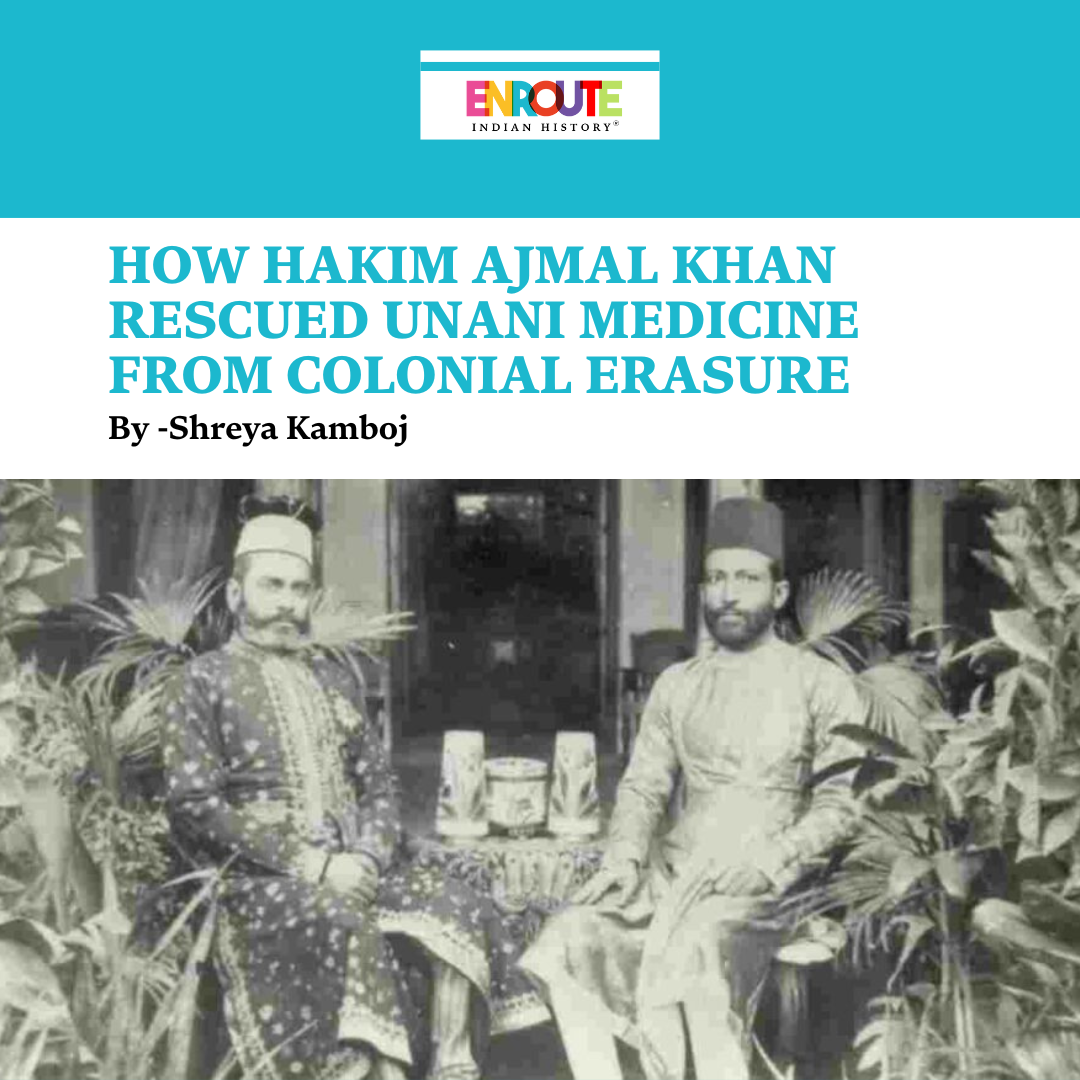
By Shreya Kamboj
The expansion of British rule in the Indian subcontinent brought with it a growing privilege for Western medicine, which increasingly positioned itself as the hallmark of scientific modernity. While the early colonial period accommodated indigenous practitioners, vaidyas and hakims, within subordinate roles in medical services, this space steadily narrowed as allopathy came to be seen as a more “rational” and “superior” alternative (Saini 2016; Harrison & Pati 1996). This shift undermined the intergenerational legacy and authority of traditional practitioners. In response, some adapted by incorporating Western methods, while others advocated for a revival and reform of indigenous systems. Crucially, this conflict was not simply about therapeutic differences but reflected deeper tensions around power, cultural identity, and epistemic legitimacy that unfolded within an era marked by rising nationalism and anti-colonial resistance (Awasthi 2024).
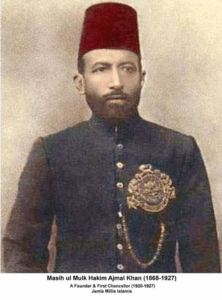
It is within this medical and political landscape that Hakim Ajmal Khan emerges as a pivotal figure. He was one of the most distinguished Unani practitioners of his time and led efforts to revive and modernize Unani and Ayurvedic traditions at a moment when they faced unprecedented marginalization under colonial authority (Dar 2018). More than a physician, Ajmal Khan was also a visionary nationalist and educational reformer, who was instrumental in founding the Ayurvedic and Unani Tibbia College and a key contributor to the establishment of Jamia Millia Islamia. This article explores his ideology, interventions, and enduring legacy within the broader socio-cultural and political currents of his time.
Origins & Flourishing of Unani in India
Unani medicine, as practiced in the Indian subcontinent, is the result of a long history of transmission, translation, and transformation. Its foundational roots lie in the Greek humoral theory, first developed by Hippocrates (c. 460-375 BCE) and later systematized by Galen (130-c. 210 CE). This body of knowledge was preserved and expanded upon during the Islamic Golden Age (8th to 14th centuries), particularly by Arab and Persian scholars such as Al-Razi (c. 865-925) and Ibn Sina (Avicenna, 980-1037). From Baghdad and Damascus, it travelled eastward, where its texts were translated and its methods were refined. Eventually, it arrived in India in the 12th century, during the rule of the Delhi Sultanate.
Its flourishing in India, however, was not merely a transplantation of foreign knowledge, but a remarkable example of intellectual and cultural syncretism. Here, Unani medicine encountered an already rich landscape of healing, primarily Ayurveda, and began to interact, adapt, and evolve. This process of cross-cultural fertilization led to a distinct Indo-Islamic medical tradition, with a growing body of Unani physicians, hakims, emerging as respected authorities in Mughal courts and across elite households.
By the 16th and 17th centuries, the Mughal period marked a high point in the institutional support of Unani. Emperors such as Akbar (r. 1556-1605), Shah Jahan (r. 1628-1658), and Aurangzeb (r. 1658-1707) patronized its practitioners and commissioned translations of Persian medical texts during their reigns. Hospitals (dar-ul-shifa), madrasas, and court-appointed hakims played a central role in embedding Unani within the fabric of Indian medical life. Families of distinguished hakims, such as the Sharifi family of Ballimaran in Delhi, established dynastic traditions of healing by combining clinical practice with philosophical scholarship.
By the 17th and 18th centuries, Unani medicine had become deeply Indian in character, not only in its pharmacopoeia, which increasingly used local herbs and minerals, but also in its social embeddedness. It became a system passed down through family lineages and integrated into vernacular literatures. Thus, long before colonial intervention began to question its legitimacy, Unani had already laid down roots that were both deep and expansive.
Colonial Encounter – British Attitudes Toward Unani
Under British rule, Unani medicine was increasingly marginalised as colonial authorities promoted Western biomedicine as the sole “rational” and scientific system. While early colonial administrators occasionally relied on indigenous knowledge, especially during disease outbreaks, this initial tolerance gave way to systematic exclusion. Institutions like the Calcutta Medical College (1835) promoted allopathy, and Unani practitioners (hakims) were denied recognition and dismissed as unscientific (Awasthi 2024; Saini 2016).
The British critique centred on Unani’s supposed lack of anatomical knowledge and empirical method. Colonial officials viewed Unani as “lacking scientific basis” and its metaphysical framework, like humoral theory, was seen as archaic. (Saini 2016) Worse still, the colonial and post-colonial era communalised indigenous systems, branding Unani as “Muslim” and Ayurveda as “Hindu”. This fractured their long history of shared development. (Awasthi 2024).
Yet, in the face of this delegitimisation, figures like Hakim Ajmal Khan began to push back, using print, institutions, and public platforms to reclaim Unani medicine as both scientific and nationalist. They set the stage for its revival in the early 20th century.
Hakims of Ballimaran and the Role of Hakim Ajmal Khan
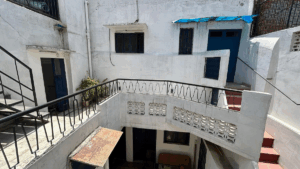
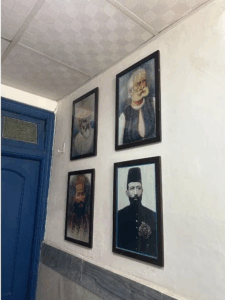
The Sharifi family of Ballimaran, in Old Delhi, represents one of the oldest lineages of Unani physicians in India. The family’s lineage traces back to Nasiruddin Khwaja Ubaidullah Ahrar of Tashkent (d.1490), an eminent Sufi with ties to Timurid rulers. Their reputation for nobility and culture was sustained through generations of learning. One of their most eminent figures, Hakim Sharif Khan (1722-1807), served as royal physician to Shah Alam II (r. 1759-1806), the Mughal emperor during a time of significant decline in imperial authority and growing British influence. He was also responsible for translating critical Arabic and Greek texts into Persian. The family mansion, located in Ballimaran, near Ghalib’s Haveli, became known as Sharif Manzil due to the influential personality of Hakim Sharif Khan, Ajmal Khan’s grandfather.
Hakim Ajmal Khan was born into this environment in 1868. He received his early education at home, where he learned Arabic and Persian, and went on to study the principles of Unani medicine under competent teachers of the time. It is evident that his training was rooted in the classical medical curriculum preserved by his family and the broader Unani tradition. His early promise as a physician led him to take over operations at the Sharifi Dawakhana in Ballimaran, where his reputation steadily grew. He had an exceptional diagnostic ability, and he kept himself informed of the latest developments that took place in the world of science. (Nizami 1988)
Hakim Ajmal Khan’s vision and efforts were multi-dimensional. He was a proud inheritor of Indian culture and traditions, and an admirer of knowledge regardless of its origin. He believed in the scientific development of the Unani system and aimed to integrate modern scientific methods into it. However, influence from Western medicine was limited and did not extend to basic principles. (Dar 2018) Crucially, he justified this integration not as an admission of Unani’s inherent deficiency, but by arguing that the need arose from the “neglect of Unani’s own texts,” implying that Unani inherently possessed the capacity for such knowledge. (Dar 2018)
He supported the Hindostani Dawakhana for drug production, pharmacy training, and funding medical education. Under chemist Dr. Salimuzzaman Siddiqui, the research unit validated Unani herbs like Rauvolfia serpentina, from which compounds such as ajmaline were isolated. Ajmal Khan’s approach addressed colonial doubts about Unani by using scientific tools to prove its effectiveness. He encouraged hakims to think critically, not follow texts blindly, and grounded Unani in research-based practice. In the final phase of his life, in 1926, Ajmal Khan established the Majlis-i Tahqiqat ‘Ilmī, a council for systematic Unani research and reform. This late initiative reflected his enduring commitment to rooting Unani in critical inquiry and modern tools. But what made Ajmal Khan unique was not only his medical ability, but also his deep ethical commitment to treating all patients with equal care. C.F. Andrews, a British missionary and contemporary of Ajmal Khan, remarked that “he made no difference whatever between rich and poor, Hindu and Mussalman: all were treated alike and I noted specially the number of Hindu poor who received free treatment”.
Hakim Ajmal Khan as an Educational Reformer
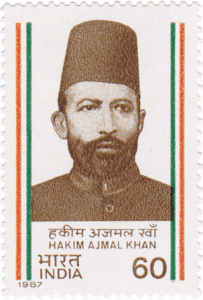
Inspired by Sir Syed Ahmad Khan’s advocacy of modern education, Hakim Ajmal Khan sought to revitalise Unani medicine through institutional reform. In 1908, he established the Anjuman Tibbiyya to manage the Madrasa Tibbiyya, which was later transformed into the Ayurvedic and Unani Tibbi College. Inaugurated in 1921, the college introduced subjects like anatomy and surgery to counter colonial critiques that Unani lacked scientific rigor. Its goals included improving indigenous materia medica, modernising pharmacology, and ensuring Unani’s professional recognition under evolving colonial medical laws. Ajmal Khan also founded the Madrasa Tibbiya Zanāna, a pioneering medical school for women, recognising the cultural barriers that prevented them from seeking treatment from male doctors. This institution combined healthcare delivery with women’s empowerment, which was remarkably progressive for its time. Beyond medicine, he was a co-founder of Jamia Millia Islamia, born out of the Non-Cooperation Movement as a nationalist alternative to colonial universities. He contributed both financially and ideologically to create a culturally rooted, modern institution.
Political Activism: Mobilizing for Legitimacy and Unity
Hakim Ajmal Khan played a key role in aligning indigenous medical reform with the nationalist movement. In 1910, he founded the All India Vedic and Unani Tibbi Conference, which brought together hakims and vaids to promote traditional systems and resist colonial marginalization. These conferences, attended by leaders like Gandhi and Azad, pushed for educational reforms and served as informal platforms for anti-colonial solidarity. He actively opposed the Medical Registration Act of 1914, which excluded traditional practitioners, and lobbied for institutional recognition of Unani medicine. In 1920, he returned the British title “Haziq al-Mulk” to protest colonial policies, a move praised by Gandhi.
Ajmal Khan held an extraordinary position in India’s freedom struggle as he served as the president of the Indian National Congress (1921), the Muslim League, and the Khilafat Committee. Gandhi called him a “great Musalman and equally great Indian” and valued his role in promoting Hindu-Muslim unity. He advocated interfaith harmony as a political necessity and urged Muslims to avoid cow slaughter to respect Hindu sentiments. In letters and speeches, he emphasized that lasting unity was essential for India’s progress. Thus, his political and social vision placed cultural unity at the core of national liberation.
Conclusion
Hakim Ajmal Khan’s work represents a clear and deliberate effort to bridge tradition with the demands of a changing society. His medical reforms, ranging from institutional development and curriculum changes to the promotion of pharmacological research, were rooted in a vision of Unani medicine as both culturally rooted and scientifically adaptable. His approach was not simply to defend indigenous knowledge, but to strengthen it through verification, professional training, and public trust.
At the same time, his political and social engagement placed him at a crucial juncture in India’s nationalist movement. His leadership across multiple national platforms and his consistent advocacy for Hindu-Muslim unity reflect a pragmatic and inclusive vision of political change. To defend a system of healing, for him, was to defend a way of knowing, a civilizational inheritance, and at times, a vision of the self. Today, his legacy continues through institutions like the Tibbiya College and the ongoing recognition of Unani under India’s healthcare system.
References
1. Ahmad, Saad. (2020). Hakim Ajmal Khan between Tradition and Modernity.
2. Ahmad, Ashfaque. (2024). Hakim Ajmal Khan (1868–1927), A Man of Determination for Renaissance of Indigenous Medicine. 1-11.
3. Andrews, C.F. (1922). Hakim Ajmal Khan A sketch of his life and career. Madras: G. A. Natesan.
4. Andrews, C.F.. (1926). Hakim Ajmal Khan, Eminent Mussalmans. Madras.
5. Awasthi, A.K. (2024). Healing Divides: How India Navigated Tradition and Modernity in Medicine. International Journal of Innovative Research in Technology, Volume 11, Issue 4. Pp. 543-547.
6. Dar, F. A. (2018). ‘Hakim Ajmal Khan and Unani Medicine: Ideas and Arguments’ in Hakim Ajmal Khan: A Man of Exceptions. Central Council for Research in Unani Medicine.
7. Harrison, M., & Pati, B. (1996). Health, Medicine and Empire: Perspectives on Colonial India, 2001; MN Pearson,‘The Thin End of the Wedge; Medical Relativities as a Paradigm of Early Modern Indian-European Relations’. Modern Asian Studies, (29), 141-70.
8. Nizami, Z.A. (1988). Hakim Ajmal Khan. Publications Division, Ministry of Information and Broadcasting, Govt. of India.
9. Osborn, D.K. (2007). The Sharifi Family Tradition: A Distinguished Family of Unani hakims. www.greekmedicine.net
https://www.greekmedicine.net/whos_who/Sharifi_Family_Tradition.html
10. Saini A. (2016). Physicians of colonial India (1757-1900). Journal of family medicine and primary care, 5(3), 528–532. https://doi.org/10.4103/2249-4863.197257