
By Saiee Katkar
Where the First Grains Took Root
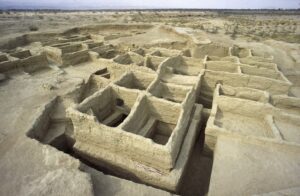
The story of South Asian food culture does not begin in a lively kitchen or a crowded marketplace. It begins in a quiet settlement where people were still learning to rea the soil. Around 7000 BCE, the small community of Mehrgarh ( Image 1 ) located at the opening of the Bolan Pass, became the earliest confirmed farming settlement in South Asia (Jarrige, 1995). Wheat and barley appeared here not as perfected agricultural packages, but as choices made through curiosity and caution.
The archaeobotanical remains capture this early experimentation. Some grains are small and hesitant, others fuller and more promising. This suggests that farmers wer selecting seeds without complete certainty about which would flourish (Costantini, 1983). In these early decisions, the first threads of South Asia’s food identity were woven. What we now know as a long tradition of breads, porridges, and seasonal rhythms began with these humble grains in homes surrounded by open fields and mud-brick walls.
The Earliest Evidence of Farming in South Asia
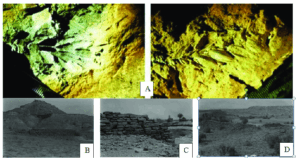
Mehrgarh holds the earliest confirmed evidence of wheat and barley cultivation in the region. ( Image 2) Before this settlement, there were no verified farming communities in South Asia. People moved frequently, relying on wild plants and pastoral herding (Jarrige and Meadow, 1980). The arrival of cereals transformed this landscape.
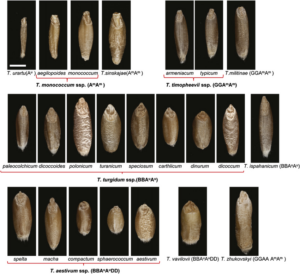
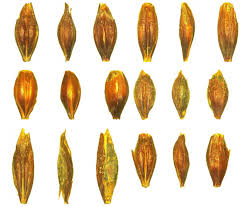
The grains found at the site show clear signs of cultivation.( Image 5 ) Their size is more regular than wild varieties ( Image 6 ), spikelet bases hint at early domestication traits, and storage features appear within households (Costantini, 1983). These communities were not only gathering. They were planting, tending, harvesting, and storing crops. With the ability to store food, families could plan for seasons, raise children in permanent houses, and pass down agricultural knowledge. This shift mark the true beginning of a South Asian food culture.
Farming Begins With Questions, Not Certainty
One of the most powerful insights from Mehrgarh is that farming was learned through experience. It was not simply borrowed from elsewhere and applied directly. The ecofacts reveal this learning process.
Variation in grain size suggests that early farmers were still exploring which seeds could survive the winter winds and respond well to the soils of the Kachi Plain (Costantini, 1983). Differences in chaff and rachis fragments show that some plant still carried wild traits, while others were changing slowly through human selection. This indicates that people were observing and choosing varieties over many seasons (Fuller, 2011). Storage pits sometimes contain burnt grain clusters, which may record moments when crops spoiled or were damaged by pests or moisture. Even these
mistakes contributed to agricultural knowledge.
For me, this is the emotional center of the story. Farming at Mehrgarh began with doubts and questions. Will this variety sprout in time? Will it survive cold nights? Will it last through storage? Every harvest offered answers that shaped the next planting season. This quiet and patient experimentation became the foundation of South Asia’s agricultural identity.
How Wheat and Barley Formed the First Food Culture
As cereals became dependable, the people of Mehrgarh shaped not only what they ate but how they organized their homes, divided labour, and planned their seasons.
Early Staples Take Shape
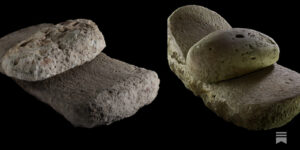
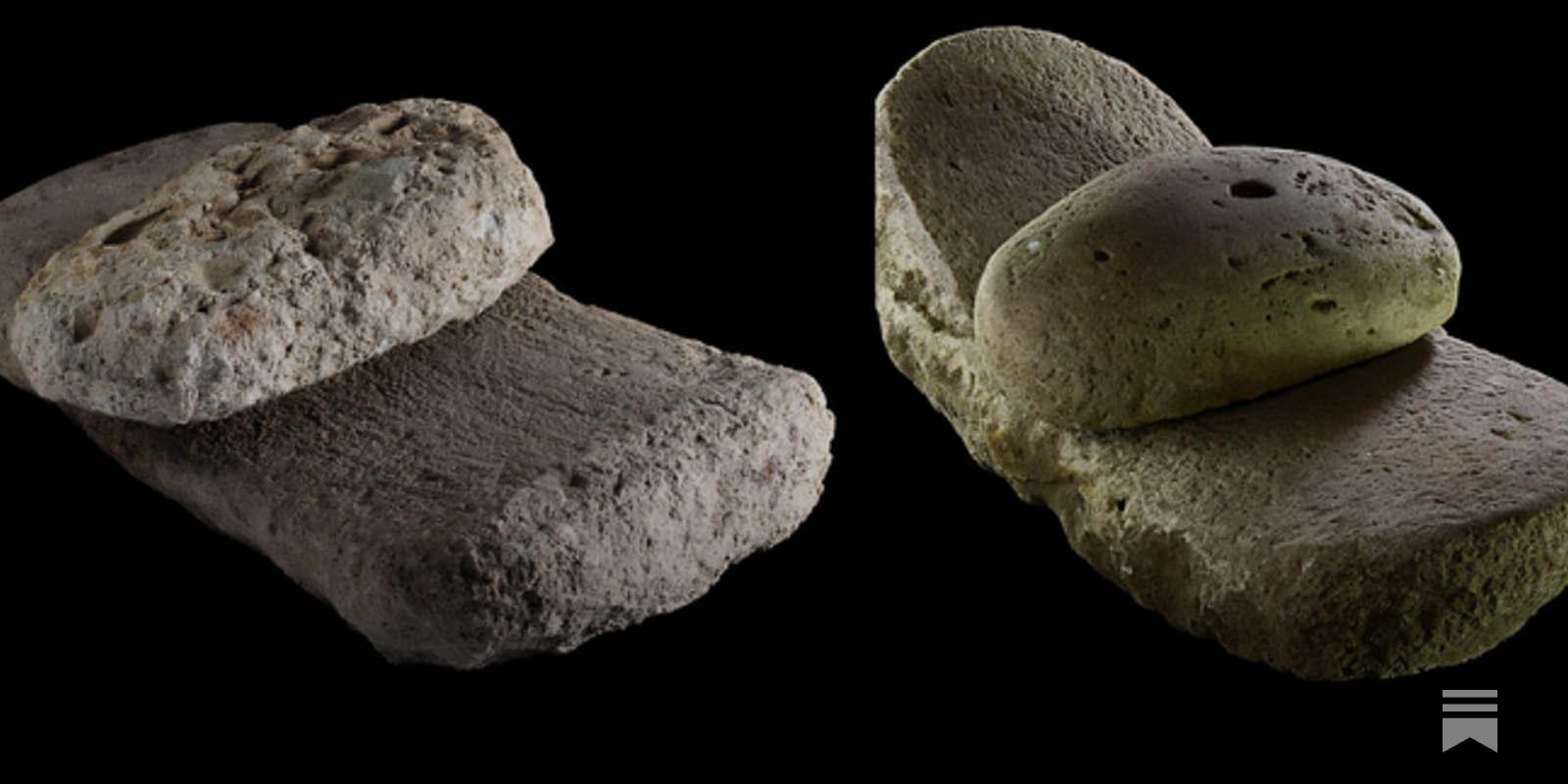
Grinding stones ( Image 3 ) found inside houses show that wheat was processed into flour and likely shaped into early flatbreads cooked on hearths (Jarrige, 1995). Barley, which tolerates difficult soil and climate conditions, was probably prepared as porridge or used in simple fermented forms. These foods formed the earliest daily meal routines, setting patterns that remain central to South Asian diets today.
The First Kitchens
The architecture of Mehrgarh reveals defined food spaces. Hearth, quern, ash layers, and dedicated processing rooms are found across households (Jarrige, 1995). These spaces are the ancestors of the Indian chulha and the family kitchen, where cooking acts as a daily anchor. Food shaped the layout of homes and influenced how familie interacted.
Seasonal Rhythms Begin
Wheat and barley introduced a new sense of time to the region. Wheat became the foundation of what would later be recognized as the rabi cycle. Barley established itself as a winter staple. These rhythms eventually grew into harvest celebrations, winter dishes, and agricultural calendars that continue across India today.
Community Labour Becomes Identity
Farming shaped community life. Flint sickles, processing floors, and grinding stones point to shared labour. Men harvested, women ground grain, and children winnowe (Meadow, 1996). These coordinated tasks encouraged cooperation and created patterns of food-related work that still echo across South Asian villages.
Why Mehrgarh Became the Cradle of Early Farming
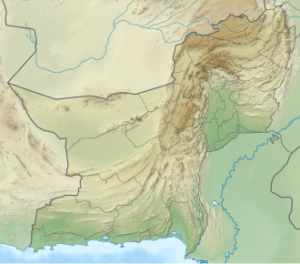
The Bolan Pass as a Natural Corridor ( Image 4 )
Mehrgarh’s position at the entrance of the Bolan Pass gave it access to ideas, seeds, and pastoral practices moving between the Iranian Plateau and the Indus plains. This natural corridor connected different ways of life and allowed new knowledge to settle long before formal trade routes developed.
Alluvial Fans and Seasonal Rivers
The alluvial soils of the Bolan River were rich and easy to work. Seasonal floods brought moisture suitable for winter crops, which meant that even without advanced tools or irrigation, families could raise cereals successfully.
The Ecotone Advantage
Mehrgarh lies between highlands suited for herding and lowlands suited for farming. This allowed communities to combine cereal cultivation with sheep and goat pastoralism (Meadow, 1996). This mixed economy created stability and resilience, a strategy seen in many later South Asian cultures.
Self-Sufficient and Stable Communities
Crops grew, herds expanded, and families built long-lasting homes. Houses were repaired and rebuilt in the same spots. Knowledge about farming and food storage passed from one generation to the next. Stability was the beginning of food culture. It was the ability to stay in one place long enough to create tradition.
What the Ecofacts Tell Us About Daily Life
The botanical remains found at Mehrgarh are small, but they speak clearly. Charred grains reveal deliberate harvesting and early domestication traits. Grain impressions in pottery and mud bricks indicate processing within homes. Weed seeds show the conditions of cultivated fields. Through these traces, it is possible to picture households arranged around processing floors, bins filled with surplus, and hearths where meals were prepared each day.
These remains reveal not just diet but rhythm. They show how seasons were felt, how work was shared, and how families shaped their lives around cultivation.
Conclusion: The Memory Held in a Single Grain
A single carbonized wheat grain from Mehrgarh holds a memory almost nine thousand years old. Darkened by fire yet still intact, it remembers a moment when farming was not certain, but hopeful. It remembers a family that planted it, harveste it, and stored it with belief in tomorrow. It marks the time when food became intentional, when planning replaced wandering, and when culture began to grow quietly inside a mud brick house.
From these small burnt kernels came the layered food culture of South Asia. The breads, porridges, festivals, and agricultural seasons that define the region trace their beginnings to the first farmers of Mehrgarh. These grains are not only ecofacts. They are the earliest heartbeat of a culinary identity that continues to thrive across the subcontinent.
References
Costantini, L. (1983). The beginnings of agriculture in the Kachi Plain. In South Asian Archaeology 1981 (pp. 29–40).
Fuller, D. Q. (2011). Pathways to Asian civilizations: Tracing the origins and spread of rice and rice cultures. Rice, 4(3–4), 78–92.
Jarrige, C. (1995). From Nausharo to Mehrgarh: The first farmers of the Indus Valley. Antiquity, 69(264), 76–88.
Jarrige, C. & Meadow, R. (1980). The antecedents of civilization in the Indus Valley. Scientific American, 243(2), 122–131.
Meadow, R. (1996). The origins and spread of agriculture and pastoralism in northwestern South Asia. In D. Harris (Ed.), The Origins and Spread of Agriculture (pp. 390–412).
Image 1 – https://en.wikipedia.org/wiki/Mehrgarh#/media/File:Mehrgarh_ruins.jpg
Image 2 – https://www.researchgate.net/publication/324006525/figure/fig2/AS:627773005647872@1526684156147/A-Evidence-of-Wheat-cultivation-at-the-remains-of-Mehrgarh-Balochistan1-B-Gabar.png
Image 3 – https://substackcdn.com/image/fetch/$s_!RbgL!,f_auto,q_auto:best,fl_progressive:steep/https%3A%2F%2Fanthropology.substack.com%2Fapi%2Fv1%2Fpost_preview%2F158052078%2Ftwitter.jpg%3Fversion%3D4
Image 4 – https://upload.wikimedia.org/wikipedia/commons/thumb/2/28/Pakistan_Balochistan_relief_map.svg/330pxPakistan_Balochistan_relief_map.svg.png
Image 5 – https://www.google.com/url?sa=i&url=https%3A%2F%2Fwww.researchgate.nt%2Ffigure%2FPhenotypic-Variation-in-Grain-Size-and-Shape-in-Ancestral-Wheat-Species_fig4_42975619&psig=AOvVaw1W86PicCYpfnuimqKNOG&ust=1764070517097000&source=images&cd=vfe&opi=89978449&ved=0CBUQjRxqFwoTCKC4svfYipEDFQAAAAAdAAAAABAE
Image 6 –
https://www.google.com/url?sa=i&url=https%3A%2F%2Fwww.researchgate.net%2Ffigure%2FPhenotypic-Variation-in-Grain-Size-and-Shape-in-Ancestral-Wheat-Species_fig4_42975619&psig=AOvVaw1W86PicCYpfnbuimqKNOG&ust=1764070517097000&source=images&cd=vfe&opi=89978449&ved=0CBUQjRxqFwoTCKC4svfYipEDFQAAAAAdAAAAABAE