
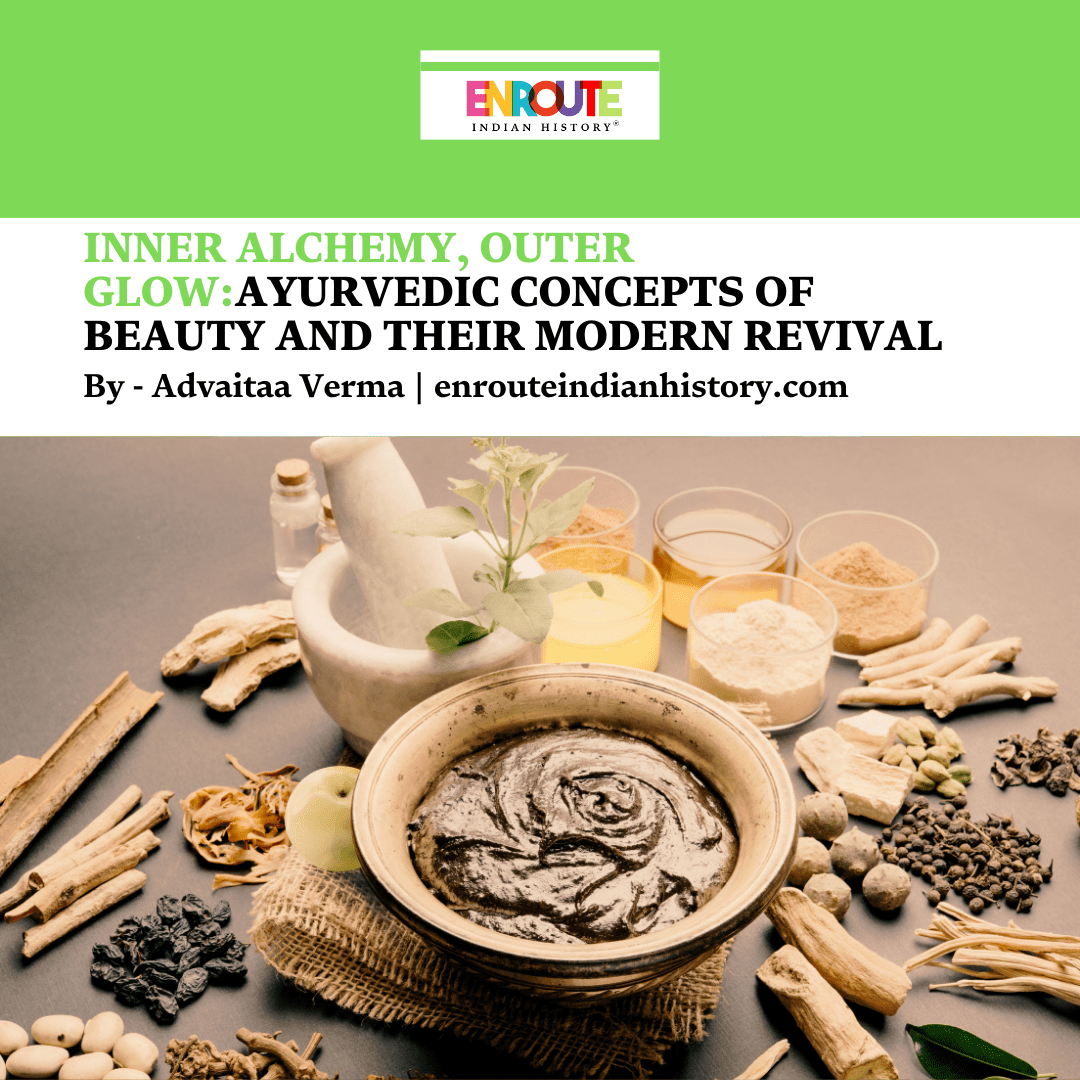
Inner Alchemy, Outer Glow: Ayurvedic Concepts of Beauty and Their Modern Revival
- May 10, 2025
By Advaitaa Verma
Ayurveda, deriving its etymology from the Sanskrit words "āyus" (life) and "veda" (knowledge), constitutes one of humanity’s oldest holistic health systems. Originating in India over 3,000 years ago, Ayurveda approaches the human being as a composite of the physical, mental, emotional, and spiritual realms, advocating a harmonized balance among these dimensions for the sustenance of health and beauty. Beauty, in Ayurvedic philosophy, is neither superficial nor isolated from broader health but is rather the natural outward
expression of inner equilibrium and vitality (Abraham, 2013). Among the numerous regional variations and preservations of Ayurvedic practice in India, Kerala stands uniquely distinguished. Blessed with a humid tropical climate, a rich biodiversity of medicinal plants, and centuries of royal and temple patronage, Kerala became
a living repository of evolved Ayurvedic beauty traditions (Harilal, 2009). Central to these traditions are the uses of Navara rice (Oryza sativa var. Njavara) and sandalwood (Santalum album), which serve as potent botanical agents for nurturing the skin, body, and mind (Abraham, 2013). This article examines the theoretical underpinnings of beauty in classical Ayurveda, the specific beauty formulations developed in Kerala, the multigenerational artisans who preserved these techniques, and the contemporary revival facilitated through social media. In doing so, it reveals how an ancient tradition has reasserted relevance in the modern global discourse on health, wellness, and holistic beauty.
Ayurveda and the Concept of Beauty
In classical Ayurvedic thought, the pursuit of beauty is integrally linked to the pursuit of health (swasthya), which is defined in Sushruta Samhita (ca. 600 BCE) as the equilibrium of doshas (biological energies: Vata, Pitta, Kapha), dhatus (tissues), malas (waste products), agni (digestive fire), and a balanced state of mind, senses, and spirit. Beauty (saundarya) was categorized into three dimensions (Sachs, 2002):
● Shariraka Saundarya (physical beauty): characterized by clear, radiant skin, well- formed limbs, and bright, alert eyes.
● Manasika Saundarya (mental beauty): denoted by tranquility, cheerfulness, and emotional resilience.
● Atmika Saundarya (spiritual beauty): emerging from spiritual consciousness and ethical conduct (Hazra & Panda, 2013).
Notably, Ayurveda emphasizes that beauty deteriorates when there is internal derangement, particularly hormonal imbalance (Artava Kshaya in women, Shukra Kshaya in men), poor digestion, or emotional distress. Stress-induced imbalances were treated with herbs (like Brahmi and Ashwagandha), meditation, massages, and internal cleanses, indicating an early recognition of the psychosomatic basis of beauty long before contemporary medicine acknowledged such links ( Sachs, 2002). Thus, the Ayurvedic vision of beauty was holistic, preventative, and intimately tied to lifestyle, diet, emotional regulation, and spiritual practices.
Ayurvedic Beauty Formulations in Ancient Kerala
Kerala's unique geographic and climatic conditions necessitated and nurtured a distinctive Ayurvedic pharmacopeia tailored for its hot, humid, and lush environment. These traditions flourished under the stewardship of families known as Ashtavaidyas (masters of eight branches of Ayurveda) and temple physicians (Abraham, 2013). The Ayurvedic practices emphasized prakriti (individual constitution) and seasonal variations (ritu), ensuring that
beauty care was not generic but deeply personalized (Harilal, 2009). Few of the canonical formulations and practices of Kerala are:
● Kumkumadi Tailam: A luxurious facial oil formulated from saffron (Crocus sativus), red sandalwood (Pterocarpus santalinus), and 26 other herbs, infused in sesame oil and goat’s milk. Revered for enhancing skin complexion and texture, it was often reserved for royalty and temple dancers.
● Dasamoola Rasayana: Comprising a decoction of ten roots, it was prescribed to purify blood, rejuvenate tissues, and strengthen immunity, improving skin clarity.
● Lepas and Ubtans: Face and body masks made from pulses, herbs, spices, and medicinal rice. Commonly applied before festivals, marriages, and religious ceremonies to bestow luminous skin.
● Taila Abhyanga: Full-body massages using customized medicated oils, often combined with specific rituals aimed at removing ama (toxins) and strengthening ojas (vital energy), thereby enhancing both health and physical allure (Harilal, 2009).
Navara Rice: The Golden Grain of Healing and Beauty
Navara rice is a cornerstone of Kerala’s therapeutic landscape. Unlike ordinary paddy varieties, Navara contains higher levels of antioxidants, phenolics, and flavonoids, making it particularly beneficial for skin health, tissue regeneration, and systemic rejuvenation. The cultivation and processing of Navara were traditionally entrusted to Brahminical and agrarian families, who considered it sacred (Joseph & Francies, 2007). Applications of navara rice in Ayurvedic beauty traditions:
● Navarakizhi: A specialized therapy wherein cooked Navara rice is bundled in muslin cloth and gently massaged onto the body after being dipped in a decoction of cow's milk and herbal oils. This therapy softens skin, alleviates inflammation, promotes lymphatic drainage, and combats aging by stimulating rasa and rakta dhatus (plasma and blood tissues).
● Face and Body Scrubs: Finely ground Navara rice, mixed with herbs like turmeric and sandalwood, served as a gentle exfoliant, promoting cellular turnover without the abrasive side-effects of harsher materials.
● Internal Rasayana: Navara-based gruels (kanji) were consumed to nourish from within, demonstrating the Ayurvedic axiom that beauty is cultivated internally as well as externally (Joseph & Francies, 2007).
Sandalwood: The Sacred Balm of Beauty
Sandalwood’s exalted status in Ayurvedic beauty practices stems from its profound cooling, antimicrobial, and aromatic properties. Ancient texts describe Chandana as a Pittahara agent, ideal for calming inflammatory conditions of the skin and mind. Access to pure sandalwood was tightly regulated, often reserved for religious and aristocratic purposes, adding to its mystique and prestige (Sandeep & Manohara, 2019).
Traditional Uses:
● Sandalwood Paste: Prepared by hand-rubbing sandalwood on a wetted stone slab (Ammi Kal), this paste was applied to the forehead, face, and body to treat acne, blemishes, and sun damage, especially before religious ceremonies.
● Medicinal Oils: Sandalwood essential oil, blended into base oils, was massaged onto the scalp and body to regulate sebum, prevent infections, and encourage tranquility.
● Ritualistic Beauty: Temple dancers and brides were adorned with sandalwood decorations as part of beauty rituals that symbolize purity, auspiciousness, and aesthetic grace (Sandeep & Manohara, 2019).
Kerala’s Generational Artisans: Custodians of a Living Tradition
The transmission of Ayurvedic beauty knowledge in Kerala was traditionally an intergenerational endeavor, maintained through rigorous apprenticeships within families. The Vaidyas, Ashtavaidyans, and temple custodians served not just as healers but also as cosmetic formulators, body therapists, and emotional well-being specialists (Abraham, 2013). This system produced a continuum of artisanship that linked physical beauty, spiritual ethics, and
natural stewardship. Key aspects of this generational knowledge system included:
● Oral Transmission: Recipes and procedures were rarely written down but memorized and ritualistically handed down through initiatory ceremonies (Gurukula system).
● Plant Cultivation: Families often maintained herb gardens (Kaavus) for sustainable access to raw materials.
● Customization and Ritual: Preparations were synchronized with lunar phases, planetary hours (muhurta), and Ayurvedic principles to maximize efficacy (Abraham, 2013).
The Role of Social Media in Modern Revival
The advent of social media platforms like Instagram, Facebook, YouTube; and many online shopping sites in the early 21st century provided an unprecedented global stage for Kerala’s Ayurvedic beauty traditions. Influencers, wellness bloggers, and natural skincare brands began showcasing therapies like Navarakizhi, Ayurvedic facials, and handmade sandalwood pastes to international audiences. Thus, social media has not only resurrected but also
reimagined the role of Kerala’s Ayurvedic beauty traditions in the contemporary world. This revival is not a mere replication of the past but a dynamic re-articulation, wherein artisans, entrepreneurs, and consumers actively negotiate between tradition and modernity. Social media platforms have allowed niche topics like Ayurvedic skincare rituals to flourish beyond academic or clinical circles. Influencers specializing in natural skincare, holistic
wellness, and "slow beauty" movements often feature Ayurvedic treatments such as Navarakizhi massages, sandalwood paste facials, herbal ubtans, therapeutic oil massages. These platforms have demystified practices that were once confined to just Kerala’s ayurvedic clinics and temple rituals. The increased use of online shopping sites has helped Kerala's generational artisans to regain their position in the cosmetic markets and industries.
Artisans making traditional herbal skincare products can now build their own brand identity around authenticity and also educate audiences about ethical sourcing, seasonal formulations, and ancestral recipes. Several modern brands have come into picture; many of these brands are founded by individuals from Ayurvedic practitioner families or deeply connected to Kerala's traditions. Brands like Forest Essentials; founded in 2000 by Mira Kulkarni, use authentic Ayurvedic methods such as cold-pressing oils, fermenting rice, and using Navara rice-based products in
their body polishes and ubtans. Many of their ingredients are sourced from Kerala. There is another brand called Kama Ayurveda; established in 2002 in partnership with the 75-year-old Arya Vaidya Pharmacy in Coimbatore. They offer products like sandalwood oils, Navara rice-based therapies, and Kumkumadi serums. Sadhev is a brand that uses Kerala sandalwood, Navara rice extracts, and traditional preparation methods closely similar to the artisan
processes of old Kerala. It is a premium Ayurvedic skincare line inspired heavily by the family's 200-year legacy of Ayurvedic practice in South India.
The Ayurvedic beauty traditions of Kerala represent far more than a collection of ancient cosmetic recipes; they embody a deeply integrated philosophy of health, spirituality, and ecological harmony (Harilal, 2009). The careful cultivation and application of Navara rice, sandalwood, and other herbs represented the profound understanding that human beauty is interconnected with nature’s rhythms and the inner architecture of mind and body. Through
generations, Kerala’s artisan families including physicians, healers, cultivators, and cosmetologists, acted as the custodians of this living knowledge; preserving the Ayurvedic beauty practices even through centuries of political, social, and cultural transformations. In their hands, beauty rituals were sacred acts: a merging of the spiritual and physical realms, a daily renewal of the body's sanctity. In the modern era, digital platforms have breathed new life into these traditions, enabling economic revitalization and cultural pride. Yet, the true essence of Ayurvedic beauty—rooted in balance, self-knowledge, and reverence for nature—remains timeless. Kerala’s legacy stands not merely as an artifact of the past but as a vibrant, evolving beacon for the future of integrative health and aesthetics.
References
Abraham, L., 2013. From vaidyam to Kerala ayurveda. The newsletter, 65, p.32.
Harilal, M.S., 2009. 'Commercialising Traditional Medicine': Ayurvedic Manufacturing in Kerala. Economic and political weekly, pp.44-51.
Hazra, J. and Panda, A.K., 2013. Concept of beauty and ayurveda medicine. J Clin Exp Dermatol Res, 4(178), p.2.
Joseph, J., Francies, R.M., Zachariah, G. and AV, S.K., 2007. Characterisation of navara (Oryza sativa L.) a traditional medicinal rice of Kerala for qualitative traits. Indian Journal of Agricultural Research, 41(4), pp.267-271.
Menon, I., 2018. Hereditary physicians of Kerala: traditional medicine and Ayurveda in modern India. Routledge India.
Sachs, M., 2002. Ayurvedic beauty care: ageless techniques to invoke natural beauty. Motilal Banarsidass Publications.
Sandeep, C. and Manohara, T.N., 2019. Sandalwood in India: Historical and cultural significance of Santalum album L. as a basis for its. NeBIO, 10, pp.235-242.