
By Ananya Vishnu
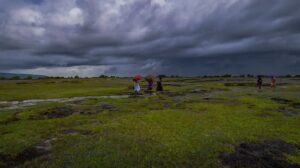
Beautiful yet “sorrowful” monsoon of Kerala
Monsoon Season and Health Implications
In Kerala, the monsoon season is locally known as Karkidakam, typically spanning from mid-July to mid-August, marking the last month of the Malayalam calendar. This period, known as Varsha Ritu in Ayurveda, is traditionally regarded as the most suitable time for rejuvenation therapies, collectively known as Karkidaka Chikitsa. While the rains bring much-needed respite, this season is associated with significant health challenges.The high humidity, reduced sunlight, and prevalence of waterborne diseases create an environment conducive to various ailments, including digestive issues, respiratory infections, skin problems, and a general decline in immunity. (Sayujya & Banu, 2023)
Ayurvedic texts emphasize the importance of adapting dietary and lifestyle practices to the changing seasons to maintain optimal health.During Karkidakam, the body’s strength, digestive fire, and immunity are believed to greatly decline. The digestive fire also called Agni is further exhausting, leading to “Agnimandya” or impairment in digestion and the accumulation of ama or toxins, causing an imbalance in the “Tridoshas” (Vata, Pitta, and Kapha).The cold rain and wind can disturb the body’s balance by increasing dryness and stiffness (linked to Vata) and heaviness or congestion (linked to Kapha). The sudden shift from the intense summer heat to cooler, damp weather can also cause digestive issues and increase heat-related imbalances (linked to Pitta). Over 80% of diseases during this season are waterborne, leading to fevers and other infectious diseases, while humidity often aggravates conditions like arthritis, asthma, and other allergies. Historically, this month was considered as “Karkadam durghadam” that is the month of poverty, diseases, and inauspicious, due to the economic standstill caused by heavy rains flooding agricultural fields. Consequently, traditional wisdom in Kerala advocates for specific dietary interventions and therapies to cleanse, strengthen, and rejuvenate the body, preparing it for the upcoming seasons.(Raghir, Rao, & S., 2023)
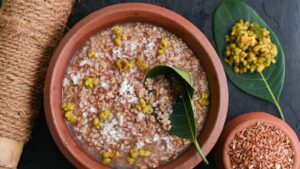
One of many forms/styles of Karkidaka Kanji
Karkidaka Kanji: An Ayurvedic Blessing
At the heart of monsoon health practices in Kerala lies the Karkidaka Kanji or a medicinal porridge. This unique medicinal dish is not merely a meal but a therapeutic concoction meticulously prepared with a blend of specific rice varieties, Ayurvedic herbs, and spices, designed to detoxify, nourish, and boost immunity.It is consumed as part of Karkidaka Chikitsa to increase digestive capacity, strengthen the body, and provide immunity.
The primary base of Karkidaka Kanji is typically Njavara rice, a traditional medicinal rice variety known for its properties, or other local red rice varieties.The dish is enriched with a carefully selected mixture of Ayurvedic herbs and spices, with 12 to 24 types of medicinal herbs being commonly used. While ingredients and preparation methods can vary across regions and family traditions. Based on plant availability, common components and methods generally include: digestive enhancers like cumin, dry ginger, pepper, and carom seeds, which rekindle digestive fire, combat heaviness, and prevent the accumulation of toxins. Herbs like ashwagandha and punarnava are included for their adaptogenic and anti-inflammatory properties, supporting immunity and reducing water retention. Fenugreek, coriander, and curry leaves balance the gut while offering mild detoxification. The inclusion of “Dashapushpam” or the ten sacred herbs underscores the ritualistic sanctity and seasonal alignment of the kanji, blending cultural reverence with physiological healing. Ingredients like moringa, horse gram kulatha, and green gram mudga enrich the preparation with proteins, micronutrients, and antioxidant properties, making it suitable even for diabetic or hypertensive patients. Together, this intricate mix of spices, grains, and herbs transforms the kanji from a simple porridge into a rejuvenating happy bowl of therapy.(Shaji & Namita, 2020)
While there is no one specific recipe for Karkidaka Kanji for healthy individuals, expert Ayurvedic practitioners can tailor ingredients for specific disease conditions.The preparation of Karkidaka Kanji is not merely culinary, it is a carefully orchestrated therapeutic process.The integration of herbs in swarasa (juice) or powder form, and in some cases, through decoctions or bolus bundles tied in cotton cloth, reveals a meticulous effort to extract the therapeutic essence of each plant. The cotton bolus method is especially significant as it reflects the practice of infusing the medicinal properties gently, without direct boiling, thus preserving the herb’s integrity. The addition of jaggery and coconut milk not only enhances its taste but balances the heat and dryness of some herbs. It is typically consumed warm, usually in the mornings or evenings, for a minimum of 7 days, or for continuous periods in multiples of 7 days (e.g., 14, 21 days) to maximize benefits.(Kumar, 2016)
Once a cornerstone of Kerala’s seasonal health traditions, it has seen a marked decline in its traditional form, particularly in urban regions. The pressures of contemporary fast paced lifestyle and convenience-oriented consumption have significantly eroded the feasibility of preparing this porridge from scratch. As a result, commercial instant alternatives such as “Oushadha Kanjikoottu” have emerged to fill the gap. While these ready-to-mix blends offer ease and accessibility, they often fall short of replicating the freshness, personalization, and therapeutic integrity of the home-prepared version, which is traditionally customized and consumed with awareness of Ayurvedic principles.(Subin & Kumar, 2022)
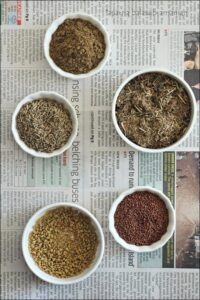
Ingredients of the dish
Cultural Significance
Karkidaka Kanji holds profound cultural significance in Kerala, transcending its medicinal purpose to become an integral part of the state’s traditional ethos. Historical records, such as British officer William Logan’s “Malabar Manual”, provide valuable insights into the significance of Karkidaka Kanji in the daily lives of Keralites during the colonial period. These accounts reveal that the dish was consumed not only for health benefits but also as part of a broader set of monsoon rituals, including Ayurvedic treatments, fasting, and prayers. Despite the introduction of new ingredients like refined sugar and wheat during colonialism, Karkidaka Kanji largely retained its traditional form, demonstrating its cultural resilience. (Subin & Kumar, 2022)
The preparation and consumption of Karkidaka Kanji symbolize a commitment to ancestral wisdom and a respect for nature’s cycles. In rural areas, its preparation is often a communal activity, fostering a sense of community and continuity as recipes and rituals are passed down through generations. This embodies a holistic approach to life where health is intertwined with seasonal rhythms and spiritual harmony. Other cultural practices during Karkidakam like the observance of “Karkidakavavu”, a day for performing special rituals for ancestors also add to the cultural fabric of this month.
This month being deeply spiritual, and is known as Ramayana Masam, a period dedicated to introspection and spiritual practices.The epic Adhyatma Ramayanam Kilippattu by Thunchath Ezhuthachan is recited daily in Hindu households and temples, usually after lighting of Nilavilakku (traditional Kerala lamp) in the evening.This practice serves to bring solace during a challenging time.(Ramachandran & Shreevathsa, 2022)
In recent times, the concept of “monsoon tourism” and “rejuvenation through Ayurveda” has also emerged, marketing Kerala as a destination for healing during the season. This helps in leveraging the traditional belief that the cool monsoon climate enhances the body’s receptiveness to oily massages and herbal concoctions.It also supports the economy by providing vital income to local communities during a season when agriculture slows down, offering alternative livelihoods through hospitality, wellness services, and cultural activities.
The growing global interest in Ayurvedic diets too has helped propel tourism and commerce through Ayurvedic practices like Karkidaka Kanji. Marketed for its immunity-boosting, detoxifying, and rejuvenative properties, it is now available through Ayurvedic wellness centers, health food stores, and e-commerce platforms. This trend mirrors a broader pattern of Indian traditional foods gaining international recognition. However, the transformation of Karkidaka Kanji into a marketable health product raises concerns about decontextualization. Without adequate understanding or respect for the cultural and medicinal knowledge underpinning it, the dish risks being reduced to another exotic food fad.
More importantly, this case underscores the broader issue of cultural sustainability: traditions survive not merely through performance, but through meaningful understanding and continuity.
Concluding Thoughts: Modern Problems Require Ancient Solutions
Karkidaka Kanji is more than just a seasonal dish, it is a reflection of Kerala’s deep-rooted wisdom, where food, health, and nature are closely intertwined. Passed down through generations, it embodies a culture that values preventive care, seasonal awareness, and the healing power of local ingredients. Even as lifestyles change and modern alternatives become more common, the continued relevance and revival of Karkidaka Kanji show the strength and adaptability of Kerala’s traditions.
By embracing both tradition and innovation, Kerala’s cultural heritage proves that ancient practices can still hold meaning in today’s world. The story of Karkidaka Kanji reminds us of the importance of reconnecting with our roots not just for nostalgia, but for sustainable health, community, and identity.
References
1. Sayujya, P.S. and Banu, W., 2023. Karkkidaka Kanji – A Health Tradition of Kerala. International Journal of Creative Research Thoughts (IJCRT), 11(7). Available at: https://ijcrt.org/papers/IJCRT2307260.pdf.
2. Shaji, S. and Namita, D.K., 2020. Karkidaka Chikitsa – Rejuvenation through Herbs. Journal of Ayurvedic and Medical Sciences. ISSN 2456-3110.
3. Kumar, R., 2016. Karkidaka Treatment: The Scientific Way. International Ayurveda Publications. Available at: https://www.ayurpub.com. ISSN 2456-0170.
4. Ramachandran, D. and Shreevathsa, 2022. Karkidaka Masa Charya: An Analytical Study in the Light of Varsha Rtu Charya. International Ayurvedic Medical Journal,10(7). doi:10.46607/iamj0510072022
5. Raghir, R.G., Rao, K. and S., I., 2023. Ethnonutritional, ethnomedicinal and sacred religious rites of “Karkidaka charya”: A traditional seasonal practice of Kerala. Indian Journal of Traditional Knowledge, 22(4), pp.693–707. doi:10.56042/ijtk.v22i4.7186.
6. Subin, D. and Priyush Kumar, U.K., 2022. The Evolution of Karkidaka Kanji: From Ancient Tradition to Modern Dietary Trend. International Journal of Food and Nutritional Sciences, 11(13). ISSN 2319-1775 (Print), 2320-7876 (Online).
Images:
1. Kerala Tourism, n.d. Monsoon Rainy Season [photograph]. Available at:https://www.keralatourism.org/photo-gallery/monsoon-rainy-season/129/ [Accessed 3 July 2025].
2. ZeeZest, 2021. Karkidaka Kanji in clay pot [photograph]. Available at: ZeeZest website [Accessed 3 Jul 2025].
3. MyDiverseKitchen, 2015. Uluva Kanji (fenugreek porridge) [photograph]. Available at: MyDiverseKitchen blog [Accessed 3 Jul 2025].