
By Shreya Kamboj
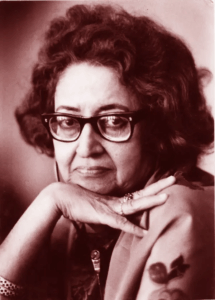
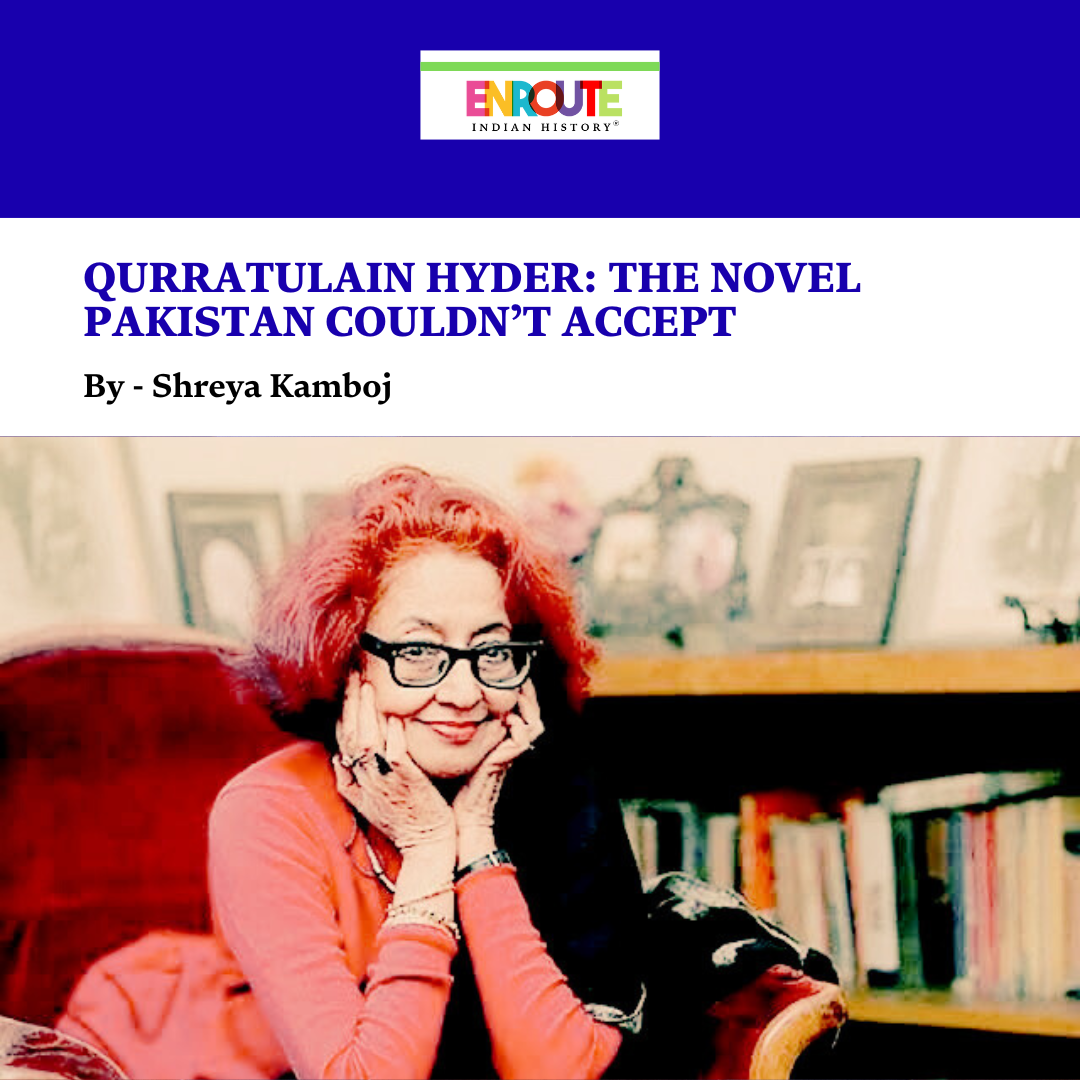
For Qurratulain Hyder, history was never a settled affair but an intrusive force; the past, as she saw it, had a “nasty habit of intruding into our lives.” She viewed Partition not as a political settlement but as a “season of betrayals” that fractured a shared culture by imposing “simplistic and artificial” binaries like Hindu versus Muslim. It was this worldview that informed her fiction and imparted it with a profound “intellectual and philosophical density.” Known as the grande dame of Urdu letters and affectionately called “Ainee Apa,” she remains one of the most towering figures in modern literature. A recipient of the prestigious Sahitya Akademi Award, Hyder was far more than a novelist; she was a chronicler of civilizations, a “hyper-literate and cosmopolitan consciousness” whose work captured the grand, sweeping currents of history through the intimate lives of her characters. Her vast literary output is characterized by a distinctly modernist narrative style that often treats time as a cyclical force rather than a linear progression. Her work consistently returns to the trauma of displacement, the social betrayals wrought by Partition, and the persistent search for cultural identity in a fractured subcontinent. This analysis will delve into her life and influences, dissect her magnum opus Aag ka Darya (River of Fire), examine her other key works, and evaluate her unique literary style and enduring legacy. (Qadri 2007) (Steele 2008) (Raza 2008)
The Making of a Literary Titan: Life and Influences
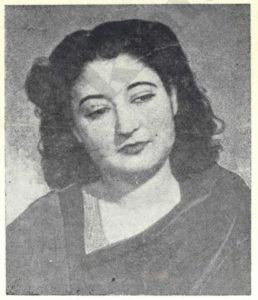
Qurratulain Hyder was born into the heart of Urdu literature. Her parents, Sajjad Hyder Yildirim and Nazar Sajjad Hyder, were both pioneering fiction writers, and she grew up immersed in an exclusive circle of North India’s literary elite (Qadri 2007). A prodigy, she wrote her first story at eleven, and her debut collection, Sitaron Se Aage (Beyond the Stars), announced a powerful new voice in Urdu fiction – one that was already making its mark long before the political convulsions that would later define her era (Qadri 2007).
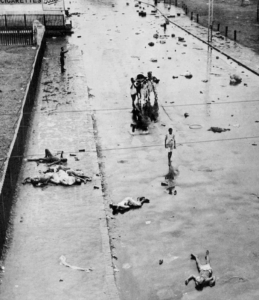
While her career was well underway, the Partition of 1947 became the pivotal event that would provide the central, tragic focus for much of her work. For Hyder, the division was no abstract political maneuver; it was a cataclysm that tore apart families and shattered the subcontinent’s syncretic culture. The trauma of this rupture, followed by her family’s migration to Pakistan and her own momentous decision to return to India years later, became the core of her creative inquiry (Steele 2008). This personal history of displacement, filtered through her experiences living and working in England, forged her unique cosmopolitan viewpoint. It was this transnational consciousness that allowed her to write about the subcontinent with a perspective that was at once deeply intimate and historically vast.
The Magnum Opus: Dissecting Aag ka Darya (River of Fire)
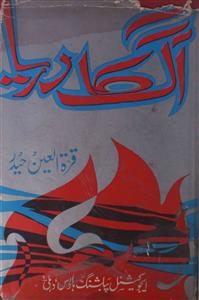
At the age of twenty-eight, Hyder published her magnum opus, Aag ka Darya (River of Fire), a landmark novel that forever changed the landscape of Urdu fiction. It is to Urdu what Gabriel Garcia Marquez’s One Hundred Years of Solitude is to Hispanic literature – a work of staggering ambition and profound vision. (Raza 2008) The novel’s canvas spans an incredible 2500 years of Indian history, from the 4th century B.C. to the post-Partition era, using this vast timeline to question the very nature of identity. Through recurring character archetypes – Gautam, Champa, Kamal, Cyril, and others – who reappear in different eras, she illustrates that the search for meaning and dislocation are timeless human experiences. On the cusp of Partition in the story, Kamal captures the novel’s central dilemma: “The Indo-Muslim life-style is made up of the Persian-Turki-Mughal and regional Rajput Hindu cultures. So, what is this Indianness which the Muslim League has started questioning? Could there be an alternate India?” (Ahsan 2019).
In its grand lament for this fractured civilization, Aag ka Darya can be read as a modern shehr ashob – a “lament for a city” expanded to a national scale. The book was deeply controversial upon its 1959 release in Pakistan, where Hyder was living. It became so popular at the time that one had to mention ‘river of water’ in Urdu if one meant simply a river (Steele 2008). Nationalists were angered by her view of the Pakistani identity as being indistinguishable from the Indian, a portrait of what critics saw as an “incomplete Indo-Muslim” who could only exist in relation to a Hindu counterpart (Ahsan 2019). The consensus is that the resulting outrage was a major factor in her decision to return to India.
For postcolonial scholars, Hyder’s historiography is a purposeful rebuke to the purist Hindutva and Islamist ideologues. Much like Benedict Anderson’s “imagined communities,” her narrative purpose is to expose the wrongness of identities based on convenient fictions (Ahsan 2019). By tracing a composite culture across millennia, she powerfully argues that such purist ideologies are not ancient truths but recent, and destructive, historical phenomena. Through this lens, the trauma of Partition is not an isolated event but another tragic turn in the long, often painful, spiral of history.
The Broader Literary Landscape: Beyond the River of Fire
To focus only on Aag ka Darya is to miss the sheer breadth and richness of Hyder’s literary world. Her debut novel, Mere Bhi Sanam Khane (My Temples, Too), was a powerful prelude to her life’s major themes. Written when she was just nineteen, it is a searing elegy for the syncretic Ganga-Jamuni culture of Lucknow, a prose shehr ashob mourning a shattered world (Raza 2008). In novellas like Sita Haran and short stories like “Housing Society,” she continued to explore the less visible wounds of 1947, not the overt violence, but the quiet violations of trust that maimed the psyche of a generation.
Her canvas, however, was never limited to the subcontinent’s division. She scanned the political horizon in later works, such as Aakhir-e-Shab ke Humsafar (Fireflies in the Mist), which shifted its gaze to Bengal to trace the arc of political idealism and bitter disillusionment within the Naxalite movement. Her range was immense, extending far beyond original fiction. She was a translator who brought Henry James’s The Portrait of a Lady into Urdu, a biographer who chronicled the life of the musician Ustad Bade Ghulam Ali Khan, and a memoirist of unparalleled skill (Steele 2008). Her monumental two-volume memoir, Kar-e-Jahan Daraz Hai (The Work of the World is Long), is a masterclass in life-writing, blurring the lines between personal memory and a sweeping social history of her times. This vast and eclectic body of work reveals an artist constantly engaged with the world, using every literary form at her disposal to document the human condition.
The Signature Style: A Modernist in Urdu
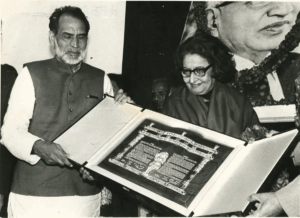
At the core of Hyder’s style is her revolutionary handling of time. For her, time was not an abstract concept but a tangible, relative force. She once explained her philosophy by demonstrating how a unit of time that feels recent, like a quarter-century, can be used as a measure to leap backwards, arriving in a different historical epoch with just a few steps. The past, in her view, was never truly past. (Hasan 2008) This ethos is the engine of her fiction; the past is not a distant memory but an active, living presence. She dismantles linear chronology, allowing history to erupt into the present through characters’ memories, ancient manuscripts, rediscovered letters, and the eerie recurrence of historical patterns. Her command of the Urdu language was masterful. Her prose was sophisticated and rich, seamlessly integrating words from Awadhi, Persian, and English.
Furthermore, her work contains a quiet but powerful feminism. Long before it became a literary trend, Hyder created female characters who were revolutionary for their time. Women like Champa in Aag ka Darya are defined not by their relationships to men but by their intellectual curiosity, their independence, and their engagement with the great philosophical questions of their era. They are educated, complex individuals grappling with existential dilemmas, making them some of the most memorable and progressive female characters in South Asian literature.
To call Qurratulain Hyder merely a “Partition writer” is to place a border around a mind that saw none. She was far more than a novelist; she was a philosopher of history and an innovator of form, a powerful voice for the composite culture she saw fractured by politics. Her work travels far beyond one time or nation because it asks timeless questions about identity, belonging, and the relentless, tragic flow of history. In an age still marked by division and battles over the past, Ainee Apa’s voice feels more urgent than ever. It is a reminder of what was lost and a plea for a more humane future. Her legacy isn’t just secured in the pages of Urdu literature; it belongs to the world, a river of stories that continues to flow.
Bibliography
1. Raza, A. (2008). ‘Qurratulain Hyder (Aini Apa) 1926-2007.’ The Annual of Urdu Studies, vol. 23. pp – 213-222
2. Steele, L. (2008) ‘“We Just Stayed on the Ship to Bombay…” Tea and Consequences with Qurratulain Hyder’, Annual of Urdu Studies, vol. 23, pp. 182–195.
3. Qadri, S. K. (2007). ‘Qurratulain Hyder: A Tribute.’ Indian Literature, 51(5 (241), 15-18.
4. HASAN, K.(2008). ‘Qurratulain Hyder: Literature’s First Lady.’ The Annual of Urdu Studies, Vol. 23: 206-212.
5. Sriram, A. (2019). ‘An Urdu Epic Puts India’s Partition Into Historical Perspective.’ New York Times. (Accessed on 6th September 2025) https://www.nytimes.com/2019/04/08/books/review/qurratulain-hyder-river-of-fire.html
6. Ahsan, K. (2019). ‘The Alternate India: Qurratulain Hyder’s forgotten vision of subcontinental history in River of Fire’. The Nation. (Accessed on 6th September 2025) https://web.archive.org/web/20190726070251/https://www.thenation.com/article/river-of-fire-qurratulain-hyder-india-pakistan-partition-novel-review/
7. Rizvi, F. (2019). ‘Remembering Qurratulain Hyder.’ Sahapedia. (Accessed on 6th September 2025) https://www.sahapedia.org/remembering-qurratulain-hyder