

Sacred Foodways: The Economic and Cultural Implications of Khichdi Distribution in Govind Ghat
- May 10, 2025
By Advaitaa Verma
The Himalayas, revered as the abode of the gods, attract millions of pilgrims annually, making pilgrimage tourism a foundation of Uttarakhand’s economy and culture. The region, often termed 'Dev Bhoomi' (Land of the Gods), is home to several sacred sites, including the Badrinath Temple (Sati, 2023). The journey to Badrinath is both spiritual and physically demanding, necessitating the presence of waypoints like Govind Ghat, located at the confluence of the Alaknanda and Lakshman Ganga rivers, serves as a vital rest stop, offering shelter, sustenance,
and medical aid to travelers undertaking the arduous trek or journey to the Badrinath Temple (Sati, 2023).
One of the most crucial aspects of Govind Ghat’s hospitality is its pilgrim kitchens, which serve thousands of devotees daily. Pilgrim kitchens play a vital role in ensuring that every traveler, regardless of socio-economic status, has access to nourishing food, thereby sustaining the pilgrimage tradition (Bharati, 1963). These kitchens contribute to local economies by sourcing ingredients from nearby villages and employing local workers. This paper explores the socio-
economic significance of pilgrim kitchens, particularly those serving khichdi, in supporting rural economies in the Himalayas and reinforcing the cultural and religious ethos of the region. Pilgrimage tourism significantly impacts the economy of Uttarakhand, especially the rural communities. The influx of devotees creates employment opportunities in transport, hospitality, and religious services. Migration of workers, seen during the pilgrimage season, from surrounding villages to places like Govind Ghat that facilitates the economic sustenance for many households, as locals find temporary employment as guides, porters, cooks, and vendors. The demand for food, accommodation, and other necessities during this season generates substantial revenue, influencing both local farmers and small businesses.
Govind Ghat’s Khichdi
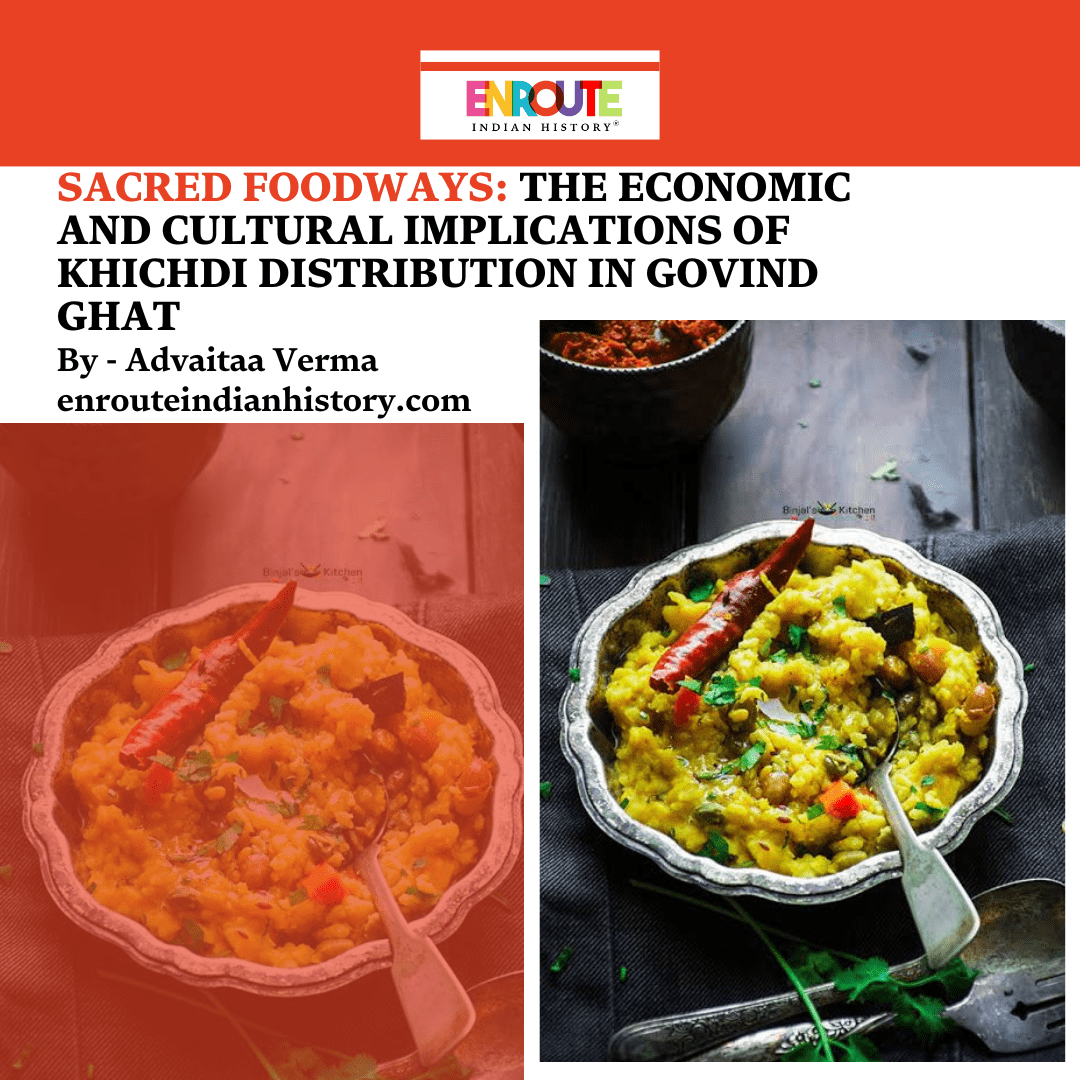
Among the various meals prepared and served in pilgrim kitchens, khichdi is a simple yet highly nutritious dish that holds special significance, and is served as prasadam, especially during these pilgrimages. Khichdi, a staple dish, is made with rice, lentils, and spices, often enriched with ghee and mild seasonings to enhance its taste and nutritional profile (Ghosh, 2022). The reason why such a simple dish is served at auspicious locations is the ease of preparation, high energy content, and this dish is easily digestible, making it an ideal meal for travelers that are travelling up to the Badrinath Temple. The dish provides a balanced source of carbohydrates and proteins, essential for maintaining stamina and warmth in cold mountainous regions. Additionally, its soft texture and simple composition make it suitable for people of all age groups, including elderly pilgrims and children (Ghosh, 2022). Beyond its nutritional value, khichdi holds cultural and symbolic significance in Hindu traditions. As a sattvic (pure) food, it aligns with the principles of simplicity and purity that define pilgrimage experiences. Its widespread distribution in community kitchens fosters a sense of unity and equality among pilgrims, reinforcing the spiritual ethos of the journey (Narayan,
2020). The preparation and sharing of khichdi reflect the collective spirit of service (seva), where volunteers and kitchen workers contribute selflessly to ensure that all travelers, regardless of economic background, receive nourishment and warmth on their path to Badrinath.
Ingredients and its Preparation
The traditional khichdi prepared at Govind Ghat follows a simple yet effective recipe, but its preparation process is deeply rooted in both regional agricultural practices and religious customs. This process not only provides nutritional sustenance but also sustains the local economy and reinforces the spirit of community service. The ingredients are mentioned in the below list:
● Rice and Lentils: Locally sourced rice and split moong dal are the primary ingredients. In making the khichdi, supporting the economy of agrarian communities
● Spices and Tempering: Cumin, turmeric, asafoetida (hing), and ghee are added in khichdi to enhance both the flavor and medicinal properties of the dish. These ingredients are often selected based on Ayurvedic principles, making khichdi an easily digestible and warming meal suitable for high-altitude conditions.
● Vegetables: Seasonal vegetables such as potatoes, carrots, and peas are added, the vegetables are chosen depending on availability. The inclusion of vegetables not only improves the nutritional value of the dish but also supports local horticulture (Ghosh, 2022).
The mixture is slow-cooked in large cauldrons over firewood or gas stoves, ensuring uniform texture and warmth (Ghosh, 2022). The communal preparation of khichdi in massive quantities necessitates careful coordination among cooks and volunteers, reflecting a blend of efficiency and spiritual service. All the ingredients are locally sourced, reliance on local produce stimulates the regional economy, providing steady income to farmers and traders. Additionally, the employment of seasonal labor in pilgrim kitchens creates livelihood opportunities.
Economic Benefits of Pilgrim Kitchens
Pilgrim kitchens, in particular, play an essential role in sustaining this economy. The large-scale preparation of meals requires a steady supply of grains, pulses, vegetables, and dairy products, much of which is procured from nearby rural communities, also supporting the livelihoods by providing market access to local farmers (Aruljothi & Ramaswamy, 2019). Furthermore, the infrastructure required for these kitchens, such as utensils, firewood, and gas cylinders, creates a supply chain that benefits small-scale traders and transporters. The economic impact of these
kitchens extends beyond their immediate operations, as they stimulate associated businesses such as logistics, packaging, and waste management services, reinforcing the interconnectedness of the pilgrimage economy with rural development. These kitchens provide structured economic opportunities for marginalized communities, ensure consistent market demand for agricultural produce, and create a robust supply chain that supports various ancillary industries (Aruljothi & Ramaswamy, 2019). Below is a detailed examination of the economic benefits derived from these communal kitchens:
● Strengthening Local Agricultural Economies: The large-scale preparation of meals in pilgrim kitchens demands for essential food supplies such as rice, lentils, vegetables, dairy products, and spices. By prioritizing locally sourced ingredients, these kitchens ensure steady income for regional farmers.
● Employment Generation and Livelihood Security: Pilgrim kitchens provide direct and indirect employment opportunities to thousands of individuals from rural backgrounds.Employment categories include cooks, kitchen assistants, logistics and supply chain workers such as transporters and wholesalers, other categories include vendors and small retailers, and sanitation workers, who are tasked with handling biodegradable waste, recycling initiatives, and maintaining hygiene standards.
● Preservation of Indigenous Culinary Practices and Cultural Heritage: Traditional dishes like khichdi serve as a bridge between religious traditions and local culinary practices. The mass preparation of khichdi and other sattvic foods in pilgrimage kitchens not only meets the dietary preferences of visitors but also reinforces the culinary heritage of Uttarakhand. The continued patronage of these dishes promotes the use of indigenous grains, pulses, and spices, ensuring their sustained cultivation and market demand.
● Contribution to the Broader Tourism Economy: The availability of free or affordable meals at langars and community kitchens encourages higher footfall at pilgrimage sites, which, in turn, benefits the broader tourism sector. By reducing food expenses for travelers, these kitchens allow pilgrims to allocate their budget toward lodging,
transportation, and religious offerings, thereby generating revenue for local businesses. The prolonged stay of visitors due to the availability of economical food options indirectly supports the hospitality sector, including guesthouses, small hotels, and transport services (Aruljothi & Ramaswamy, 2019).
The preparation and distribution of khichdi at Govind Ghat exemplifies the intricate interplay between religion, food, and economy in the Himalayan region. Pilgrim kitchens, operating at the intersection of spiritual service and economic sustenance, provide crucial support to thousands of devotees while simultaneously strengthening local livelihoods. Through their reliance on locally sourced agricultural produce, these kitchens create stable markets for farmers, ensuring continuous demand for staple grains, dairy, and vegetables. Additionally, they generate employment opportunities in food preparation, logistics, transportation, and waste management, contributing to the broader pilgrimage economy. The cyclical economic benefits of these kitchens extend beyond the immediate vicinity of Govind Ghat, reinforcing trade networks, sustaining tourism-dependent businesses, and strengthening the financial resilience of rural communities. As Uttarakhand continues to experience an influx of religious travelers, the
strategic development and institutional support of these community kitchens will be instrumental in fostering sustainable economic growth while preserving the spiritual and cultural integrity of the region.
References
Aruljothi, C. and Ramaswamy, S., 2019. Pilgrimage tourism: Socio-economic analysis. MJP Publisher.
Bharati, A., 1963. Pilgrimage in the Indian tradition. History of religions, 3(1), pp.135-167.
Breckenridge, C.A., Khare, R.S. and Rao, M.S.A., 1986. Food, politics and pilgrimage in South India, 1350–1650 AD. Food, Society and Culture, pp.21-53.
Ghosh, A., 2022. An Overview of Indian Culinary Journey with Glimpse of Regional Cuisine. Bulletin of Culinary Art and Hospitality, 2(1), p.5.
Kaushik, S., Bhadula, S. and Saini, P., Pilgrimage as a Tool of Socio Economy at Haridwar (Uttarakhand). Food Culture and Tourism of India, p.154.
Narayan, S., 2020. Food and faith: a pilgrim's journey through India. HarperCollins Publishers India.
Sati, V.P., 2023. Pilgrimage tourism in Uttarakhand Himalaya: Pilgrims’ inflows and trends. Journal of multidisciplinary academic tourism, 8(2), pp.109-117.