
By Ashutosh Pandey
Introduction
On a cool Delhi evening in 1852 as winter drifted lightly across Yamuna ,the Red Fort glowed brighter than it had in decades.
The occasion was not an ordinary celebration : it was the wedding of Mirza Jawan Bakht the only son of Zeenat mahal and the last royal wedding the Mughal empire would ever witness.
The wedding did far more than unite two young people.It revealed the ambitions of the queen ,the anxieties of the emperor,British interference and the cultural brilliance of the dying dynasty. In many ways it was the final flare of Mughal splendour before the storm of 1857 extinguished the 300 year legacy.
Prince born in battle of succession
Mirza Jawan Bakht was born in 1841 to Empress Zeenat Mahal,the youngest and most politically influential wife of Bahardur Shah Zafar. By the mid 19th century the Mughal Empire existed only between the walls of Red Fort. The British East India Company ruled the land ,the emperor lived on pension and the real power was gone.Yet succession still mattered and thus Zeenat Mahal understood this better than anyone.
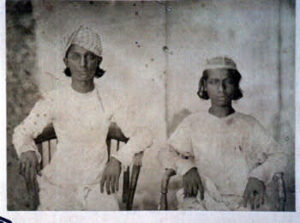
Mirza Jawan Bakht on left
The official British recognized heir was Mirza Fath-ul-Mulk Bahardur (Mirza Fakhru) the eldest son of Zafar from another wife ,but Zeenat was determined to place her son Jawan on the throne and thus she planned everything like controlling palace politically,influencing the emperor , keeping cordial ties with British and finally arranging grand wedding for her son which would declare him as rightful heir. The wedding was not just a celebration,it was more like a political statement.
Grand celebration after decades
The Red Fort once home of emperors like Shah Jahan & Aurangzeb has not seen a true royal wedding for generations .Decline has crept into its courtyards,its treasury was thin and its power was a memory , But Zeenat Mahal wanted to bring back the lost dazzle at least for one historic night.So weeks before the ceremony the fort transformed
1. Belgian mirrors were polished
2. Silk carpets arrived from kashmir
3. Chandeliers from Lucknow were hoisted high
4. Floral arches made of jasmine and motiya lined the pathways
5. Perfumes from Chandni Chowk filled the air with ittar
6. Musicians from Delhi,Rampura and Agra rehearsed day and night.
Zafar himself a great lover of poetry and culture supervised the selection of performers,Ghazal singers and qawwals.The emperor wrote verses specially for the occasion and some were recited in mehfils held during the days leading up to the wedding.
And Delhi by then losing its royal identity felt alive again.
Special Day
On the wedding day,the city gathered in thousands to watch the Baraat of Mirza Bakht.He rode on white stallion decorated in gold and velvet and his attire a sherwani of brocade woven with silver ,pearl necklace ,kamarband embroidered with gems and small curved dagger(symbol of Mughal royalty).Crowd was cheering and throwing petals of roses,many of them heard stories of royal weddings but never witnessed before.For them the wedding was bridge between the memory and present , Delhi was proud but also aware that this might never happen again.
The Bride Shah Zamani Begum, niece of Zeenat Mahal, arrived in a palanquin draped with gold cloth ,surrounded by women of the zenana singing traditional wedding songs.
The feast was legendary and the emperor curated a musical list that showcased the best Indo-Islamic culture,it had everything Dhrupad by court ustads,khayal performance , kathak dance from lucknow gharana , qawwali inside rang mahal, mehfil-e-sama for invited sufis. It was the last time when the Red Fort witnessed such unrestrained cultural brilliance.
The British Reaction
Though the British officers attended the celebration ,they saw the event as more than a wedding.They understood Zeenat Mahal’s intention ,her son’s wedding extravagant, public,politically charged was meant to bolster his claim to the throne. The British understood the queen’s ambition and they had suspicion behind a polite smile.They remained firm that Mirza Fakhru would remain their chosen heir,not Jawan Bakht.But Zeenat did not step back and the wedding became a battlefield disguised in jewels and music.
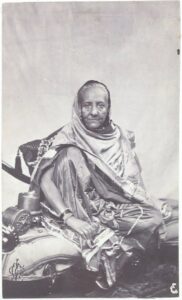
Zeenat Mahal
While the city celebrated the wedding there was a sentimental sadness also lingered.Delhi’s resident knew the Mughal era was ending and this wedding illuminated a dynasty that flickering not flourishing.Poet cap[tured the mood in couplets that described the celebration and loss,splendour and decline , laughter and uncertainty.Ghalib also wrote sehra for the wedding.
In 1856,Mirza Fakhru the British favoured heir died suddenly .Some said it was cholera , some whispered poisoning but no evidence surfaced.Although Zeenat Mhal pushed harder for her son but British refused again and in 1857 the storm of first war of Independence broke out , Bahadur shah zafar unintentionally became its symbolic leader.And the rebellion collapsed zafar was exiled to Rangoon ,most of mughal princes were killed ,the zenana women were imprisoned and Red Fort was emptied of its culture.
Conclusion
The wedding of Mirza Jawan was not just a historical event,it was the final breathtaking flourish of a civilisation which reached its destiny. It captures the last moments when Mughals splendour,courtly etiquette,poetry,politics and the shared culture of Delhi converged under one magnificent roof.
Only few years later the uprising of 1857 reshaped the city forever castling long shadow over the very corridors where this wedding once brought life and laughter.Zeenat Mahal’s ambition,zafar’s affection to his son ,Ghalib’s eloquence and the people’s devotion to Delhi’s traditions all found a place in this single celebration.
To remember this wedding is to remember the last heartbeat of a fading empire ,It is the echo of a world where music filled the fort ,where silk rustled against marble floors and where poetry blessed the air.Mirza Jawan Bakht’s wedding stands as the mughal empire’s final signature before history turn its pages.
Bibliography
1. Dalrymple, William. The Last Mughal: The Fall of a Dynasty, Delhi 1857. New Delhi: Penguin Books, 2006.
2. Zafar, Rana Safvi. Tales from the Qila. New Delhi: HarperCollins India, 2018.
3. Hasan, Mushirul. The Peacock Throne: Essays on Medieval Indian History. New Delhi: Orient Blackswan, 2001.
4. Eraly, Abraham. The Mughal World: Life in India’s Last Golden Age. New Delhi: Penguin, 2007.
5. Lahiri, Sharan. Bahadur Shah Zafar and the Decline of Mughal Empire. Delhi: Oxford University Press, 1988.
6.Bahadur Shah Zafar. Kulliyat-e-Zafar. (Critical editions vary; commonly referenced Delhi Urdu Academy edition.)
7. Ghalib, Mirza Asadullah Khan. Kulliyat-e-Ghalib. (Any standard critical Urdu edition; contains the Sehra for Mirza Jawan Bakht.)
8. Metcalfe, Charles. Delhi: Reminiscences and Sketches of Imperial Delhi. (Metcalfe Papers, British Library Archives.)