
The Phulmoni Case: How it Exposed the Faultlines of Hindu Marriage and Consent in India
- December 11, 2025
By Ramyani Banerjee
The Case of an “Unfortunate” Marriage:
In 1889, ten-year-old Phulmoni Dasi stepped into marriage—a moment celebrated as the beginning of a “new life”—only to lose her own within hours. She died on her own wedding night after her thirty-five-year-old husband, Hari Mohan Maiti, attempted to forcibly consummate the marriage.
What could easily have been dismissed as a “natural” household tragedy burst into the public sphere when it was revealed through an autopsy that the young bride had died from severe internal injuries and blood-loss caused by forced marital consummation. Maiti’s family rushed to frame the incident as an unfortunate “accidental death.” But that narrative collapsed almost instantly: the police arrived, the reports exposed the brutality she had endured, and Phulmoni’s mother stepped forward with testimony that directly implicated him. Her statement pushed the case into the Calcutta Sessions Court on 6 July 1890, transforming a domestic tragedy into public news.
However, inside the courtroom, the deeper rot of the legal system emerged. Colonial law, through the clause of Section 375 of the Indian Penal Code (IPC), 1860, permitted sexual intercourse with a wife, that effectively exempted husbands from prosecution— even when the “wife” was a child, or the consummation is non-consensual. Because the law then considered Phulmoni “of legal age,” prosecutors could not charge her husband Hari Mohan Maiti with rape or culpable homicide. Instead, he was convicted only under Section 338 for causing “grievous hurt”, receiving a sentence of just twelve months’ hard labour.
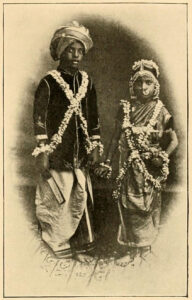
An Indian Child Bride and Child Groom – Circa 1897, Old Indian Photos, blog post, 8 August. Available at: https://www.oldindianphotos.in/2021/08/indian-child-bride-and-groom-circa-1897.html (Accessed: 2 December 2025).
Sadly, the way we understand consent today—a girl’s autonomous choice, her bodily integrity, her ability to say yes or no—had no place in the legal imagination of pre-colonial and early colonial Hindu jurisprudence. Recorded as Empress v. Hari Mohan Maiti, the case starkly exposed how both the Hindu social custom and Colonial Law colluded to leave young girls defenceless within the very institution of marriage.
Educated social reformers seized on Phulmoni’s death as damning evidence that the Hindu marital framework prioritised conjugal rights and patriarchal authority over a girl’s bodily safety. Hindu nationalist leaders and many others, however, denounced any British legal reform as an imperial assault on the sanctity of Hindu marriage. But before we enter the court and controversy, a fundamental question demands attention: What did Hindu personal law actually say about consent in marriage?
Did the woman’s “Consent” already exist in Hindu Shastras?
At first glance, the question sounds deceptively simple. What did “marital consent” even mean in pre-colonial India? Did a lawful age of marriage exist? Did any codified Hindu law recognise a woman’s right—or her free will—to consent to marital consummation?
The deeper we look, the more unsettling the answers become.
In the Hindu religious lawbooks like Dharmashastras and Smritis—the backbone of Brahmanical religious law—the question of what makes a marriage “legal” unfortunately has nothing to do with consent as we understand it today. Because, the concept of “consent” was stitched into the fabric of dharma, varna hierarchy, caste-purity and ritual correctness. Marriage was a sacrament, a sanskara—and in a sacrament, the family’s authority mattered far more than the bride’s will. Therefore, what we hear from these texts is what men thought women should want, feel, or accept in marriage. We must remember that the Hindu Shastras were written by men, for a social world governed by men.
Only a few scattered verses gesture—mostly implicitly—toward the idea of unwillingness of the woman. For example the Yajnavalkya Smriti notes that “one who approaches a woman who is unwilling (ayacitayah) is to be punished” (Yajnavalkya Smriti 1.72), and even The Manusmriti, despite its rigid conservatism similarly states that “he who has intercourse with a woman who does not consent (ayacitam) shall be fined” (Manusmriti 8.352;).
But we must understand that these prohibitions applied only to unmarried women. Within marriage, such protections disappear because the Smritis assume a wife to be a possession of the husband, and cannot withhold or refuse consent from him. In Naradsmriti (12.66) also, the girl’s own “agreement” in the union is mentioned, but quickly subordinates it to familial approval. While Kautilya criticises giving a girl in marriage too early, the rest and sadly most of the Hindu shastras like Baudhayana Dharmasutra (4.1.14) have always privileged pre-puberty marriage as the righteous choice. If read closely, none of these texts articulate anything close to meaningful consent or free-will of the bride. Rather they provide structures in which women were positioned as dependants, not decision-makers.
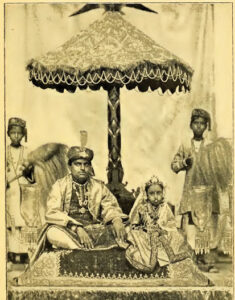
Hindu Groom and his Child Bride – 19th Century [n.d]. [Source:- Available at: https://www.oldindianphotos.in/2011/06/hindu-groom-and-his-child-bride-19th.html (Accessed: 04 December 2025)]
Moreover, these ancient Brahmanical law books describe an entire spectrum of marital forms—from the ceremonially exalted Prajapatya marriage to the violently coercive Rakshasa or Paishacha one—all of which were framed within the same logic of ritual sanctions, that would ultimately make such problematic “marital unions” legitimate.
Therefore, taken together, the Smritis and Dharmashastras reveal a stark truth: while they speak of “unwilling” women and prohibit such union at many instances, they never explicitly mention women’s consent within marriage. Rather, according to these texts, the wife/girl’s personhood simply travels from one male custodian to the next, with no conceptual space for her autonomy, free-will or choice.
What does it really mean when a society calls marriage “sacred”?
Across centuries, one pattern in Hindu legal tradition refuses to fade: marriage being imagined as a father’s sacred obligation, tied to purity, honour, and the timely transfer of a girl to her husband’s household. But if marriage is so “holy,” why did only one form—the Gandharva union—dare to acknowledge mutual attraction and personal choice? And why has this lone form, the only one grounded in individual will, been historically dismissed for lacking the ritual backbone of kanyadaan?
The Dharmashastras and Smritis make the answer uncomfortably clear. The traditionally “approved” marriages—Brahma, Prajapatya, Daiva, Arsha—are constructed entirely around the authority of the guardian. It is the father’s will that sanctifies the union; the daughter’s role is to be given, not to decide. And unlike earlier Vedic traditions, which offered women relatively wider agency, the Dharmashastras cemented strict varna endogamy, caste-preservation and ritual propriety as the normative rule, dictating whom one could marry and in what manner.
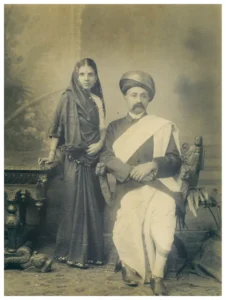
Loeildela Photography (1890’s) A couple with a disturbing age gap. [Source:- Available at: https://devikamalik.medium.com/a-10-year-old-was-raped-to-death-on-her-wedding-night-by-her-30-years-old-husband-cc7c190a80de (Accessed: 4 December 2025)]
So what made marital consent “legal” in this worldview? Not because the bride wholeheartedly agreed to it, understood it, or was old enough to withstand it—- but because it met the demands of ritual purity and social approval. Understanding this textual and cultural framework is crucial to understanding why the Phulmoni Dasi case unfolded the way it did.
Phulmoni, only ten years old, was considered legally married under a social system that treated child marriage as a religious duty and not a violation of bodily integrity. Despite the fact that oftentimes young child brides were allowed to stay in their natal homes until puberty— the belief that a father must marry off a daughter before puberty itself was actually embedded in the very legal imagination of Hindu personal law.
Was the British state using the Phulmoni case to stigmatize Hindu customs?
When the British arrived, they did not dismantle the Hindu Personal law structures—rather they codified them. Early Orientalists like William Jones, Nathaniel Halhed, and Henry Thomas Colebrooke, joined by Bengal pundits enlisted for translation, were convinced that India’s “ancient laws” offered a pristine window into its civilization. So they translated the Dharmashastras—Manusmriti, Yajnavalkya Smriti, Mitaksara, Dayabhaga along with the digest of other Hindu laws—and eventually the colonial legal system was built on them. In other words, what had once been interpretive religious injunctions became state-enforced law. But in reality, what these colonial projects overlooked was truly important: these Dharmasastric texts had not evolved for centuries, even as society’s needs had.
Eventually, this led to a strange paradox: One, the British claimed they were not interfering in Indian customs. This is because the Lex Loci Report, 1840 explained that the British would preserve Hindu and Muslim personal law, while The Assam & Bengal Presidency Regulations (late 18th–early 19th c.) reaffirmed the principle that disputes concerning family must be decided by Hindu and Muslim personal law. But this codification did the very opposite of neutrality. By choosing the upper-caste religious scriptures counted as “Hindu law,” they froze a narrow, elite, Brahmanical interpretation of the Dharmashastra texts, stripping it of their regional variation and customary flexibility.
This inherited legal architecture produced a moral crisis, when the horrific case of Phulmoni Dasi forced the British administration to confront a law-system they had codified. The case exposed a glaring legal vacuum—one created and sustained by the British themselves—by elevating Dharmashastric norms into binding statutory law. After Phulmoni’s death, it became impossible to ignore what Dharmashastric norms and colonial codification had sanctioned: marriage without consent, consummation without readiness and accountability.
Why the Age of Consent Act of 1891 Split the Nation?
Much of the public outrage, it turned out, was fuelled less by the Bill itself and more by a fundamental misunderstanding of it. The Act never sought to meddle with Hindu marriage rites; its scope was limited to one specific intervention — legally forbidding the consummation of a marriage before a girl reached the age of twelve.
But the debate over marital age had been simmering long before the Bill appeared, especially after the sensational 1887 Bombay High Court case involving Dr. Rukhmabai. Married at eleven and refusing to live with her husband, Rukhmabai exposed a stark contradiction at the heart of Hindu marital law: a marriage was to be considered perfectly valid even when the wife refused conjugal consent. The law protected the marriage—not the girl. In 1891, Sir Andrew Scoble introduced the Age of Consent Bill in the Legislative Council of the Governor-General in Calcutta. It sought one simple amendment: raise the marital age of consent from 10 to 12, making sexual intercourse with a wife under 12 a prosecutable offence of rape (Act X of 1891). Yet what seemed like a small legal adjustment detonated into one of the fiercest ideological battles of the late 19th century.
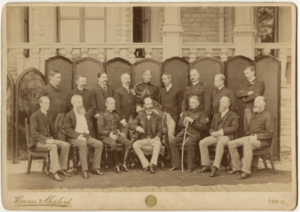
Bourne and Shepherd, Shimla. (1890) Lord Lansdowne and Sir Andrew Richard Scoble with the English ICS officers in India [Photograph]. Available at: https://commons.wikimedia.org/wiki/File:ICS_Bourne_and_Shepherd.png (Accessed: 4 December 2025).
One of the strongest objections to the reform came from those who argued that it struck at the heart of Hindu religious law, violating the very assurances of non-interference promised in the Queen’s Proclamation of 1858. Opponents repeatedly asked how Europeans—who had only read a few translated texts of Hindu scripture—could confidently claim with such certainty that the Age of Consent Bill posed no threat to Hindu marriage customs?
Opposition erupted instantly. Council member Sir Romesh Chunder Mitter denounced the bill as an attack on orthodox Hindu code, arguing that colonial intervention threatened the sanctity of Hindu marriage—an institution rooted in Dharmashastric authority. Outside the council, influential nationalist leader Bal Gangadhar Tilak warned that even well-intentioned reforms were intolerable if they tampered with Hindu domestic life: “We would not like that the government should have anything to do with regulating our social customs or ways of living, even supposing that the act of government will be a very beneficial and suitable measure.” For many Hindu nationalist leaders of the time, marriage was not merely a social arrangement but a sacred sacrament—an arena governed by the Dharmashastra, not by the interventions of a secular colonial state. So, any attempt to raise the age of consent was thus cast as an intrusion into Hindu autonomy itself, a direct challenge to their authority over the marital body and the sanctity of tradition.
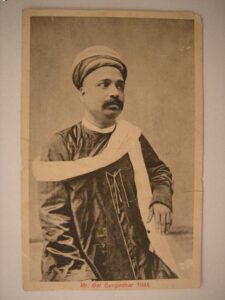
Left:- Vintage Postcard of Bal Gangadhar Tilak (n.d.) Old Indian Photos. [Available at: https://www.oldindianphotos.in/2011/10/vintage-postcard-of-bal-gangadhar-tilak.html (Accessed: 4 December 2025)]
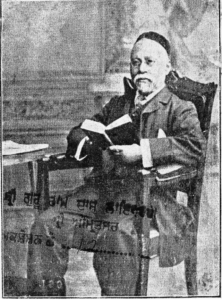
Right:- Behramji Malabari [Available at: https://commons.wikimedia.org/wiki/File:Behramji_Malabari.png (Accessed: 04 December 2025) ]
Several newspapers like Amrita Bazar Patrika further fuelled public unease, circulating distortions and half-truths that cast the Government’s intentions over Hindu Marriage in a haze of suspicion. Through these sources, we get to know how there were many opponents, who were circulating baseless and foolish accusations against the Government and their western education; while others went so far as to print false news, and inflame public sentiment by declaring, “O Hindu brethren, your religion is being polluted; you must excommunicate anyone who supports the Age of Consent Bill.” Such rhetoric attempted to frame a basic reform of marriage and conjugal relations as a threat to religious identity.
Yet defenders of the bill were equally vocal. Council member Rao Bahadur Krishnaji Lakshman Nulkar and Viceroy Lord Lansdowne argued that the state had a moral duty to protect girls, whose marriages were governed by laws that had not evolved for centuries. Eminent reformers such as Behramji Malabari—whose 1884 tract Notes on Infant Marriage and Enforced Widowhood had already stirred debate—strongly insisted that Hindu marriage practices were endangering wives in the name of ritual purity. Malabari also sought support from Dayanand Saraswati’s Arya Samaj, arguing that the Act would serve as a crucial step toward abolishing child marriage. In Punjab, there was almost unanimous support for the Age of Consent Bill.
Most importantly, the majority of the educated native Indians, who were aware of such unlawful marital consummations generally supported the reform. In fact, many argued that it would have been wiser for the Government to encourage Indian society to address this social problem themselves rather than impose legislation from above. Several vernacular newspapers voiced strong support for the Age of Consent Bill of 1891, and also advanced several supporting arguments: that raising the age would reduce maternal deaths, and that early unions endangered both the physical well-being and the moral development of young brides.
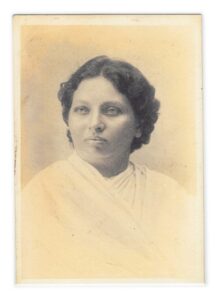
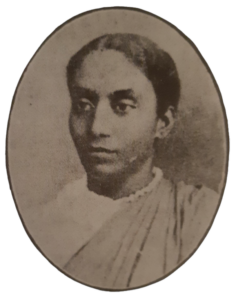
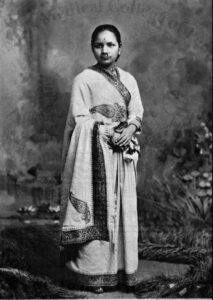
Right: Pandita Ramabai [Image Source:- Khan, A. (2018) ‘Overlooked No More: Pandita Ramabai, Indian Scholar, Feminist and Educator’, The New York Times, 14 November]
Middle: Dr. Rukhmabai Raut [Image Source:- Royal College of Physicians (2024) ‘Dr Rukhmabai Raut ~ Happy 160th Birthday’, RCP Museum Blog, 22 November. Available at:https://history.rcp.ac.uk/blog/dr-rukhmabai-raut-happy-160th-birthday]
Left: Dr. Anandibai Joshi [Image Source:- Dall, C. W. H. (before 1887) Photograph of Anandibai Joshi [online image]. Available at: https://commons.wikimedia.org/wiki/File:Anandibai_joshi.jpg (Accessed: 4 December 2025)]
Ironically, the very people whose “consent” lay at the heart of the national uproar—women—were kept at the margins of the legislative process by both the British administration and Indian nationalists. Yet it was women who emerged as some of the bill’s most powerful public advocates. In the Bombay Presidency, figures like Dr. Rukhmabai and Pandita Ramabai mobilised journals, pamphlets, and women’s organisations to deliver an uncompromising message: a marriage rooted in injury, coercion, or fear could never claim moral legitimacy. Their interventions reframed the debate from abstract legal reform to lived bodily reality. And in an even more striking departure from nationalist sentiment, Anandibai Joshi—India’s first woman physician—openly supported and strongly advocated British intervention, insisting that child marriage was a social evil demanding urgent remedy.
Yet despite such heated debates, the Age of Consent Act was never meaningfully enforced. The law that followed—first weakly applied, then superseded by the Child Marriage Restraint Act of 1929, and later amended to set the minimum age at 18—shows how slowly and painfully the legal recognition of girls’ rights evolved. Today, in retrospect, many scholars argue that the greatest impact of the Phoolmoni Case and Age of Consent Debate was the reassertion of upper-caste Hindu male authority over the domestic sphere, recasting as a nationalist battleground against colonial intrusion.
Conclusion:
Marriage is always celebrated as a sacred union and a new beginning between two individuals. But the history surrounding the Age of Consent debate always reminds us that the very structure of marriage has long been used to regulate women’s bodies and choices. It reveals that for centuries, marriage in India—both under Dharmashastric norms and colonial law—functioned less as a partnership between two people and more as an institution regulated by patriarchal authority, community expectations, and state power. And that every legal reform we debate today is part of a much longer struggle to place dignity, consent, and equality at the center of intimate life. To reckon honestly with this history is to recognize that rethinking marriage is not about dismantling tradition, but about refusing the injustices that Hindu ritualistic tradition once enabled.
REFERENCES:
1. Bandyopadhyaya, S. (2004) From Plassey to Partition: A History of Modern India. Hyderabad: Orient Blackswan, pp. 237–238.
2. Bannerji, H. (2001) Inventing Subjects: Studies in Hegemony, Patriarchy and Colonialism. London: Anthem Press, pp. 74–76.
3. Goyal, H. (2024) ‘The Age of Consent in India’, International Journal of Social Science Research and Review, 7(8), pp. 74–82. doi: 10.47814/ijssrr.v7i8.2160.
4. Heimsath, C.H. (1962) ‘The Origin and Enactment of the Indian Age of Consent Bill, 1891’, Journal of Asian Studies, 21(4), pp. 502–503. doi:10.2307/2050879.
5. Kaur, M. (2023) ‘The Age of Consent Act of 1891 through the Lens of Vernacular Press’, International Journal for Innovative Research in Multidisciplinary Field, 9(4), pp. 214–216.
6. Olivelle, P. (1999) Dharmasutras: The Law Codes of Ancient India. Oxford: Oxford University Press. Available at: https://archive.org/details/dharmasutrasthelawcodesofancientindiapatrickolivelleoup_202003_809_K (Accessed: 4 December 2025), chapters 11.15–11.16.
7. Sarkar, T. (2000) ‘A Prehistory of Rights: The Age of Consent Debate in Colonial Bengal’, Feminist Studies, 26(3), pp. 601–622.
8. Sreenivas, M. (2008) Wives, Widows, and Concubines: The Conjugal Family Ideal in Colonial India. Bloomington: Indiana University Press, p. 71.