

By Arnav Kala
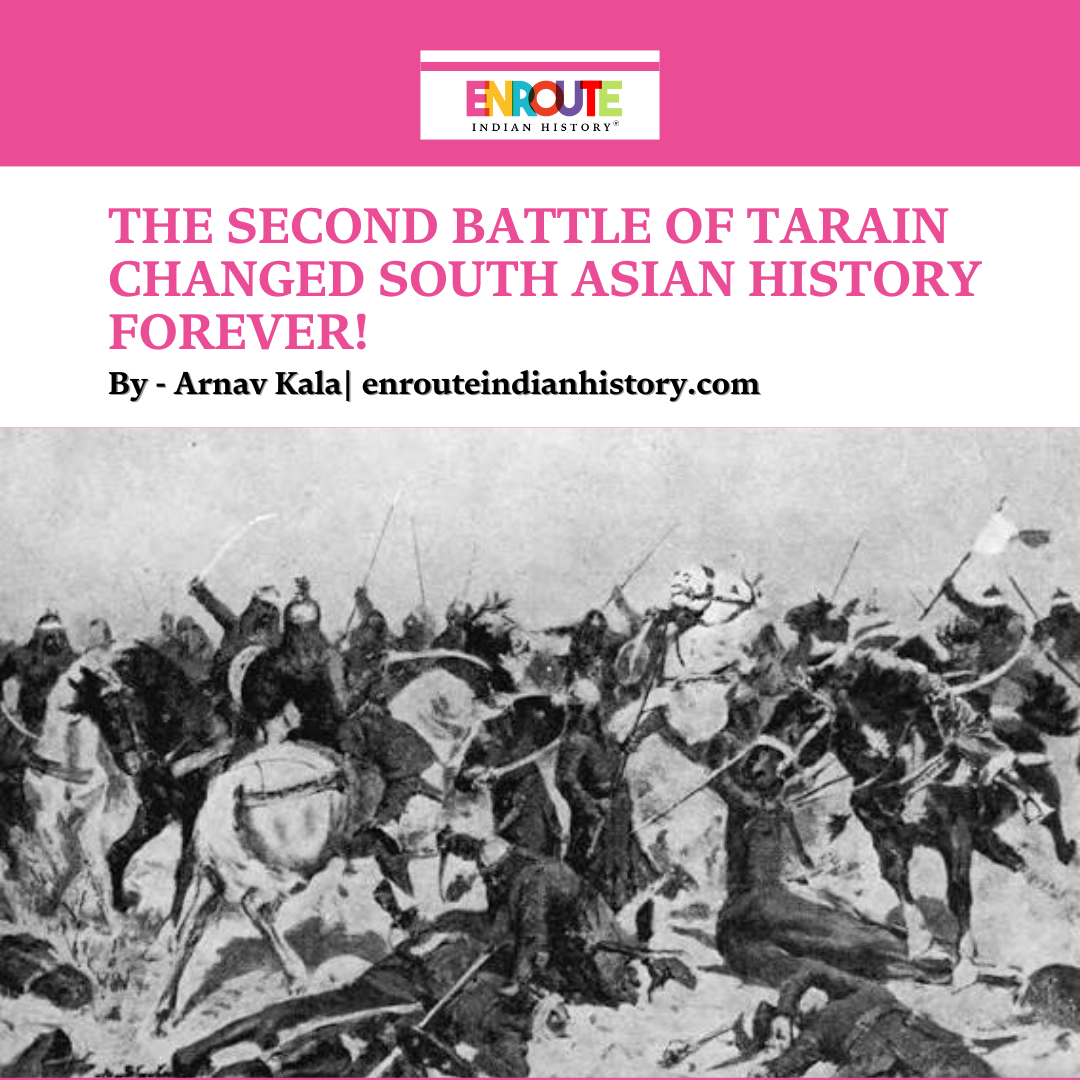
The Second Battle of Tarain, fought in 1192 CE between Prithviraj Chauhan of the Chahamana dynasty and Muhammad Ghori of the Ghurid Empire, was not just a military encounter but also a defining moment in Indian history. While battles are often remembered for their immediate consequences, this one left deep and lasting imprints on the subcontinent’s political and cultural landscape. More than a clash between two rulers, it symbolised the beginning of a long and transformative Indo-Islamic phase in South Asia’s history. The Second Battle of Tarain as a military event left a deep socio-political mark as its aftermath, and must be seen as a pivotal civilisational collision that shaped the trajectory of Indian history.
Context Before the Battle
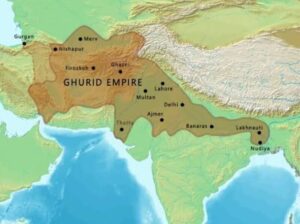
By the late 12th century, Northern India was a patchwork of powerful regional kingdoms often locked in constant warfare. Among these, the Chahamana (Chauhan) dynasty, under the leadership of Prithviraj Chauhan, controlled strategic portions of modern-day Rajasthan, Haryana, and Delhi. Meanwhile, the Ghurid Empire, based in present-day Afghanistan, was expanding eastward under the ambitious Muhammad Ghori, seeking not only plunder but political control over the fertile Indo-Gangetic plain.
The First Battle of Tarain in 1191 had seen Prithviraj Chauhan decisively defeat Ghori, supposedly wounding him and forcing a retreat. However, Ghori’s resolve to continue raiding into the sub – continent did not falter. Over the next year, he regrouped and meticulously planned a return, while Prithviraj, confident in his earlier victory, reportedly underestimated the renewed threat.
Anatomy of the Battle: Strategy, Tactics, and Technology
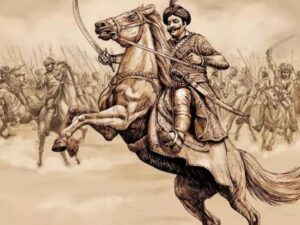
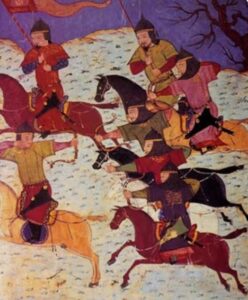
Unlike the chaotic melee-style warfare common among Indian kingdoms at the time, Ghori’s strategy was marked by discipline, mobility, and deception. His army included Turkish cavalry skilled in mounted archery, a tactic alien to Indian forces reliant on infantry and war elephants.
Ghori employed the classic Central Asian steppe strategy of feigning a retreat. On the battlefield at Tarain, he divided his forces into several units. After a brief frontal engagement, his central units pretended to flee, drawing the Rajput forces into a hot pursuit. Once the Indian lines were broken and scattered, Ghori’s flanking cavalry units encircled and struck with precision.
Prithviraj Chauhan’s forces, though said to be valorous, lacked the flexibility and coordination to recover from this tactical ambush. Historical records suggest that over 100,000 Rajput troops were involved. The defeat was catastrophic as the Chauhan king was captured and subsequently executed, either by Ghori or under his orders.
Aftermath: Political and Religious Consequences
The immediate consequence of Ghori’s victory was the establishment of Muslim rule in North India. Though Ghori returned to Ghazni, he left his slave-general Qutb al-Din Aibak in charge. Aibak would go on to lay the foundation of the Delhi Sultanate in 1206, institutionalising Ghurid authority in India.
The political implications were far-reaching:
1. Decentralized Hindu rule gave way to centralized Turkic-Islamic governance, with a more bureaucratic and militarized administration.
2. Feudal Rajput states were slowly absorbed or crushed, and a new elite of Persianate administrators, Afghan warriors, and Turkish nobles emerged.
3. Delhi began to rise as a major center of power, from where successive Sultanates would shape the destiny of the subcontinent for centuries.
On the religious and cultural front, Ghori’s victory was instrumental in accelerating Islamic expansion in the Indo-Gangetic heartland. It marked the beginning of the long interaction between Islamic and Indic civilizations, seen later in architecture, language, law, and philosophy.
Clash of Civilisations: Myth or Reality?
Modern historians often debate whether it is fair to describe this as a “clash of civilizations.” While the term may evoke Samuel Huntington’s more recent theory, the Second Battle of Tarain undeniably brought together two distinct world orders:
1.The Indic Order: decentralized, temple-based, caste-structured, and steeped in regional identity.
2.The Islamic Persianate Order: centralized, transregional, monotheistic, with an emphasis on written law (sharia) and military meritocracy.
The outcome did not result in an immediate Islamic cultural takeover, but it initiated centuries of conflictual, syncretic, and transformative interaction. The rise of Indo-Islamic architecture, the Persianisation of Indian courts, and the evolution of composite languages like Urdu can all trace their roots to the new order catalysed by Tarain.
Why Did the Rajputs Lose?
One of the enduring questions that comes to mind is how an army that had defeated Ghori a year earlier failed so dramatically in the second encounter. Several reasons emerge:
1.Overconfidence and Lack of Preparation: Prithviraj seemed to believe Ghori would not return so soon. There was little evidence of coalition-building with neighboring Rajput states.
2. Inflexible Military Tactics: Rajput warfare was centered on honor-bound frontal assaults, unsuitable against the feigned retreat strategy.
3. Lack of Strategic Intelligence: Ghori’s night march and surprise tactics suggest a lack of espionage or forward intelligence on the Rajput side.
4. Cavalry Mismatch: The Turkish light cavalry could maneuver quickly, while Rajput forces were hampered by elephants and slower infantry.
Legacy and Historical Memory
Prithviraj Chauhan’s tragic heroism was later immortalized in ballads and legends, notably the Prithviraj Raso by Chand Bardai, which romanticised his resistance and recast his defeat as martyrdom. These literary retellings played a crucial role in shaping Rajput identity and resistance narratives in later centuries.
However, these legends obscure the deeper significance of Tarain. The defeat was not just personal, it also marked the end of Hindu hegemony in northern India, a reality slowly understood by later Hindu rulers, some of whom adapted by forming alliances or hybrid governance systems.
Reinterpreting Tarain in Modern Historiography
Contemporary historians are careful to avoid oversimplified religious binaries when interpreting this battle. While Ghori was a Muslim ruler and Prithviraj a Hindu king, their conflict was also shaped by realpolitik, ambition, and the desire to control rich trade routes and fertile territories.
Yet, the symbolic resonance remains strong. For many, the Second Battle of Tarain represents the moment India lost its political sovereignty to a new civilization—a transformation with consequences still evident in the subcontinent’s demographic and cultural realities.
Conclusion
The Second Battle of Tarain deserves its place as a landmark event in Indian history. It was more than a military defeat—it marked the end of one civilizational order and the ascent of another. As a historical hinge, it opened India to new cultural interactions, political institutions, and religious ideas. The battle is a testament to how singular events, rooted in tactical brilliance and strategic missteps, can alter the destiny of a subcontinent.
References
1. Kaushik Roy, “The Army of the Early Delhi Sultanate,” Indian Historical Review, Vol. 34, No. 2 (2007) – SAGE Journals PDF
2. Iqtidar Ahmad, “Ghuri Conquests and the Foundation of Muslim Rule in North India,” Oxford Handbook of Islamic South Asia – Oxford Academic Chapter
3. André Wink, Al-Hind: The Making of the Indo-Islamic World, Vol. II – Free Full Text on Archive.org