

By Arnav Kala
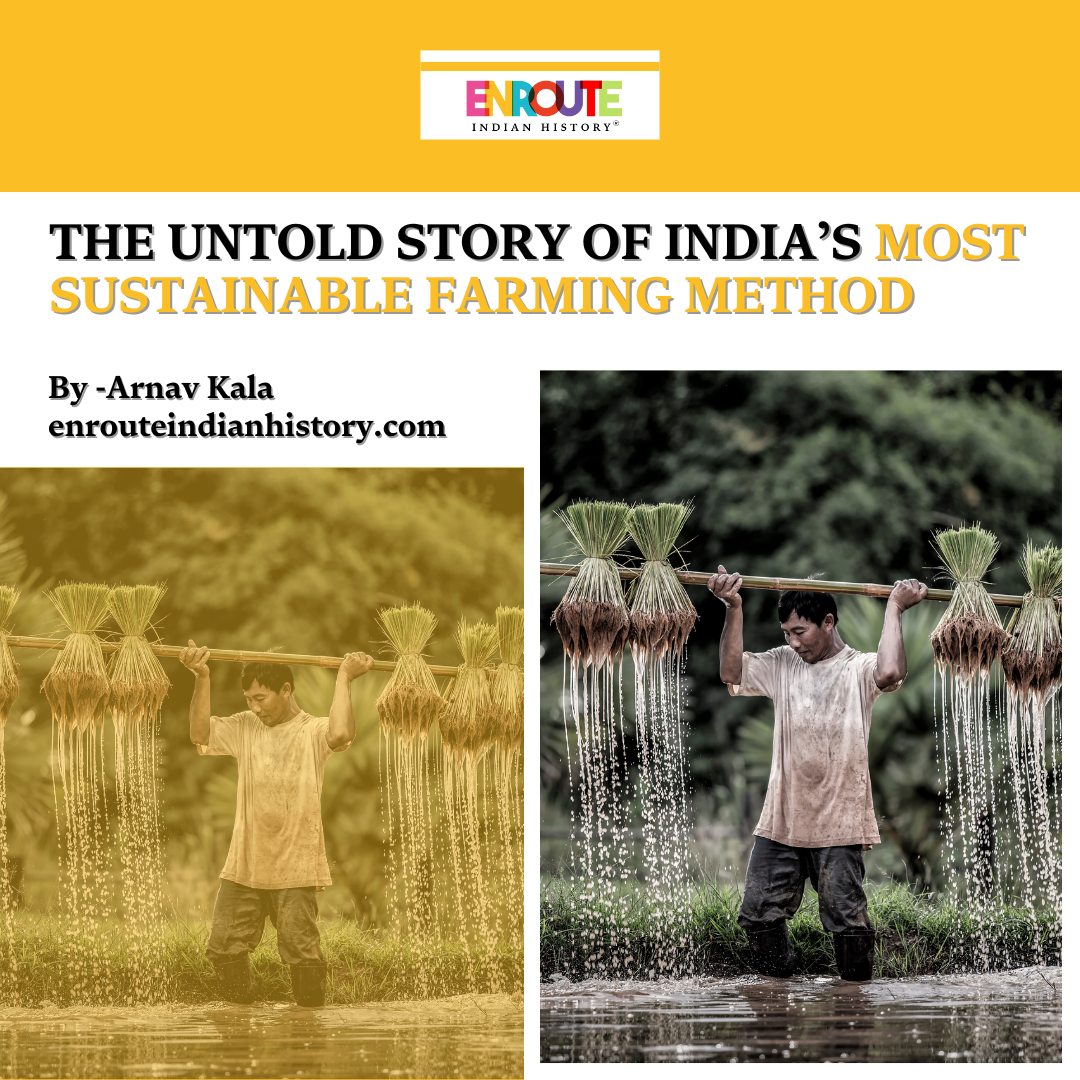
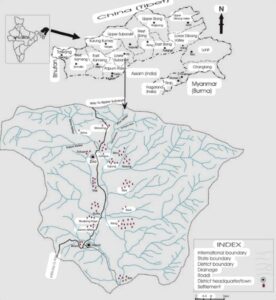
India’s northeastern frontier, nestled in the valleys of Arunachal Pradesh, harbors an ancient agricultural innovation practiced by the Apatani tribe which is known as wet rice–fish cultivation. In the Apatani plateau of Ziro Valley, a remarkable example of sustainable agriculture thrives, where rice and fish are cultivated together in precisely engineered terraced fields without the use of chemical fertilizers or pesticides. This indigenous practice, embedded in socio-cultural traditions and ecological harmony, has drawn increasing academic and environmental interest. Recognized by various researchers and lauded in national journals and platforms like Down to Earth, the Apatani system stands as a blueprint for sustainable farming in mountainous and ecologically fragile terrains.
Origins and Technical Aspects of the Apatani Farming System
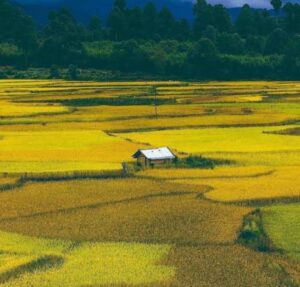
The Apatani people of Lower Subansiri district have practiced wet rice–fish cultivation for centuries. This system integrates pisciculture with paddy farming in terraced fields. The land is carefully leveled, bounded by low earthen embankments, and divided into rectangular plots with drainage and irrigation channels. These are interconnected and fed by bamboo or wooden pipelines diverting water from mountain streams. What makes the Apatani method exceptional is the refined control over water flow, managed without modern tools. Paddy fields are irrigated and drained through a gravitational channel system. The design incorporates a small ditch or refuge area where fish can retreat during water scarcity or for breeding.
The Apatani system commonly uses local carp species (such as Cyprinus carpio) introduced into the flooded fields at the early growth stage of the rice crop. These fish thrive on natural food sources like plankton, periphyton, algae, and pests which contributes to the biological balance of the fields. Furthermore, crop diversification is integral to Apatani farming. After the rice harvest, finger millets (ragi) are grown on dry plots using residual soil moisture. This tri-cropping pattern of rice, fish, and millets ensures year-round productivity and nutrient security for the community. A key feature of this system is the zero dependence on external chemical inputs. Instead, it relies on internal nutrient recycling involving composting of agricultural waste and livestock dung, further enhancing soil health.

Traditional Ecological Knowledge and Cultural Embedding
The Apatani practice is more than an agricultural system as it is a manifestation of traditional ecological knowledge passed through generations. Water management, seed saving, fish propagation, and soil stewardship are carried out collectively by community members. Farming roles are distributed across gender and age as both men and women contribute to activities such as irrigation, seedling transplantation, bund repair, and fish care.
Culturally, this system is closely tied to Apatani festivals like Dree, which celebrates fertility and agricultural abundance. Rituals associated with sowing and harvesting reflect the deep spiritual connection between the Apatanis and their land. Their collective labor and communal ownership over irrigation channels foster strong social capital, something which is rare in industrialized farming. These community practices significantly reduce resource conflicts and promote knowledge-sharing.
Recognition and Conservation Efforts
The uniqueness of the Apatani farming system has not gone unnoticed. The Food and Agriculture Organization (FAO) of the United Nations has included India’s integrated rice–fish systems, including the Apatani method, in its Globally Important Agricultural Heritage Systems (GIAHS) framework (Cambridge, 2020). Moreover, environmental and developmental agencies have recognized its potential to combat environmental degradation, particularly as a counter to shifting (jhum) cultivation that accelerates deforestation and erosion.
Despite this, the Apatani method faces threats from modernization, land-use changes, and migration. Many younger Apatanis are moving away from traditional farming in pursuit of urban opportunities, raising concerns about the system’s long-term sustainability.
Influence and Benefits of Apatani Rice–Fish Cultivation
1. Ecological Sustainability and Soil Health
One of the most remarkable ecological impacts of the Apatani method is its enhancement of soil quality. Narang Ampi’s (2021) comparative study on rice–fish fields and adjacent forests in the Apatani plateau found that the cultivated fields exhibited higher levels of organic carbon, phosphorus, and micronutrients, alongside improved soil texture. These outcomes stem from the organic manure inputs, recycling of fish waste, and natural decomposition processes within the paddy ecosystem.
The periphyton which is a biofilm of algae and microbes that grows on submerged surfaces further enriches the soil. This periphyton community provides nutrients to fish and contributes to phosphorus recycling, forming a self-sustaining nutrient loop.
This closed-loop nutrient management prevents leaching and minimizes the need for external inputs, helping conserve the delicate ecological balance of the Himalayan foothills.
2. Enhanced Productivity and Food Security
By combining rice and fish in the same field, the Apatanis effectively double their food yield from a single unit of land. This method can yield an additional 500 kg of fish per hectare per season, while also boosting rice productivity by 10–15% due to fish-induced pest control and improved soil aeration.
The inclusion of finger millets after the rice-fish phase diversifies both calories and nutrients available to families. Millets are drought-resistant and rich in micronutrients, offering a nutritionally balanced farming model in contrast to monoculture paddy systems. This model also addresses protein deficiency, which is a common issue in remote tribal areas, through the fish component, making the Apatani diet more resilient and complete.
3. Pest and Weed Suppression
Fish play a vital role in biological pest control by consuming mosquito larvae, insects, and weeds. Their movement through flooded paddy fields also reduces algae overgrowth and prevents water stagnation, lowering the incidence of vector-borne diseases. This natural control reduces the need for synthetic herbicides and insecticides, thereby limiting chemical runoff and protecting aquatic biodiversity. According to the Cambridge Journal of Renewable Agriculture, this balance is difficult to achieve in conventional monocultures. Moreover, the bunds around paddy plots support biodiversity niches such as frogs, earthworms, and beneficial insects thrive here, creating a multilayered and dynamic agro-ecosystem.
4. Water Efficiency and Erosion Control
The Apatani system demonstrates an extraordinary ability to conserve and utilize water efficiently in a hilly region prone to runoff and soil erosion. Using bamboo aqueducts and gravity-fed channels, water is diverted, distributed, and conserved in the fields with minimal loss.
This also prevents siltation of rivers and downstream water bodies which is a frequent issue with conventional jhum or terrace cultivation. The presence of ditches or “refugia” in each plot ensures water is retained during dry spells, enhancing climate resilience. This method could serve as a model for water-efficient farming in climate-vulnerable zones, especially in highland Southeast Asia and parts of the Western Ghats.
5. Socio-economic Resilience and Cultural Continuity
Beyond environmental benefits, the system provides economic security through surplus rice and fish production. Households that produce more than they consume can sell fish locally, generating supplementary income without capital-intensive inputs.
More importantly, the system supports social equity. Tasks are divided across gender lines, ensuring participation of women in irrigation and transplanting. Communal management of water and land strengthens collective decision-making and conflict resolution, avoiding privatization and fragmentation of resources.
Cultural practices and festivals tied to the agricultural calendar foster community spirit and ensure intergenerational transmission of ecological knowledge. As modern youth become increasingly disconnected from land-based practices, such systems offer a pathway for cultural revitalization and dignified livelihoods.
6. Climate Mitigation Potential
Although formal studies on GHG emissions from Apatani rice–fish fields are limited, findings from comparable systems suggest lower methane emissions than monoculture flooded paddies. The presence of fish improves soil aeration and reduces anaerobic microbial activity responsible for methane generation.
The system’s carbon sequestration through organic matter buildup and minimal tillage further adds to its climate-friendly profile. As Cambridge Review notes, rice–fish systems may be “future-ready” solutions in global climate adaptation strategies.
Apatani Wet Rice–Fish Cultivation as a Global Contribution in Traditional Agricultural Innovation
As a contribution to global agricultural heritage, the Apatani system challenges the dominant narratives of progress that equate modernity with industrialised monocultures. Instead, it aligns with emerging international principles of agroecology, climate adaptation, and food sovereignty. It demonstrates that complex, high-yield farming can emerge not from technological interventions alone, but also from culturally situated, biologically diverse practices refined through centuries of observation, experimentation, and community knowledge-sharing. The Apatani model contributes to the global discourse on climate-resilient agriculture. Its minimal carbon footprint, efficient water use, and soil-conserving design align it with the goals of the UN’s Sustainable Development Goals (SDGs), particularly those relating to zero hunger, life on land, and responsible consumption. It also offers a replicable template for other highland and ecologically sensitive regions across Asia, Latin America, and Africa, where conventional techniques have failed to adapt to topographical and cultural realities.
As India increasingly positions itself as a knowledge leader in sustainable and traditional systems, whether through yoga, Ayurveda, or permaculture, the Apatani wet rice–fish cultivation deserves similar visibility as a uniquely Indian innovation in the realm of food and farming. It highlights the strength of Indigenous knowledge systems not as static relics of the past, but as dynamic frameworks capable of addressing 21st-century global crises. To preserve, promote, and learn from this practice is not just a matter of cultural pride but of planetary urgency. As the world searches for low-impact, high-output agricultural methods, the Apatani farming system offers a globally relevant model of how tradition and sustainability can flourish together.
Conclusion
The Apatani wet rice–fish cultivation system exemplifies a time-tested, ecologically sound, and socially embedded innovation that balances food production with environmental stewardship. Its precise water management, biological pest control, soil enrichment, and tri-crop integration offer a replicable model for sustainable agriculture in fragile upland ecosystems.
In an era of environmental degradation and nutritional insecurity, this indigenous system which is recognized by FAO and studied by Indian scholars has remained a living laboratory of innovation. Protecting, promoting, and learning from Apatani farming is not just about preserving a cultural heritage, it is about cultivating pathways to a more resilient and equitable agricultural future.
References
1. Saikia, D. K., & Das, J. (2010). Ecology of terrace wet rice-fish environment and role of periphyton. Nepal Journals Online (NepJOL)
2. Ampi, N. (2021). Development of soil physico‑chemical quality index of rice‑fish farming system in Apatani plateau. Krishikosh
3. Rai, N. (2005). Apatani paddy-cum fish cultivation: An indigenous hill farming system. ResearchGate
4. Tayo, R., Tajo, L., & Mize, M. (2017). Integrated Paddy, Fish and Finger Millets Cultivation by Apatani Tribes. [Arunachal Times article, archived]
5. Cambridge Review (2020). Sustainable food production through integrated rice–fish farming in India. Cambridge.org
6. Towards sustainability: Arunachal’s Apatanis use a unique integrated cultivation method (2023). Down to Earth