

By Shreya Kamboj
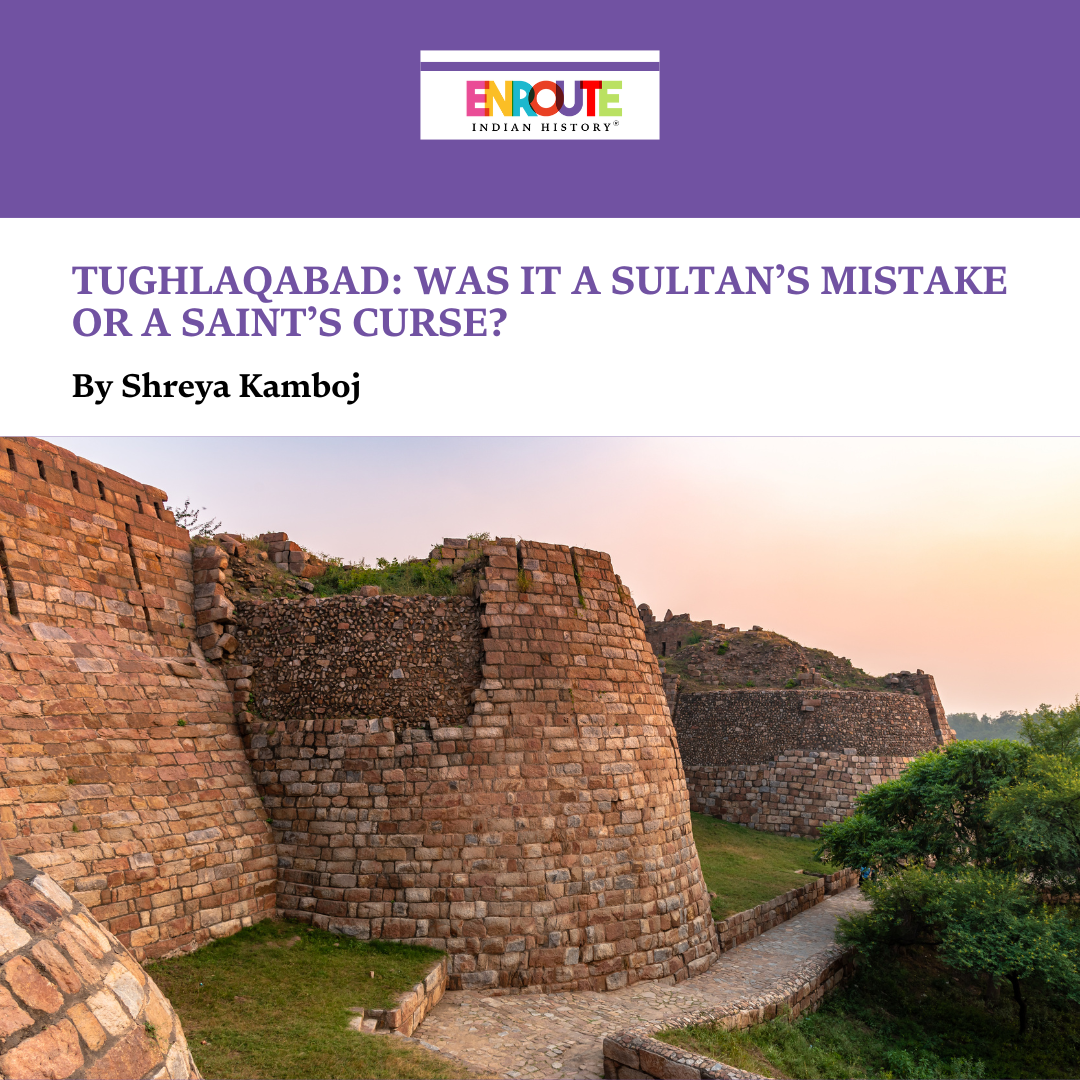
Tughlaqabad, the third fortified city of Delhi, was built on the Aravalli hills by Sultan Ghiyas-ud-din Tughlaq between 1321 and 1325 C.E.. The fort’s design featured massive, sloping walls and bastions, characteristic of Tughlaq architecture. It was intended to serve as a defensive stronghold against Mongol invasions and as the dynasty’s administrative center. Despite its strategic construction and scale, the fort was abandoned shortly after its completion and remained largely unpopulated. This rapid desertion raises a crucial question: why did such a significant imperial project fail? (Singh 2024)
The most common explanation is the legendary curse of the Sufi saint Nizamuddin Auliya. According to the legend, the saint, after being obstructed by the Sultan in the construction of his tank, pronounced that the new city would remain desolate or be inhabited by nomads (“Gujars and jackals”). The Sultan’s sudden death in a pavilion collapse before he could return to Delhi is often linked to this curse. Historical analysis, however, points toward more practical reasons for the fort’s decline.
This article argues that the narrative of the saint’s curse is a later fabrication, as it is not mentioned in contemporary accounts. Instead, Tughlaqabad’s abandonment can be attributed to a combination of factors, including logistical issues like water scarcity and the political shifts that followed Ghiyas-ud-din’s death. His successor, Muhammad bin Tughlaq, transferred the capital to Daulatabad, a decision that rendered the fort obsolete. The persistence of the curse legend is significant not as a factual account, but as an example of ‘history from below’, a narrative that reflects popular sentiment and a search for divine justice against imperial authority.
The Genius of Tughlaq’s Fortress
The story of Tughlaqabad’s creation begins with a prophetic exchange, even before its founder, Ghiyas-ud-din Tughlaq, ascended the throne. A well-known legend states that while serving his master, Sultan Mubarak Shah Khilji, Ghiyas-ud-din identified a rocky, easily defended outcrop and proposed that a fort should be built there. The Sultan reportedly laughed at the suggestion and mockingly told Ghiyas-ud-din to build it himself when he became sultan, not realizing his words would come true.
We cannot ascertain the degree of truth in this story, however, what we’re sure of is that the construction was a direct response to the political realities of the time, driven by two primary motives: dynastic pride and defense. As the soldier-founder of a new dynasty, Ghiyas-ud-din needed a capital that symbolized his power, while the renewed and pressing Mongol menace made an impregnable fortress a strategic necessity. (Spear 1937)
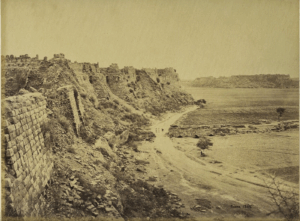
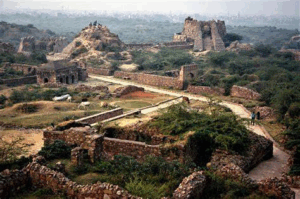
The fort’s architects demonstrated a mastery of the landscape by selecting that highly defensible position on the edge of the Aravalli hills. This rugged terrain provided natural advantages, with rocky scarps integrated directly into the man-made fortifications, which were built from locally quarried stone. The strategic use of the topography exemplified the principles of a vana-durga, or forest fort, designed to leverage natural barriers for protection. Moreover, the colour of the material used (quartzite colour) blends well with the natural vegetation, which helps in camouflaging. (Singh 2024)
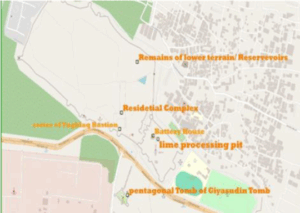
The architectural prowess of Tughlaqabad is most evident in its formidable defenses. The iconic battered, or sloping, walls are a hallmark of the grim and powerful Tughlaq style, which was engineered to be incredibly stable and difficult for an enemy to scale. The fortifications were extensive, with the inner and outer walls stretching for 6.5 kilometers. These defenses were further enhanced by a glacis, a gentle slope of earth at the base of the wall, and an even steeper slope above it, which was designed to make it nearly impossible for attackers to position their ladders effectively. Internally, the city was organized into a tripartite division: a formidable citadel, a protected palace area, and the wider city for the general populace. The residential area followed a straightforward grid pattern of streets, intersected by a main road leading from the city’s central gate directly to the entrance of the citadel. (Spear 1937) (Peck 2005) (Singh 2024)
To sustain the city, its builders implemented a sophisticated water engineering system. By constructing a series of dams and sluices, they created a large artificial lake that served the dual purpose of providing a crucial water source and forming a defensive moat, which notably surrounded the island-like enclosure of Ghiyas-ud-din’s own tomb. This combination of strategic location, powerful architecture, and clever engineering made Tughlaqabad a fortress of immense strength and rendered its abandonment all the more enigmatic. (Spear 1937) (Singh 2024) (Peck 2005)
The Saint’s Wrath

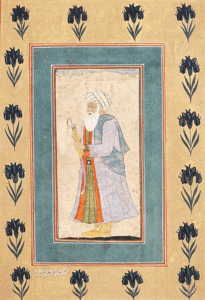
Interestingly, the most enduring story associated with Tughlaqabad is not one of architectural ambition but of a conflict between authority. The core of this legend lies in the rival construction projects of Sultan Ghiyas-ud-din Tughlaq and the revered Sufi saint, Hazrat Nizamuddin Auliya. While the Sultan was raising his massive fortress, the saint was building a baoli (step-well) for the public. To ensure his fort was completed without delay, Ghiyas-ud-din forbade all laborers from working on any other project, which directly halted the saint’s work. The laborers who were devoted to the saint obeyed the Sultan by day but continued their work on the baoli by night. When Ghiyas-ud-din learned of this, he cut off their supply of oil for lamps. It was then, according to legend, that the saint performed a miracle which caused the water of the well to burn like oil, allowing the work to continue. While this may not have been true, it signals a narrative that spiritual authority would not yield to imperial decree. As the conflict escalated, Nizamuddin Auliya is said to have pronounced two famous prophecies. The first was a direct curse upon the new city: “Ya rahe ujjar, ya base Gujjar” (May it remain desolate, or be inhabited by nomads). The second came after the Sultan, infuriated by the events and returning from a victorious campaign in Bengal, sent word of his impending and threatening return to Delhi. The saint is said to have calmly replied, “Hunuz Dilli dur ast” (Delhi is yet far) (Peck 2005; Spear 1937). This ‘prophecy’ was seemingly fulfilled when the Sultan was met at Afghanpur, just outside Delhi, by his son Muhammad bin Tughlaq. A temporary wooden pavilion, erected for his reception, collapsed and killed him. (Peck 2005) (Spear 1937)
The mysterious circumstances of the Sultan’s death fueled the legend, especially as contemporary accounts were conflicting. The court historian Ziauddin Barani is inconclusive, attributing the death to a lightning strike, which seems improbable for that time of year. In contrast, the traveler Ibn Battuta, writing in his Rihla a few years later, noted the widespread belief that the collapse was a planned assassination by Muhammad bin Tughlaq. These suspicions were compounded by the fact that the ambitious prince, Jauna (later Muhammad bin Tughlaq), had been gathering followers and frequently visiting Shaikh Nizamuddin Auliya, as noted by Ibn Battuta himself. This led to the suggestion of a “suspected collusion with Mohammed in the matter; certainly both of them benefited by the accident,” though modern historians consider this a debatable terrain (Spear 1937). However, historians consider this a debatable terrain.
While the clash of authority between the saint and the Sultan is historical, scholars generally agree that the curse is a post-facto narrative. It emerged to make sense of the enigmatic fall of a brilliant fort and the suspicious death of its founder. Crucially, the curse has not been mentioned by any contemporary writer, including Ibn Battuta, Isami, and Barani.
Unraveling the Abandonment
Beyond the legend of the curse, historical and logistical factors provide a more logical explanation for Tughlaqabad’s swift decline. The abandonment was likely the result of a combination of practical challenges and decisive political shifts.
One of the most cited reasons is a severe scarcity of potable water. Historical interpretations suggest the water in the district was brackish and that the supply, despite the creation of an artificial lake, would have been insufficient to sustain a large imperial capital. However, this theory is not universally accepted. Some modern analyses and surveys of the area’s hydrology suggest that ample water resources were, in fact, available, leaving the role of water scarcity in the fort’s abandonment an open debate. (Spear 1937) (Singh 2024)
A more definitive factor was the sudden death of Sultan Ghiyas-ud-din Tughlaq in 1325. His demise removed the project’s visionary and primary patron after a brief reign of only four years. His successor, Muhammad bin Tughlaq (r. 1325-51), had different and far-reaching ambitions. He soon abandoned Tughlaqabad and embarked on a controversial plan to shift the imperial capital hundreds of miles south to Daulatabad (formerly Devagiri) in the Deccan. Although he eventually moved the court back to Delhi, he did not reoccupy his father’s fortress. Instead, he focused on building his own city, Jahanpanah, by walling in the area between the older settlements of Qutb Delhi and Siri, a decision that rendered Tughlaqabad permanently obsolete. (Frykenberg 1988)
History from Below: The Enduring Power of the Legend
The persistence of the curse legend, despite the clear historical reasons for the fort’s failure, speaks to its social and cultural significance. The story’s true value is not as a factual account but as a powerful example of “history from below.”
The narrative offered a moral and deeply satisfying explanation for the fall of a powerful ruler and his grand project. For the populace, the events were not a matter of logistics or policy but of divine justice enacted against a Sultan who had challenged a beloved holy man. This interpretation gave a voice to the voiceless – the conscripted laborers and common people who revered Nizamuddin Auliya. In their worldview, the magnificent fort’s decay was a clear and public sign of spiritual authority triumphing over temporal power. This became a moral lesson that was carried down for centuries.
In the end, two personalities built Tughlaqabad. The first, Sultan Ghiyas-ud-din, built a city of stone, a masterpiece of defense that was abandoned almost as soon as it was finished. His grand failure taught a crucial lesson that pushed Delhi’s future capitals away from the dry ridge and towards the life-giving Yamuna River. The second was the storyteller, who built a legend of a saint’s curse that has captivated people for centuries. The Sultan’s city crumbled, but the people’s story endured. It’s this legend that gives the magnificent ruins their soul and reminds us that what truly lasts isn’t always stone and mortar.
Bibliography
1. Breese, G. (1975). Delhi – New Delhi: Capital for conquerors and country. Ekistics, 39 (232), 181–184. http: //www.jstor. org/stable/43618483
2. Frykenberg, R.E. (1988). ‘Delhi Through the Ages’. Delhi: Oxford University Press.
3. Haig, W. (1928) ‘The Cambridge History of India Vol. 3’. Cambridge: Cambridge University Press
4. Jackson, P. (n. d.). The Delhi Sultanate: A Political and Military History Cambridge University Press (1999).
5. Peck, Lucy. (2005). ‘Delhi: A Thousand Years of Building’. New Delhi : The Lotus Collection.
6. Singh, A.K. (2024) ‘Tughlaqabad Fort: An Analysis and Review through Kautilya’s Arthashastra’. International Journal of Science and Research (IJSR). Volume 14 Issue 2.
7. Spear, P. (1937). ‘Delhi: A Historical Sketch’. London: Oxford University Press.